
For car enthusiasts, home mechanics, and professional auto shop owners alike, garage floor space is often the single most precious resource. Traditional lifting solutions, while effective, frequently consume a massive footprint that leaves little room for maneuverability, tool storage, or additional vehicles. This is precisely where a 1 post car lift enters the conversation as an elegant, highly efficient alternative. Designed to elevate vehicles safely while occupying a fraction of the floor area required by standard two-post or four-post systems, single post lifts have gained immense popularity across residential garages and specialized automotive facilities.
Whether you are looking to maximize storage in a standard two-car garage or seeking a flexible maintenance station for light repair and detailing, understanding how a 1 post car lift operates, its structural advantages, and its key technical specifications will help you make an informed investment. In this comprehensive guide, we explore everything you need to know about single column automotive lifts, comparing them against traditional designs, evaluating crucial safety features, and answering the most common questions buyers ask when purchasing a 1 post car lift for their workshop.
What Is a 1 Post Car Lift and How Does It Work?
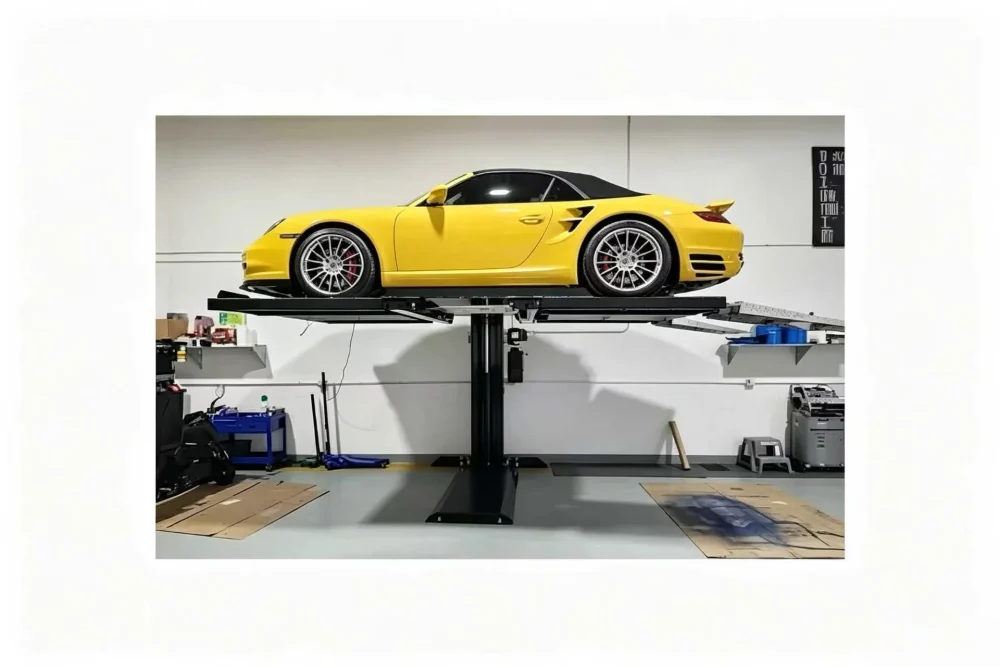
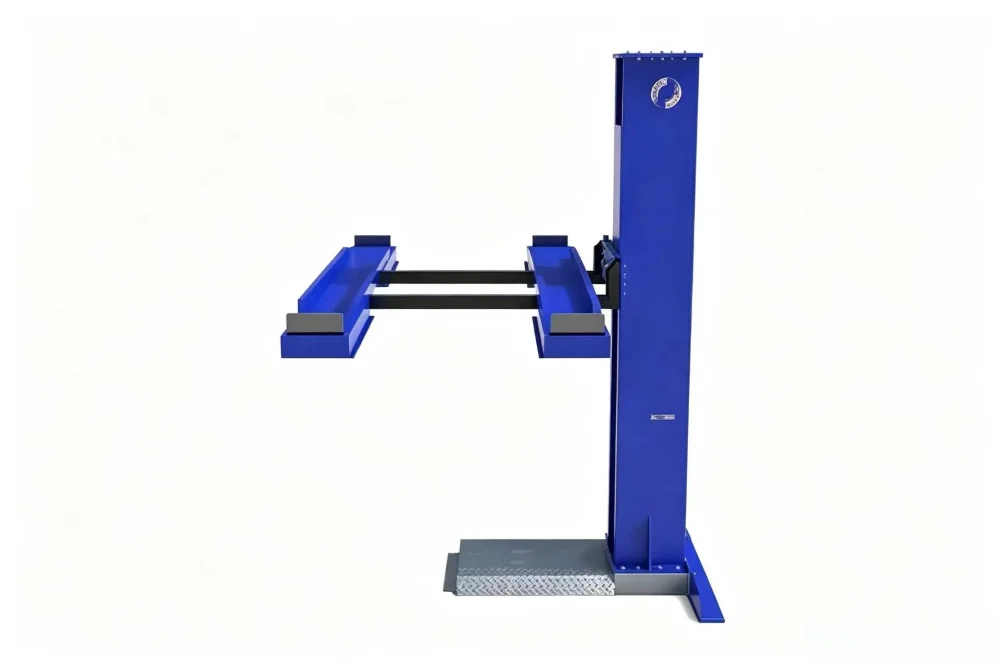
At its core, a 1 post car lift is a vertical vehicle lifting system supported by a single heavy-duty column. Unlike multi-post configurations that surround the vehicle with columns on both sides, a single post design utilizes a cantilevered arm structure anchored to or supported by a single robust column positioned on one side of the bay.
The Mechanics Behind the Lift
Most modern single post lifting systems rely on electro-hydraulic operation. A high-torque electric motor drives a hydraulic pump, forcing fluid into a heavy-duty hydraulic cylinder housed securely inside the main column. This hydraulic pressure raises a primary carriage fitted with sturdy, adjustable lifting arms.
Cantilever Strength: Because all the load weight is borne by one side, the column of a single post car lift is engineered with high-tensile structural steel, heavy base plates, and reinforced internal gussets to handle immense bending moments.
Adjustable Support Arms: Extending from the central carriage are swing arms or drive-over ramps equipped with adjustable rubber pads, allowing technicians to target precise frame lift points on sports cars, sedans, or light SUVs.
Mechanical Safety Locks: Safety is paramount in hydraulic machinery. A quality single column lift features multi-position automatic safety locks that engage mechanically as the lift rises, preventing accidental descent in the event of hydraulic pressure loss.
Major Advantages of Choosing a 1 Post Car Lift
Why are so many garage owners transitioning toward a single column solution? The answer lies in structural versatility and spatial economy.
1. Unmatched Floor Space Efficiency
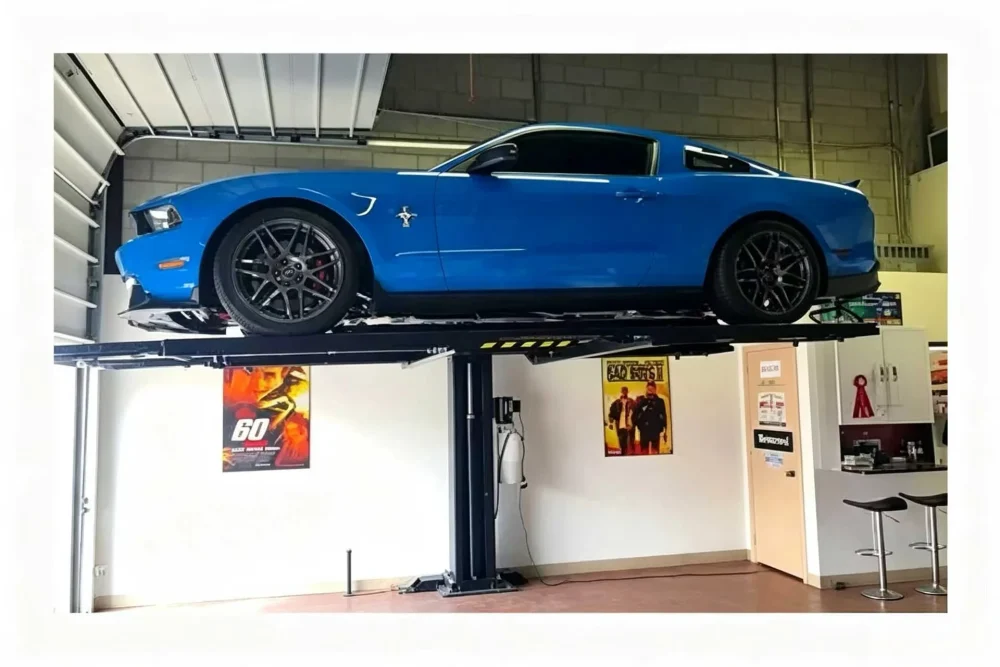
The primary draw of a single column lift is its minimal physical footprint. In a tight residential garage, adding a conventional two-post lift creates a physical barrier right in the middle of the room. Installing a single post lift tucked against a side wall or in a corner leaves the rest of the floor completely open for walking, moving toolboxes, or opening vehicle doors without restriction.
2. Maximum Accessibility
Because there are no upright posts on the opposite side, opening vehicle doors on the free side is effortless. This unobstructed lateral access makes a 1 post car lift particularly favored by vehicle detailers, wrap installers, and body shop technicians who require uninterrupted access to side panels, rockers, and interior cabins.
3. Mobility Options (Mobile & Semi-Portable Models)
While many single post units are permanently bolted to a reinforced concrete slab, several manufacturers produce mobile variants. A portable single post lift utilizes caster wheels and a tow handle, allowing you to wheel the unit across a smooth shop floor when unloaded. When space demands change, you can simply roll the equipment out of the way.
Technical Comparison: 1 Post vs. 2 Post vs. 4 Post Lifts
To better understand where a single column lift fits within the market, let us compare the three main types of automotive lifts across key performance indicators.
| Feature / Specification | 1 Post Car Lift | 2 Post Car Lift | 4 Post Car Lift |
| Typical Lifting Capacity | 2,000 kg – 3,500 kg (4,400 lbs – 7,700 lbs) | 3,500 kg – 6,000 kg (8,000 lbs – 13,000 lbs) | 3,500 kg – 8,000+ kg (8,000 lbs – 18,000+ lbs) |
| Footprint Impact | Very Minimal (Single Side Column) | Moderate (Two Side Columns) | Large (Four Corner Posts + Ramps) |
| Drive-Through Clearance | Maximum (Unobstructed side access) | Limited by post distance | Restricted by internal posts |
| Portabilité | High (Mobile units available) | Fixed (Requires heavy bolting) | Low to Medium (Optional caster kits) |
| Primary Applications | Parking storage, detailing, light maintenance | Suspension work, frame repair, engine drops | Long-term storage, oil changes, alignment |
| Concrete Depth Required | 150mm – 200mm (Fixed models) | 100mm – 150mm | 100mm (Low floor stress) |
Critical Factors to Consider Before Purchasing
Investing in a 1 post car lift requires careful assessment of your existing garage architecture, power supply, and vehicle fleet. Here are the primary considerations to keep in mind:
Ceiling Height and Overhead Clearance
Before ordering equipment, accurately measure your ceiling height. You must calculate the total height of your vehicle, the desired lifting height of the single column lift, and an extra safety margin of at least 10–15 centimeters (4–6 inches). For low-ceiling residential garages, short-rise single column lifts are available to prevent roof contact.
Concrete Foundation Specifications
Because a single post lift centers all leverage and load distribution onto one base plate, concrete integrity is crucial for stationary installations.
Thickness: Most stationary installations of a 1 post car lift require a solid concrete slab of at least 150 mm to 200 mm (6 to 8 inches).
PSI Rating: The concrete should ideally have a minimum compressive strength of 3,000 to 4,000 PSI.
Curing Time: Avoid mounting a heavy 1 post car lift on freshly poured concrete that has cured for less than 28 days.
For portable models, a flat, level concrete surface with standard residential slab thickness is usually sufficient, provided the ground is free of deep cracks or severe slopes.
Vehicle Weight and Load Distribution
Always check the Gross Vehicle Weight Rating (GVWR) of the vehicles you plan to lift. A standard single post lift is rated between 2.5 tons and 3.5 tons, making it ideal for sports cars, luxury sedans, crossovers, and light vintage automobiles. However, if you routinely service heavy diesel trucks or full-size commercial vans, you may require a higher-capacity industrial system.
Practical Applications for Home and Commercial Spaces
The flexibility of a single post lift lends itself to a broad range of creative automotive environments:
Double-Stacking Vehicles in Home Garages
One of the most common residential uses for a 1 post car lift is vertical parking optimization. By lifting a seasonal convertible or classic vehicle up toward the ceiling, you free up the ground space underneath to park your daily driver, effectively doubling your parking capacity without costly building additions.
Professional Detailing and Vinyl Wrap Bays
Detailers love working around a single post lift because it provides clear, uninhibited access to 75% of the vehicle without navigating around bulky steel posts. Adjusting the vehicle to comfortable working heights reduces back strain during long polishing sessions, paint correction, or ceramic coating applications.
Vintage Car Restorations and Light Repair
Working under a project car on a single post lift is vastly simplified when you can easily move equipment, transmission jacks, and parts carts around the vehicle without colliding with multiple support pillars.
Step-by-Step Maintenance Routine for Longevity
To keep your 1 post car lift operating smoothly and safely for years to come, implement a straightforward periodic maintenance routine:
Weekly Checks: Inspect hydraulic hoses, fittings, and cylinder seals for any signs of fluid leaks. Ensure all mechanical safety latches engage freely and disengage completely when releasing.
Monthly Checks: Lubricate the internal carriage tracks, chain assemblies, and slider blocks of your single post lift with high-grade grease. Check all structural bolts and floor anchors to ensure proper torque
Annual Service: Flush and replace hydraulic fluid, inspect arm locking mechanisms for wear, and inspect structural welds on the column and arms of the 1 post car lift for stress fractures.
Frequently Asked Questions (FAQ)
Q1: Is a 1 post car lift completely safe for working beneath the vehicle?
Yes, provided the 1 post car lift is manufactured to certified safety standards (such as CE or ALI standards) and operated within its specified weight capacity. Quality units feature robust mechanical safety locks that mechanically engage at multiple height increments, ensuring the load is supported by solid steel rather than hydraulic pressure while raised.
Q2: Can I install a 1 post car lift on an unpaved or asphalt surface?
No. Operating a 1 post car lift requires a solid, level concrete surface. Asphalt, dirt, gravel, or cracked wood subfloors cannot support the concentrated load and point-pressure exerted by the column base, creating a severe safety hazard.
Q3: What electrical power supply is needed for a 1 post car lift?
Most residential models of a single post lift utilize a standard single-phase power supply (110V or 220V/230V, 50/60Hz). Commercial auto shops may opt for three-phase power configurations for faster lifting speeds and heavy-duty usage cycles.
Q4: How long does it take to raise and lower a vehicle on a 1 post car lift?
On average, raising a vehicle to full working height on a 1 post car lift takes approximately 40 to 60 seconds, depending on the motor power and hydraulic pump output. Lowering typically takes 30 to 45 seconds.
Q5: Can I use a 1 post car lift for long-term vehicle storage over the winter?
Using a 1 post car lift for seasonal vehicle storage is an excellent choice. Once the vehicle is raised to the desired height, lower the carriage slightly so the weight rests securely on the mechanical safety latches, relieving pressure from the hydraulic system.
Conclusion & How to Get in Touch
A 1 post car lift is an exceptional investment for anyone seeking to maximize garage utility, double parking availability, or streamline vehicle maintenance without sacrificing precious floor space. Its unique blend of minimal footprint, versatile lifting capabilities, and user-friendly operation makes it one of the smartest upgrades for modern residential and commercial workshops.
If you are ready to transform your garage layout or need tailored recommendations regarding a 1 post car lift, including weight capacity, installation site requirements, and custom specifications, our team of equipment specialists is here to help.
Phone / WhatsApp: +86 189 5417 1380
Email: [email protected]
 French
 English
 Arabic
 Korean
 Spanish
 German
 Russian