
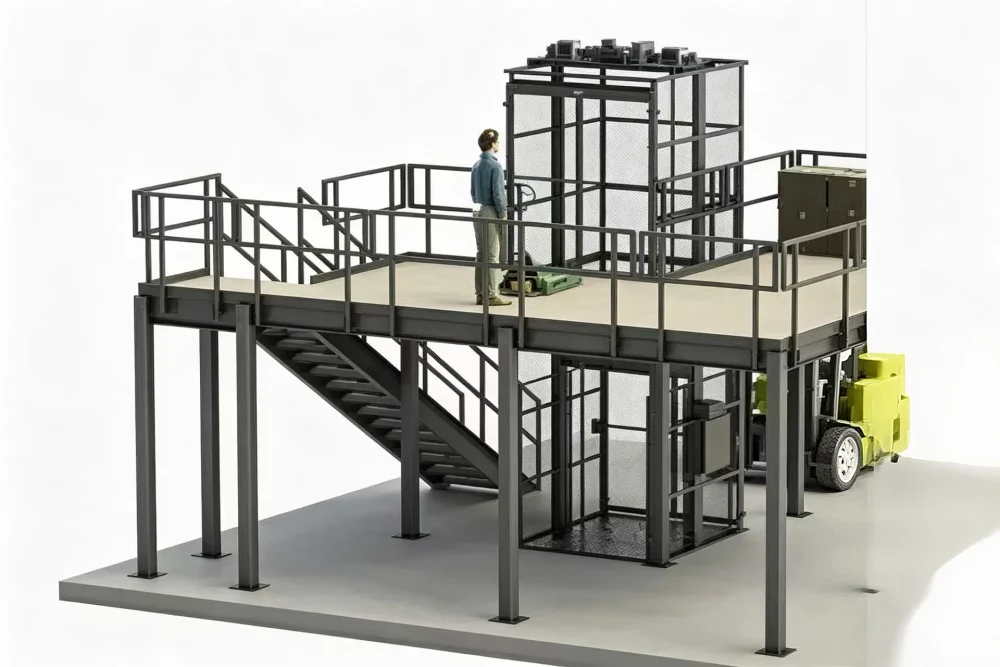
In the modern landscape of warehousing, manufacturing, and industrial logistics, spatial optimization is no longer just a luxury—it is a core competitive advantage. As urban land prices escalate and facility footprints remain constrained, enterprises must look upward rather than outward. The implementation of structural mezzanines has long been a preferred method for doubling or tripling usable floor space. However, the true bottleneck of multi-tiered facility operations frequently lies in material movement. Transporting heavy pallets, raw components, and finished goods across different elevations safely and efficiently requires specialized, heavy-duty machinery. This is where the integration of a custom industrial mezzanine lift becomes an absolute operational necessity.
Unlike standardized, off-the-shelf vertical conveyor systems, industrial environments demand tailormade machinery engineered to withstand rigorous duty cycles, strict safety regulations, and complex spatial constraints. Investing in a custom industrial mezzanine lift allows facility managers to bridge the vertical gap seamlessly, ensuring that workflow momentum is maintained without compromising safety or structural integrity.
Understanding the Core Mechanics of Industrial Vertical Logistics
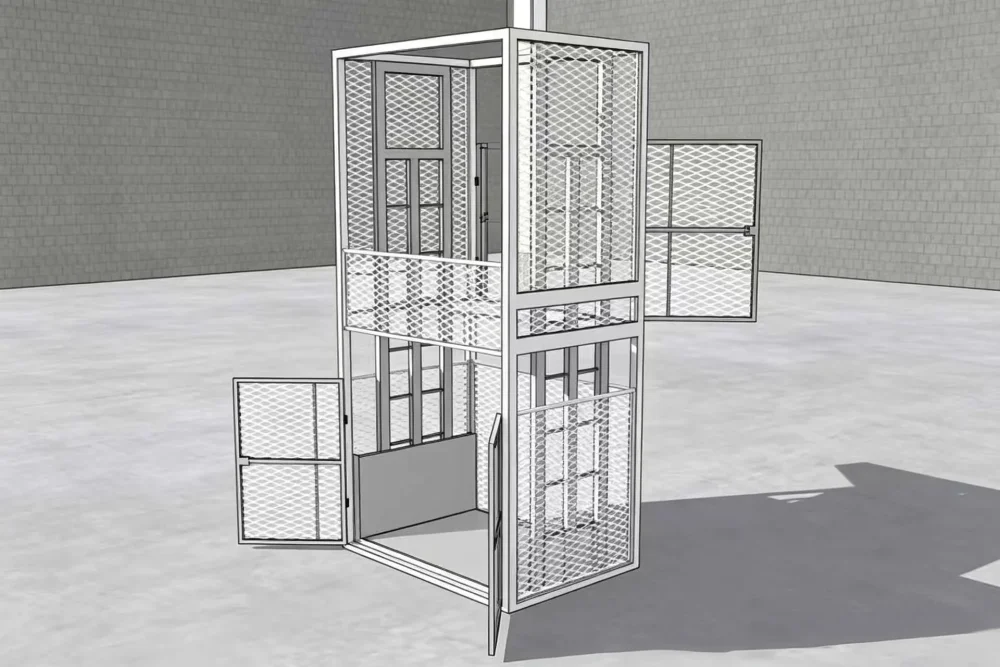
At its foundational level, a custom industrial mezzanine lift—frequently classified under the broader category of vertical reciprocating conveyors (VRCs)—is an automated or semi-automated mechanical system designed to transport cargo between multiple defined elevations. Unlike passenger elevators, which are bound by highly restrictive and often unnecessary regulatory frameworks for material-only transport, industrial VRCs are built exclusively for heavy payloads, providing a far more cost-effective and structurally versatile solution.
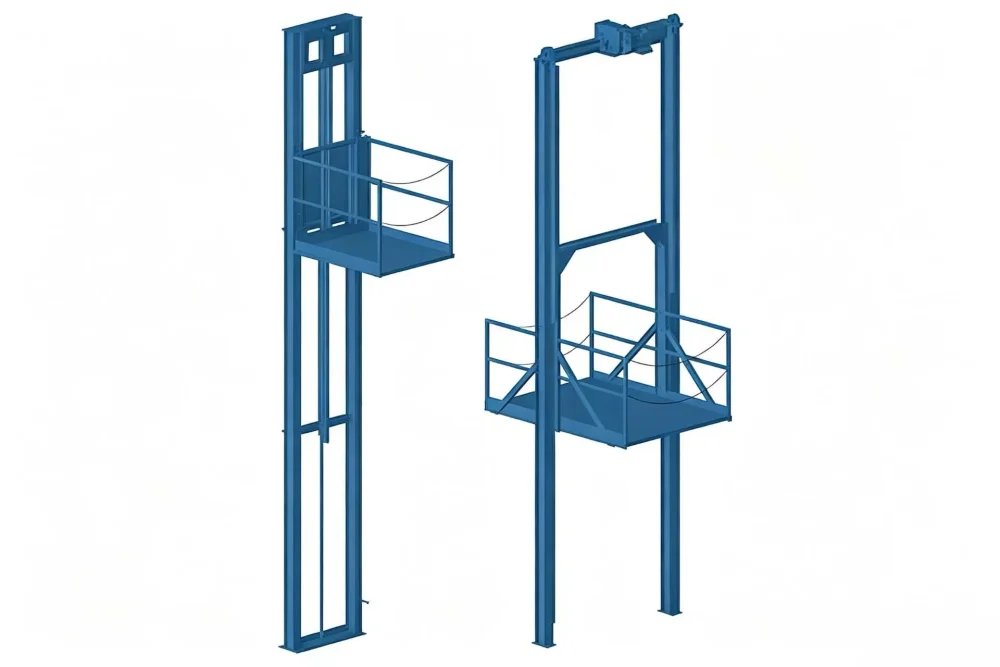
When engineering a custom industrial mezzanine lift, the drive mechanism chosen dictates the system’s performance envelope. The two primary drive methodologies utilized are hydraulic systems and mechanical (wire rope or chain-driven) systems.
Hydraulic Drive Systems: Best suited for high-capacity, low-to-medium vertical travels (typically up to two stories or 20–30 feet). Hydraulic systems utilize precision-machined cylinders and fluid pressure to achieve incredibly smooth ascents and descents. They feature fewer moving parts, reducing long-term maintenance overhead, and excel at lifting massive, concentrated loads.
Mechanical Drive Systems: Ideal for high-travel applications or continuous, high-speed automated cycle rates. Driven by heavy-duty electric motors, gearboxes, and reinforced roller chains or steel cables, these lifts can span multiple mezzanine levels effortlessly and provide exceptional precision in automated positioning systems.
Selecting the appropriate configuration depends heavily on your specific operational profile, cycle frequency, and load distribution.
Why “Custom” Matters: Tailoring the Lift to Your Infrastructure
Industrial facilities are rarely uniform. Variations in ceiling heights, floor loading capacities, structural pillar configurations, and existing workflow lanes mean that a cookie-cutter approach to material lifting inevitably fails. Specifying a custom industrial mezzanine lift ensures that every parameter of the machinery is engineered to integrate perfectly within your unique architectural envelope.
Key aspects of customization include:
Carriage Dimensions and Configurations
Depending on whether you are moving oversized aerospace components, standard EUR-pallets, or dense bin carts, the carriage size must be built to match. Customization allows for specific width, depth, and vertical clearance configurations. Furthermore, the loading and unloading patterns can be tailored—allowing for Z-pattern (in one side, out the opposite), C-pattern (in and out the same side), or 90-degree angular transfers to accommodate existing conveyor feeds.
Load Capacity Calibration
From light-duty 500 kg parcel lifts to heavy-duty industrial configurations capable of lifting over 10,000 kg, the structural framing, mast design, and power unit of a custom industrial mezzanine lift are calibrated precisely to your heaviest anticipated payload, incorporating substantial safety margins.
Environmental Adaptability
Industrial settings can be harsh. Lifts destined for chemical processing plants, food-grade cleanrooms, or unheated outdoor storage zones require specialized considerations. Custom engineering enables the integration of stainless-steel structures, explosion-proof motors, corrosion-resistant coatings, and IP65-rated electrical enclosures to guarantee longevity under extreme conditions.
Technical Comparison: Standard vs. Custom Lift Architecture
To fully appreciate the capital expenditure validation of bespoke engineering, it is useful to evaluate how a tailored system compares against mass-produced alternatives. The following matrix contrasts standard configurations against a fully optimized custom industrial mezzanine lift.
| Engineering Parameter | Standard Off-the-Shelf Lift Systems | Custom Industrial Mezzanine Lift |
| Load Capacity Range | Rigidly fixed (typically capped at 1,000–2,000 kg) | Scalable from 500 kg to over 15,000 kg based on application |
| Travel Height Flexibility | Pre-engineered modular increments; strict limits | Built to exact millimeter specifications matching the mezzanine |
| Carriage Orientation | Standard single-side entry/exit only | C-shape, Z-shape, or 90-degree adjacent configurations |
| Control Integration | Standalone push-button stations | Fully integrated into facility WMS, PLC networks, and AGV lanes |
| Safety Enclosures | Generic mesh panels; may require field modification | Interlocked gates, light curtains, and full ASME B20.1 compliance |
| Lifecycle & Duty Cycle | Intermittent duty cycles; standard component wear | High-frequency continuous duty cycles; heavy-duty components |
Key Architectural and Safety Features
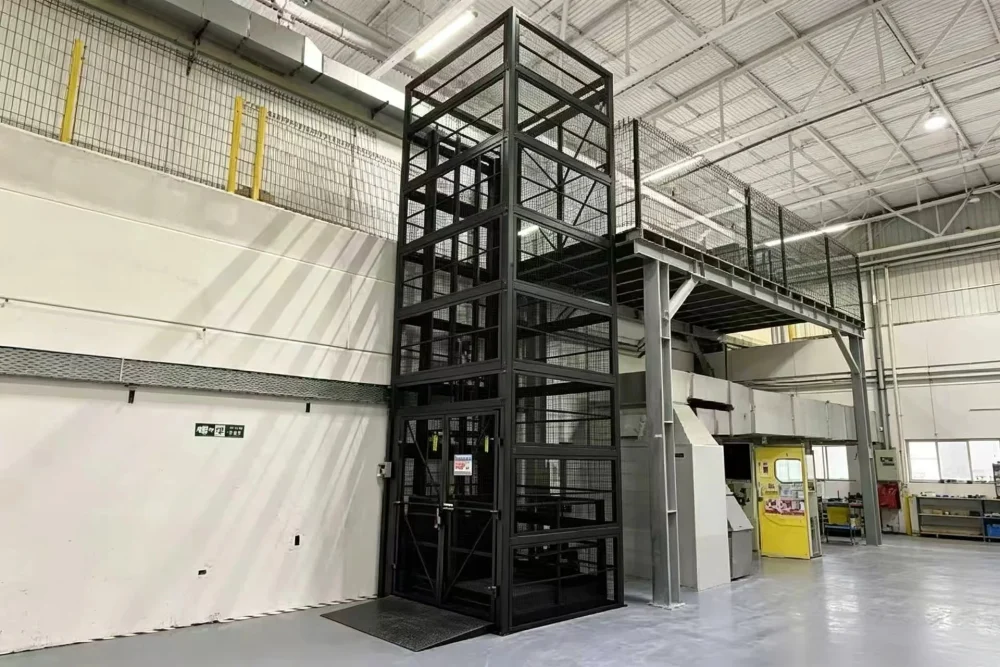
Safety is the absolute cornerstone of any industrial operation. Because a custom industrial mezzanine lift operates across different structural levels, it must be equipped with comprehensive safety layers to safeguard personnel and prevent catastrophic material damage.
Interlocked Safety Gates and Enclosures
A premium custom industrial mezzanine lift features mechanical or electromechanical interlocks on all access gates. These interlocks guarantee that the lift carriage cannot move unless all gates are completely closed and securely locked. Conversely, the gates at a specific level cannot be opened unless the carriage has arrived and settled safely at that exact landing.
Velocity Fuses and Drop-Stop Mechanisms
In the highly improbable event of a sudden hydraulic pressure drop or mechanical chain failure, integrated velocity fuses and mechanical structural cams act instantly. These emergency devices lock the carriage securely to the guide masts, stopping a fully loaded platform within inches to prevent free-fall scenarios.
Smart Control Systems and Automation Integration
Modern industrial lifts do not operate in isolation. A high-performance custom industrial mezzanine lift can be outfitted with advanced Programmable Logic Controllers (PLCs) that communicate seamlessly with Warehouse Management Systems (WMS). This allows for automated optical sorting, weight verification prior to lifting, and smooth integration with Automated Guided Vehicles (AGVs) or autonomous mobile robots executing automated storage and retrieval tasks.
Streamlining Workflow and Maximizing ROI
The implementation of a custom industrial mezzanine lift delivers measurable, immediate returns on investment across multiple facets of facility management.
Eradicating Forklift Reliance
Relying entirely on high-reach forklifts to move materials to a mezzanine level introduces substantial bottlenecks and safety hazards. Forklifts require wide operational aisles, present tipping risks at high elevations, and tie up skilled operators. A strategically placed custom industrial mezzanine lift establishes a dedicated, fixed vertical conduit for materials, freeing up your forklift fleet for horizontal transport duties and dramatically minimizing the risk of pedestrian collisions.
Enhancing Throughput Velocity
When materials flow through a dedicated custom industrial mezzanine lift, cycle times become highly predictable. Instead of waiting for an available forklift or manually moving goods via restrictive staircases, operators can rapidly stage pallets onto the lift platform, press a button, and return to their primary responsibilities. This streamlined material handling loop slashes processing times and enhances daily operational throughput.
Labor Optimization and Ergonomics
Manual lifting and variable floor-to-floor transit are primary contributors to workplace fatigue and repetitive strain injuries. Implementing an ergonomically designed custom industrial mezzanine lift with floor-level roll-on loading or integrated roller conveyors means operators can transfer massive loads with minimal physical exertion, fostering a safer, more productive work environment.
Crucial Steps in Specifying Your Custom Lift Project
Embarking on the acquisition of a custom industrial mezzanine lift requires rigorous planning and alignment between your internal operations team and the manufacturing engineers. To ensure a successful deployment, keep the following phases in mind:
Define the Exact Load Profile: Document not just the weight, but the dimensions, stability, and center of gravity of your typical loads. Uniformly distributed loads handle differently than highly concentrated point loads.
Analyze the Structural Footprint: Evaluate the floor slab thickness of the ground level to ensure it can support the dynamic loads transmitted through the lift masts. Check the structural integration point at the mezzanine edge for level alignment and clearance.
Determine the Operational Cycle Rate: Calculate how many times per hour or per shift the lift will cycle. High-frequency operations demand heavier duty-cycle motors, reinforced bearings, and proactive lubrication systems.
Confirm Compliance and Local Codes: Ensure your custom industrial mezzanine lift manufacturer adheres strictly to relevant industrial standards, such as ASME B20.1 (Safety Standard for Conveyors and Related Equipment) or local equivalent CE regulations, to guarantee passing building inspections without friction.
Frequently Asked Questions (FAQ)
What is the primary difference between a mezzanine lift and a standard freight elevator?
A standard freight elevator is rated for passenger transport, which mandates complex, highly restrictive shafts, deep pits, and frequent, costly regulatory certifications. A custom industrial mezzanine lift (classified as a VRC) is engineered exclusively for material transport. It cannot carry passengers, which allows it to be vastly more cost-effective, structurally adaptable, and installed without digging deep foundation pits.
Can a custom industrial mezzanine lift be installed in an existing facility?
Absolutely. One of the greatest advantages of a custom industrial mezzanine lift is its ability to retroactively fit into existing structures. Because the layout is custom-designed, engineers can configure the lift to work around existing support pillars, overhead HVAC ductwork, or restrictive floor plans.
What sort of maintenance profile does a custom mezzanine lift require?
While highly reliable, a custom industrial mezzanine lift should undergo routine quarterly inspections. For hydraulic systems, this involves checking fluid levels, inspecting seal integrity, and verifying pressure valves. For mechanical systems, regular chain lubrication and tension tracking are essential. Safety interlock functionality should be tested monthly.
How long does the engineering and manufacturing process typically take?
Because a custom industrial mezzanine lift is built to order rather than pulled from a warehouse, the timeline generally spans from 6 to 12 weeks depending on structural complexity, automation integrations, and current factory capacities. This ensures that every component is tailored flawlessly to your operational blueprints.
Conclusion: Partnering for Vertical Success
Optimizing your facility’s vertical footprint is an investment in long-term operational resilience. By integrating a rugged, intelligently engineered custom industrial mezzanine lift, you eliminate workflow bottlenecks, enhance personnel safety, and unlock the true volumetric potential of your square footage.
When configuring material handling machinery of this scale, working with an experienced manufacturer is vital. For custom engineering consultations, precise technical specifications, or tailored budgeting assessments for your upcoming industrial lifting project, please connect with our engineering team directly.
Phone: +86 189 5417 1380
Courriel :: [email protected]
 French
 English
 Arabic
 Korean
 Spanish
 German
 Russian