
Understanding a clear freight elevator definition is essential for architects, warehouse managers, building designers, and industrial facility supervisors who need to optimize vertical material transportation. In modern commercial structures, manufacturing plants, distribution hubs, and multistory industrial facilities, heavy cargo movement demands specialized lifting machinery engineered specifically for high payload capacity, rugged durability, and rigorous daily operation. While standard passenger lifts prioritize aesthetic finishes, smooth rapid acceleration, and human ride comfort, a true industrial cargo lift focuses strictly on structural reinforcement, heavy floor loading tolerance, impact resistance, and functional safety compliance.
In this comprehensive technical guide, we will break down the complete freight elevator definition, analyze core structural components, review mechanical design variations, compare key operating specs, examine architectural site installation requirements, and highlight essential maintenance practices for commercial enterprises.
What is a Freight Elevator Definition in Industrial Engineering?
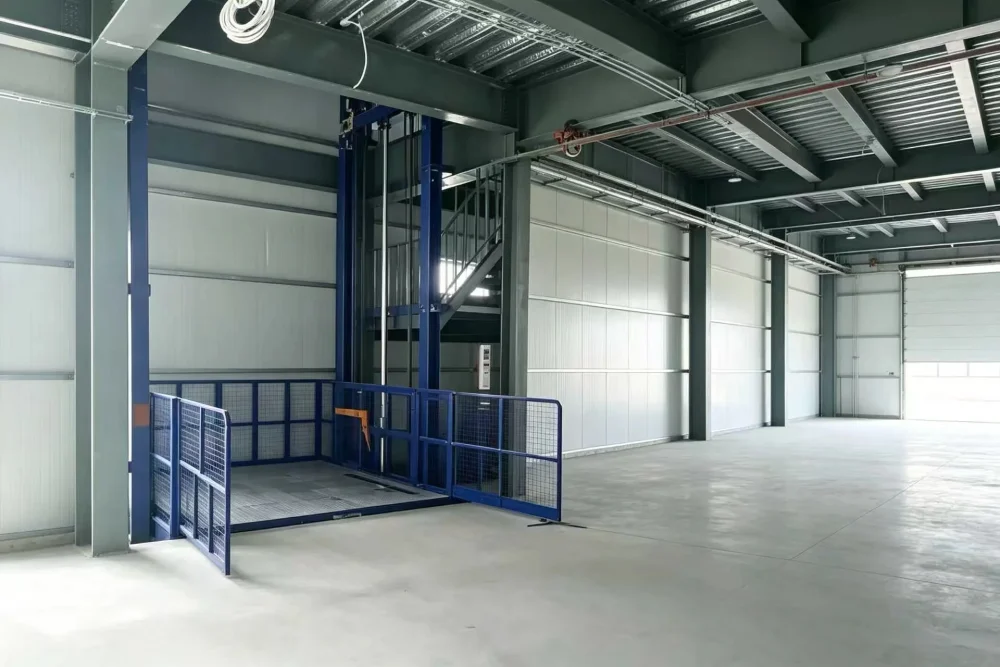
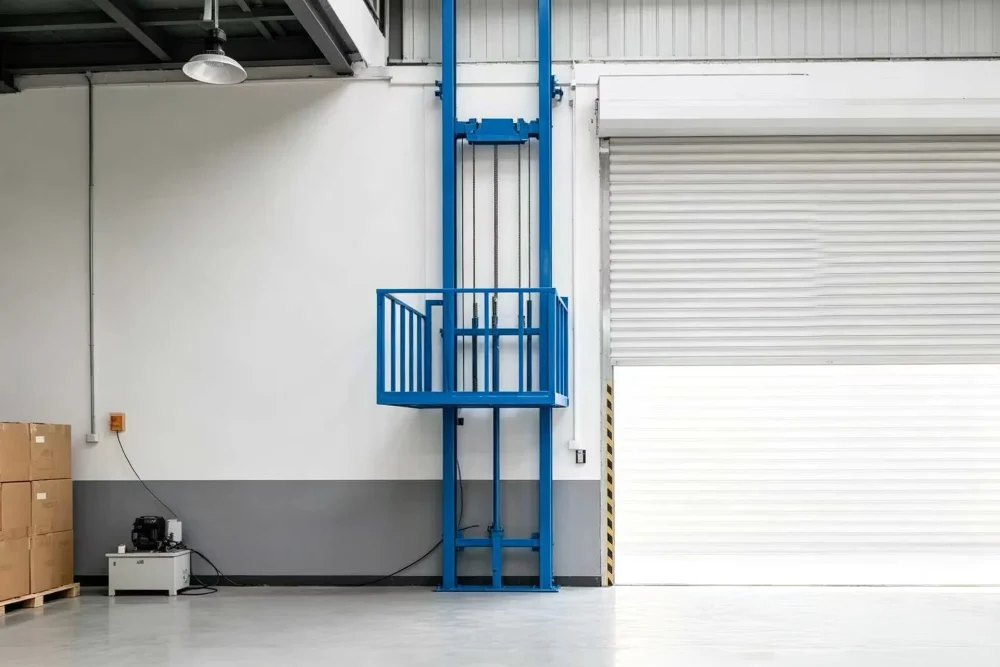
To establish a complete freight elevator definition, one must look beyond simple mechanical terminology. In industrial engineering and architectural design, a cargo lift is formally defined as a dedicated vertical transportation system engineered exclusively or primarily for moving goods, heavy equipment, palletized freight, raw materials, and utility loads between building floors. Unlike passenger systems designed under strict human comfort parameters, the fundamental freight elevator definition centers on heavy-duty load distribution, structural collision resistance, and specialized floor loading capabilities.
Key Characteristics of Commercial Freight Lifts
Heavy Load Capacities: Built to handle operational payloads ranging from 2,000 lbs in light commercial setups to over 50,000 lbs in heavy industrial plants.
Rugged Interior Finishes: Constructed with heavy-gauge steel wall panels, non-skid steel diamond plate flooring, and heavily reinforced steel car framing.
Vertical Bi-Parting Doors: Equipped with heavy counterbalanced metal doors that open vertically from top and bottom to save valuable horizontal landing space.
Impact Resistance: Specially designed to withstand direct physical impacts from forklifts, motorized pallet jacks, and heavy rolling carts during loading and unloading procedures.
Core Classes of Loading in Freight Elevator Engineering
A critical aspect of any formal freight elevator definition is the classification system established by international safety codes like ASME A17.1 / CSA B44. These standards categorize industrial lifts based on how weight is distributed across the platform during loading:
Class A: General Freight Loading
Under standard safety definitions, Class A covers general freight loading where load weight is distributed evenly across the floor deck and no individual piece of cargo exceeds 25% of the total rated capacity. Loading and unloading are typically carried out manually or via hand-operated push trucks.
Class B: Motor Vehicle Loading
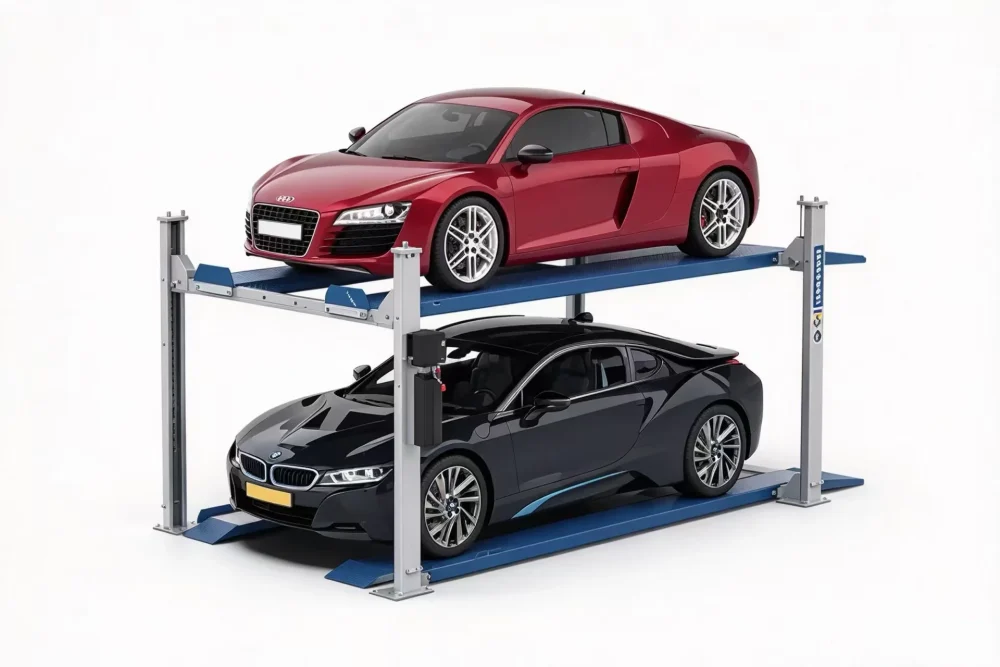
This specific freight elevator definition applies to lifts designated solely for transporting passenger automobiles, commercial delivery vans, or utility trucks between parking decks or multistory automotive service facilities.
Class C: Industrial Truck Loading
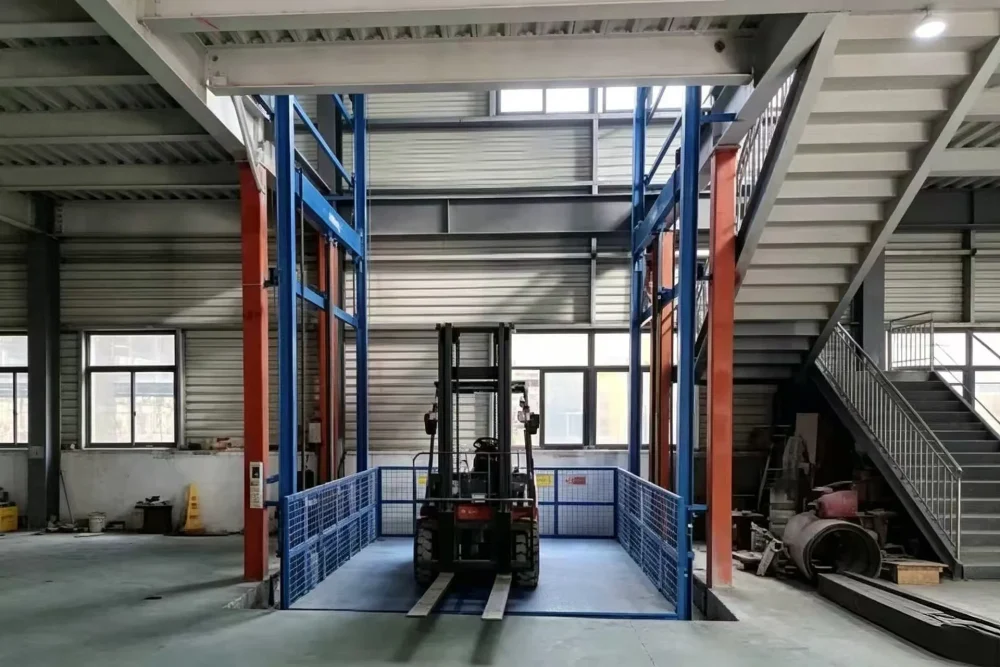
Class C represents heavy-duty industrial lift applications where motorized vehicles, such as forklifts, ride-on pallet jacks, or tractors, drive directly onto the elevator floor platform to deposit cargo.
Class C1: The industrial truck remains parked on the car platform during floor-to-floor travel.
Class C2: The industrial truck drives onto the platform to load the car but backs out and does not ride along during travel.
Class C3: Heavy concentrated loads are loaded by power trucks, but the total weight of the truck is not supported directly by the car platform during floor travel.
Exploring Structural Variations and Drive Systems
Expanding on our freight elevator definition, it is crucial to recognize that drive mechanisms vary depending on overall travel height, total load weight, building architecture, and daily duty cycle requirements.
Hydraulic Freight Lift Systems
Hydraulic systems utilize high-pressure fluid pumps and heavy steel piston cylinders to raise and lower the car frame. In hydraulic applications, the freight elevator definition emphasizes low initial installation cost, exceptional heavy-duty weight capacity for low-to-mid rise buildings, and minimal structural overhead requirements above the top landing.
Traction Electric Freight Systems
Traction systems utilize steel wire ropes or flat polyurethane belts wrapped over a grooved drive sheave powered by an electric motor and counterweight system. For high-rise warehouses, fulfillment centers, and multistory factories, a traction drive satisfies the freight elevator definition by delivering faster travel speeds, smoother acceleration, and higher energy efficiency across multi-story vertical shafts.
Technical Specifications Comparison Table
To clarify how different drive technologies align with our technical freight elevator definition, the following matrix compares key engineering parameters across industrial configurations:
| Parameter / Feature | Direct Hydraulic Cargo Lift | Holeless Hydraulic Lift | Overhead Traction Freight Lift |
| Primary Duty Cycle | Heavy industrial, low-rise | Medium industrial, mid-rise | High-volume distribution, high-rise |
| Typical Rated Capacity | 3,000 lbs to 50,000+ lbs | 3,000 lbs to 20,000 lbs | 4,000 lbs to 30,000+ lbs |
| Travel Height Range | Up to 40 feet (2-4 floors) | Up to 60 feet (2-6 floors) | 50 feet to 200+ feet |
| Car Speed | 25 to 100 FPM (0.12 – 0.5 m/s) | 25 to 100 FPM (0.12 – 0.5 m/s) | 100 to 400+ FPM (0.5 – 2.0 m/s) |
| Pit Depth Required | Deep pit required for cylinder casing | Standard pit (4 ft to 6 ft) | Deep pit (5 ft to 8 ft) |
| Machine Room Location | Adjacent to lowest landing | Adjacent to lowest landing | Overhead directly above hoistway shaft |
| Door Operation | Manual / Power bi-parting | Manual / Power bi-parting | Vertical bi-parting power doors |
Regulatory Compliance and Safety Standards
A thorough freight elevator definition must also encompass safety standards, regulatory compliance, and municipal inspection frameworks. Industrial vertical lifts operate under severe mechanical stresses, making strict adherence to national elevator safety codes non-negotiable.
ASME A17.1 Safety Code Standards
In North America, the official freight elevator definition and operational mandates fall under ASME A17.1. These safety standards dictate mandatory mechanical protections, including instant-acting safety clamps, slack-cable cut-off switches, emergency stop buttons, gate mechanical interlocks, and overspeed governors.
Passenger Usage Restrictions and Guidelines
Under strict code regulations, standard freight lifts are prohibited from carrying general public passengers. Authorized personnel required to load and unload cargo are permitted to ride inside the car, provided the system satisfies specific safety interlock and lighting requirements outlined in the regulatory freight elevator definition.
Key Site Preparation and Architectural Considerations
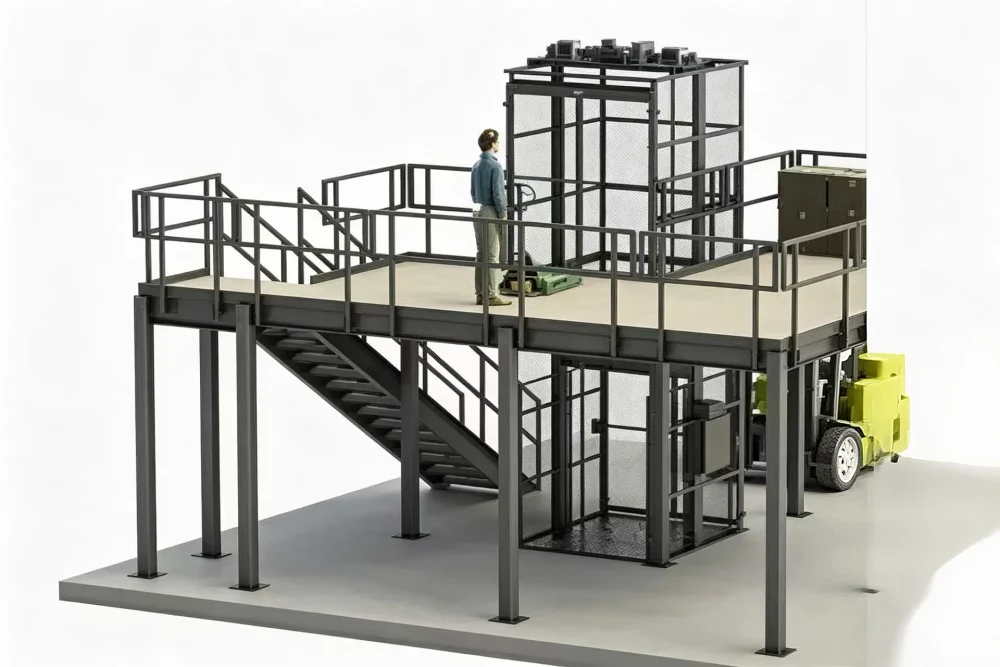
When integrating equipment that meets the industrial freight elevator definition into building blueprints, architects and structural engineers must plan for several critical structural and electrical factors:
Reinforced Hoistway Structure: The hoistway walls and pit foundation must withstand extreme lateral forces and impact vibrations generated during heavy forklift loading operations.
Sufficient Overhead Clearance: Adequate distance between the top floor landing level and the hoistway ceiling is necessary to accommodate structural crossheads, sheaves, and overhead safety gear.
Dedicated Power Infrastructure: Industrial lifts require stable three-phase electrical supplies to power high-torque electric motors and hydraulic power units reliably under full load conditions.
Pit Drainage and Waterproofing: Elevator pits must be properly waterproofed and equipped with sump pumps or oil separators to prevent water accumulation, hydraulic fluid contamination, and corrosion of structural steel elements.
Structural Wall Anchorage: Structural guide rails must be anchored securely to reinforced concrete beams or structural steel columns along the entire height of the shaftway to maintain rigid alignment.
Long-Term Preventive Maintenance and Inspection Protocols
To ensure equipment adhering to the commercial freight elevator definition maintains long-term reliability and operational compliance, property managers must implement structured inspection routines:
Daily Pre-Shift Inspection: Operators should perform visual checks on gate interlocks, emergency light operation, floor level accuracy, and control button responsiveness before starting morning shift cargo operations.
Monthly Lubrication & Fluid Analysis: Service engineers must regularly lubricate guide rails, inspect hoisting cables for wire fraying, test hydraulic fluid cleanliness, and verify seal integrity on hydraulic cylinders.
Annual Full-Load Testing: Municipal codes require annual full-load safety tests conducted at 100% rated capacity to verify safety brake activation, pressure relief valves, and mechanical lock integrity under realistic working stress.
Frequently Asked Questions (FAQ)
Q1: What is the primary freight elevator definition according to building codes?
According to standard architectural and building codes, the freight elevator definition refers to an elevator used primarily for carrying freight, raw materials, heavy machinery, and goods rather than general passengers, constructed with reinforced interiors and high loading capacity.
Q2: Can facility employees ride inside a freight lift?
Yes, designated material handlers, warehouse personnel, and truck operators can ride inside a freight lift to load and unload cargo, provided the equipment meets specific safety codes included in the commercial freight elevator definition.
Q3: How does a freight lift differ from a service elevator?
While the terms are often confused in daily speech, a service elevator is essentially a passenger elevator with durable interior wall pads used by staff and delivery workers. In contrast, the true freight elevator definition requires heavy-duty structural loading classification, vertical bi-parting doors, and significantly higher floor load tolerances.
Q4: What speed do industrial freight elevators typically travel?
Most low-rise hydraulic cargo systems operate at modest speeds between 25 and 100 feet per minute (FPM). High-rise traction models meeting the high-speed freight elevator definition can travel at speeds upwards of 200 to 400 FPM to serve multi-story distribution hubs efficiently.
Q5: What maintenance schedule is required for commercial cargo lifts?
Commercial freight lifts require routine monthly preventive maintenance checks and mandatory annual full-load safety tests conducted by certified technicians to comply with municipal safety codes and maintain operational integrity.
Conclusion & Contact Information
In summary, a clear freight elevator definition goes far beyond describing a large metal platform in a warehouse hoistway shaft. It represents a specialized engineering discipline combining heavy structural design, custom loading classifications, impact-resistant materials, and rigorous safety controls to keep modern global supply chains moving vertically.
For expert technical advice, customized vertical material handling designs, or detailed specification quotes for your industrial facility, get in touch with our engineering team today:
Phone / WhatsApp: +86 189 5417 1380
Email: [email protected]
 French
 English
 Arabic
 Korean
 Spanish
 German
 Russian