
In modern multi-tier warehouses, manufacturing plants, logistics hubs, and commercial processing facilities, optimizing internal material movement is critical for operational efficiency. Safely transferring heavy palletized inventory, raw materials, heavy machinery, and finished goods across different factory levels requires robust vertical transportation equipment. While traditional traction passenger-cargo elevators involve high machinery costs, complex shaft wall construction, and continuous maintenance overhead, industrial facilities increasingly rely on heavy-duty vertical hydraulic technology.
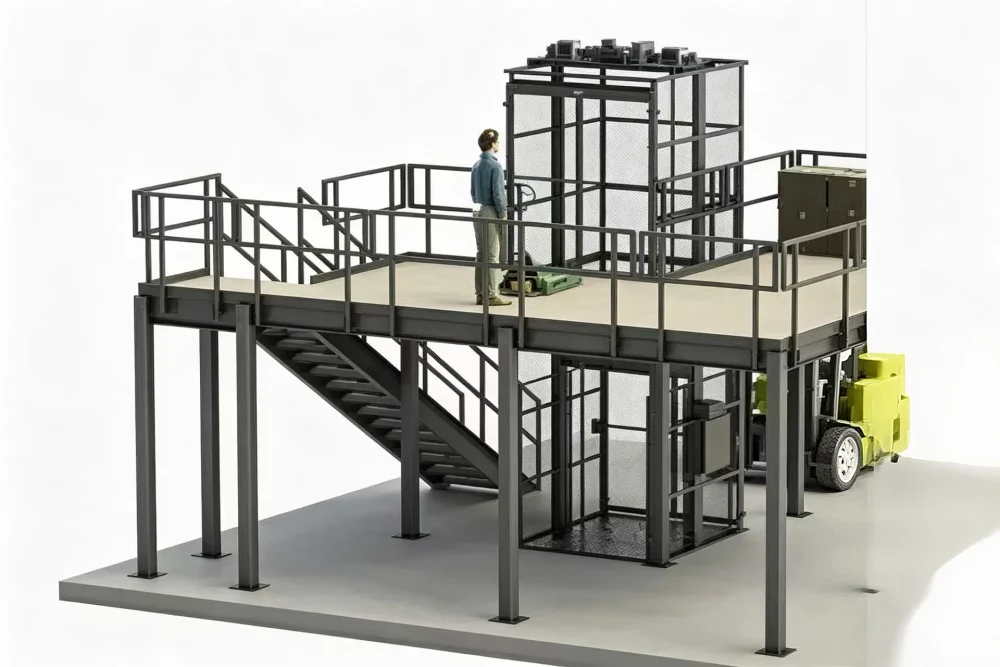
Deploying a hydraulic rail goods freight lift provides an exceptional, highly adaptable, and economical vertical cargo handling solution. Specifically engineered for heavy material transport without passenger occupancy, these specialized lifts bypass complex building modifications, offering seamless integration for indoor factories, outdoor loading docks, and warehouse mezzanine platforms.
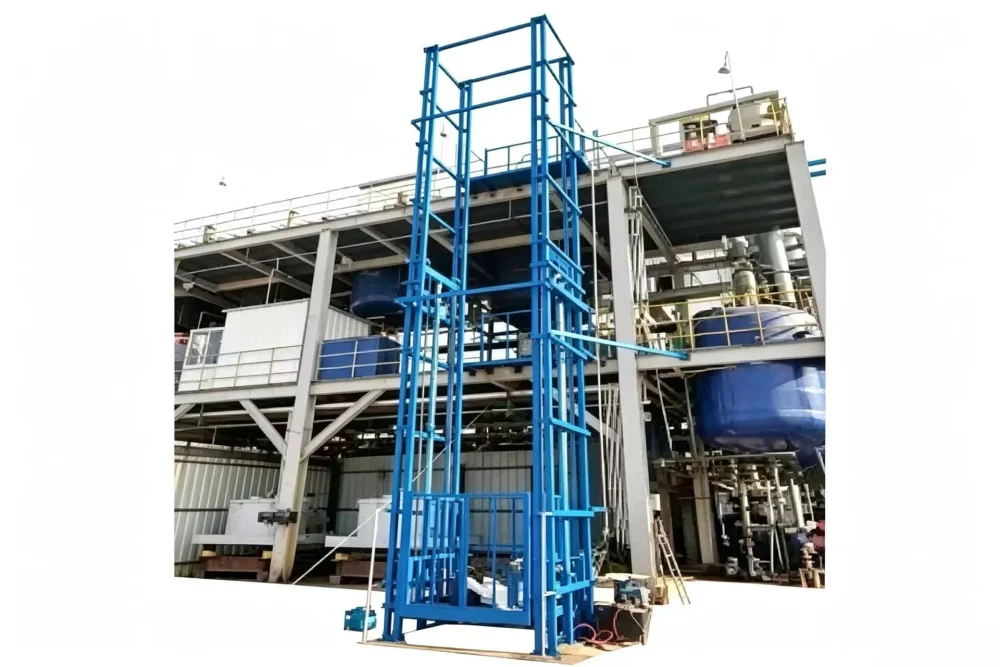
Mechanical Architecture of Hydraulic Rail Goods Freight Lifts
The fundamental strength of a hydraulic rail goods freight lift lies in its heavy-duty mechanical frame and fluid power transmission system. Unlike cable-suspended traction lifts that rely on overhead motorized sheaves, hydraulic guide-rail lifts utilize powerful hydraulic cylinders to push high-tensile chain-and-sprocket mechanism networks, raising the cargo platform smoothly along rigid vertical steel guide rails.
Core Structural Components
Precision Steel Guide Rails: Manufactured from high-grade H-shaped or I-shaped structural steel sections, these vertical rails anchor securely to facility walls or self-supporting steel frames, guaranteeing zero platform tilt during loading.
Heavy-Duty Hydraulic Cylinders and Leaf Chains: High-pressure oil cylinders drive multi-strand leaf chains, delivering high force multiplication and ultra-smooth vertical extension.
Reinforced Steel Cargo Carriage Deck: Built with anti-skid chequered diamond steel plates and perimeter protective mesh guardrails, the cargo platform effortlessly resists heavy forklift entry and pallet truck impacts.
Self-Contained Hydraulic Power Unit: Houses an oil reservoir, high-pressure gear pump, electromagnetic valves, and motor control board inside a compact remote cabinet.
Key Advantages Over Traditional Elevator Systems
Evaluating the long-term operational value of a hydraulic rail goods freight lift reveals significant construction, mechanical, and maintenance advantages for industrial property managers:
1. Minimal Civil Prep and Shallow Pit Requirements
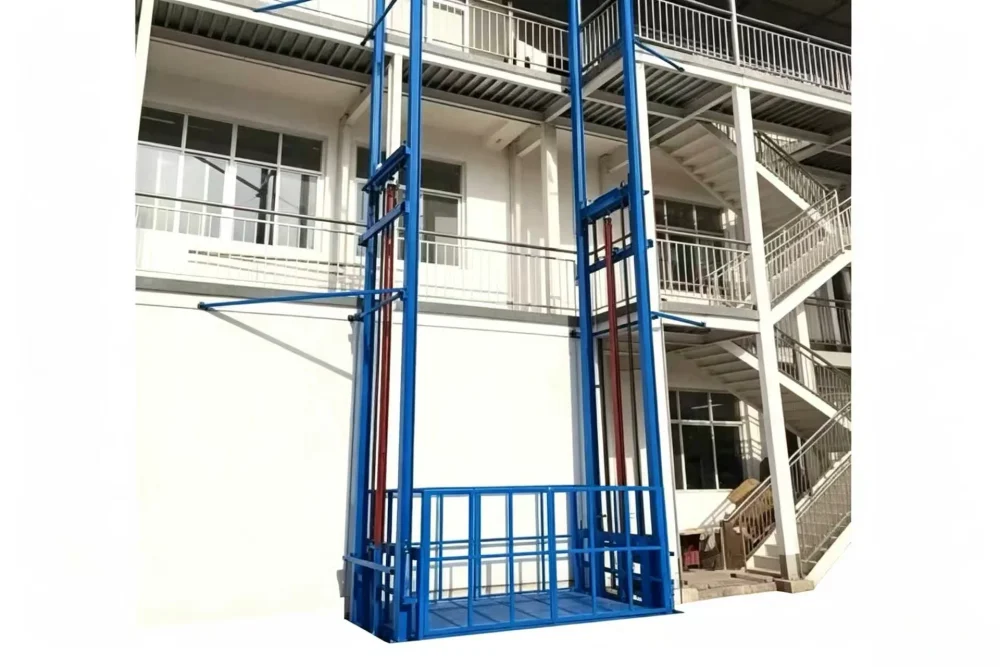
A major financial benefit of installing a hydraulic rail goods freight lift is its minimal impact on building foundations. While traditional elevators demand deep concrete pits (often 1.5 meters or deeper), hydraulic guide-rail lifts operate smoothly with a shallow pit recess of only 150 mm to 300 mm. Where pit excavation is impossible due to subterranean utility lines, a surface-mounted platform combined with a short entry ramp eliminates pit digging entirely.
2. Machine-Room-Less Space Optimization
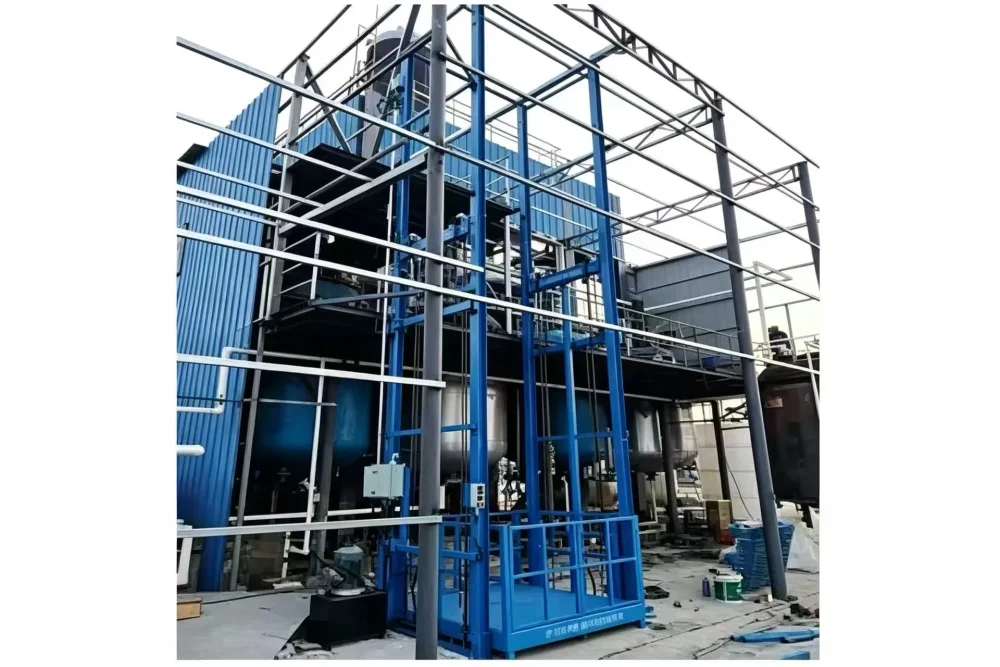
Because the hydraulic pump station can be installed up to 10 meters away from the lift shaft frame, there is no need to construct expensive overhead machine rooms above the roofline. This Machine-Room-Less (MRL) flexibility simplifies factory roof design and saves valuable floor space.
3. Exceptional Load Capacity and Custom Platform Sizing
Industrial facilities handle diverse cargo shapes, from oversized wooden crates to stacked pallet racks. A hydraulic rail goods freight lift can be fully customized with payload capacities ranging from 1,000 kg up to 20,000 kg (20 metric tons), featuring platform deck dimensions tailored precisely to fit existing warehouse building bays.
4. Exceptional Energy Efficiency and Low Operating Costs
During upward travel, electric motors power the hydraulic pump to raise the cargo carriage. During downward travel, the lift harnesses gravity, using controlled oil release valves to lower the platform softly without consuming main electrical power, drastically reducing utility bills.
Technical Comparison of Industrial Freight Lifting Systems
Choosing the right material handling equipment depends on load requirements, travel height, civil site constraints, and equipment budget. The table below compares a hydraulic rail goods freight lift with other common material transport configurations.
| Technical Parameter | Hydraulic Rail Goods Freight Lift | Traditional Traction Freight Elevator | Scissors Hydraulic Cargo Lift |
| Typical Payload Capacity | 1,000 kg – 20,000 kg | 1,000 kg – 5,000 kg | 500 kg – 5,000 kg |
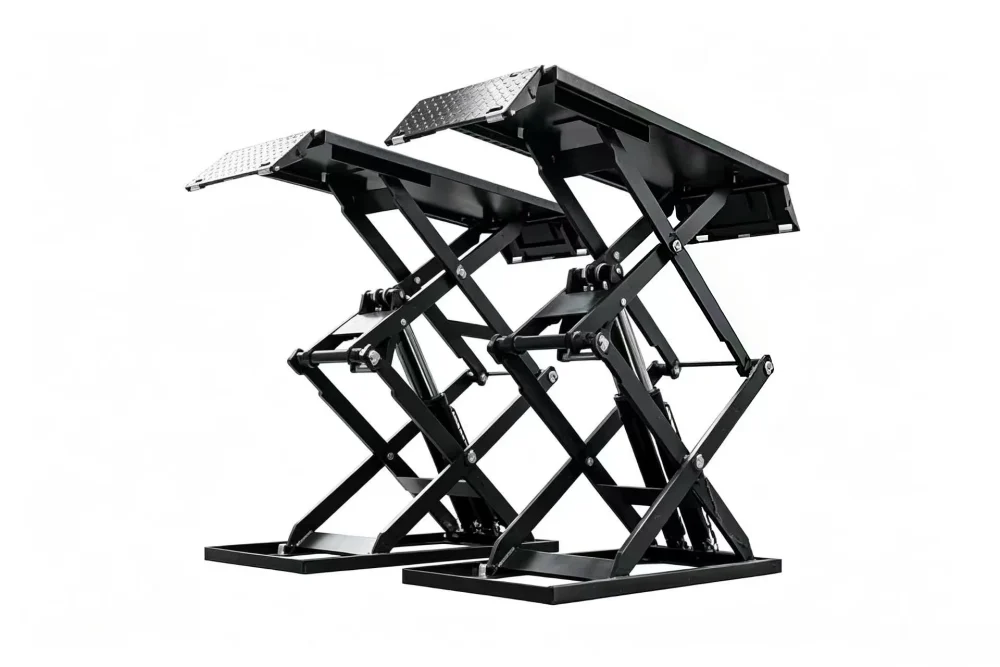
| Maximum Vertical Travel Height | Up to 20 Meters (Multiple Floors) | Up to 50+ Meters | Up to 6.0 Meters (Single Level) |
| Pit Depth Requirement | 150 mm – 300 mm (Shallow) | 1,200 mm – 1,800 mm (Deep Pit) | 300 mm – 600 mm (Deep Pit) |
| Overhead Machine Room Needed | No (Remote Pump Cabinet) | Yes (Overhead Machine Space) | No (Integrated Base Unit) |
| Civil Construction Expense | Very Low (Surface or Shallow) | High (Reinforced Shaft & Pit) | Moderate (Large Base Pit) |
| Overall Installation Economy | Highly Cost-Effective | Premium High-CapEx Investment | Economical for Low Heights |
Critical Factors That Influence Total Equipment Pricing
Several engineering and structural variables affect the manufacturing and installation budget of a hydraulic rail goods freight lift:
Travel Height and Landing Stops: Higher vertical travel requires longer guide rail sections, longer hydraulic oil lines, extended chain assemblies, and additional landing interlock gates, increasing material expenses.
Rated Payload Capacity and Platform Dimensions: Higher payload ratings require thicker steel profiles, larger diameter hydraulic cylinders, higher kW pump motors, and reinforced platform bracing, raising equipment costs.
Platform Protection and Enclosure Finishing: Standard platforms feature waist-high perimeter mesh rails. Upgrading to full-height metal wall enclosures, automatic roll-up shutter doors, or stainless steel paneling increases overall machinery pricing.
Site Retrofitting and Structural Support: Installing a hydraulic rail goods freight lift against a solid concrete wall is straightforward. However, installing a self-supporting steel frame inside an open floor cutout requires additional structural steel framing.
Industrial Safety Features and Code Compliance
Worker safety and cargo protection are vital when operating heavy material handling machinery. A industrial-grade hydraulic rail goods freight lift integrates multiple redundant mechanical and electrical protections:
Electromechanical Landing Gate Interlocks: Heavy-duty safety interlocks prevent landing doors or gates from opening unless the cargo carriage is docked level at that specific landing zone.
Anti-Drop Chain Break Safety Brakes: Spring-loaded mechanical safety catches immediately grip the vertical guide rails if a lift chain experiences slack or unexpected failure, preventing carriage descent.
Hydraulic Burst Protection Valves: High-pressure safety valves installed directly on hydraulic cylinder ports automatically lock fluid flow if a supply hose ruptures, locking the platform safely in position.
Overload Protection Pressure Switches: Pressure sensors prevent platform operation if cargo weight exceeds the factory-rated maximum payload limit, protecting hydraulic pumps and structural frames from stress.
Emergency Manual Descent Valves: In the event of a municipal power outage, manual pressure release valves allow operators to lower the platform smoothly to the ground level to retrieve inventory safely.
Versatile Application Scenarios Across Industry Sectors
The robust versatility of a hydraulic rail goods freight lift makes it an essential asset across various commercial and industrial environments:
1. Multi-Level Logistics Warehouses and Distribution Hubs
Effortlessly transport heavy pallet loads and forklift carts between ground floor receiving bays and upper mezzanine storage decks, accelerating order fulfillment cycles.
2. Automotive Dealerships and Service Centers
Move spare parts, heavy engine blocks, vehicle components, and tire racks quickly between ground service floors and subterranean or upper storage decks.
3. Industrial Manufacturing and Assembly Plants
Feed raw materials directly to upper production assembly lines and transfer finished heavy machinery down to packing areas without clogging personnel stairwells or elevators.
4. Commercial Shopping Malls and Department Stores
Move bulk retail merchandise, inventory crates, and display fixtures from underground loading docks straight to retail stockrooms discreetly and efficiently.
Maintenance Guidelines for Optimal Long-Term Performance
Systematic preventative maintenance keeps a hydraulic rail goods freight lift operating smoothly, quietly, and dependably through years of demanding multi-shift operation:
Monthly Visual and Mechanical Audits: Inspect vertical guide rail surfaces for proper grease lubrication, verify leaf chain tension, check emergency stop buttons, and test landing gate interlocks.
Quarterly Hydraulic System Inspections: Check hydraulic oil levels, inspect hose connections for fluid leaks, verify valve pressure settings, and clean suction line oil filters.
Semi-Annual Electrical Audits: Tighten terminal wiring inside the main control box, inspect limit switch contacts, and test overload pressure sensors.
Annual Safety Brake and Anchor Tests: Engage certified lifting equipment technicians to audit anchor bolt torque, test anti-drop safety brakes under full payload conditions, and replace aging hydraulic fluid.
Frequently Asked Questions (FAQ)
Q1: Can workers ride inside a hydraulic rail goods freight lift with the cargo?
No, standard guide-rail freight lifts are engineered strictly for material transport only and do not permit passenger riding. Controlling the lift is done via external push-button control panels located at each landing level.
Q2: Is a deep concrete pit mandatory for installing a hydraulic rail goods freight lift?
No, a deep pit is not required. These lifts need only a shallow recess of 150 mm to 300 mm. If floor excavation is impossible, the lift can sit directly on flat concrete, using a short steel ramp for pallet jack entry.
Q3: Can a hydraulic rail goods freight lift be installed outdoors against an exterior wall?
Yes, outdoor installations are very common. Outdoor units feature weatherproofing options including hot-dip galvanized steel frames, rain-proof motor enclosures, IP65 waterproof control boxes, and anti-corrosion paint finishes.
Q4: How long does it take to install a standard two-stop guide rail goods lift?
Because major rail and carriage components are pre-engineered and factory-tested, a professional installation team can assemble, wire, and commission a two-stop freight lift within two to three working days on a prepared site.
Conclusion and Engineering Support
For facility directors, warehouse managers, and industrial contractors seeking a heavy-duty, space-efficient, and economical vertical cargo transport solution, a hydraulic rail goods freight lift provides the ideal balance of payload capacity, civil simplicity, and long-term operating safety. By eliminating expensive pit digging and machine room construction, these lifts streamline material handling while maximizing ROI.
For custom structural site audits, CAD dimensional blueprints, or factory-direct quotes on a custom hydraulic rail goods freight lift, contact our technical support team today:
Phone / WhatsApp: +86 189 5417 1380
Courriel :: [email protected]
 French
 English
 Arabic
 Korean
 Spanish
 German
 Russian