
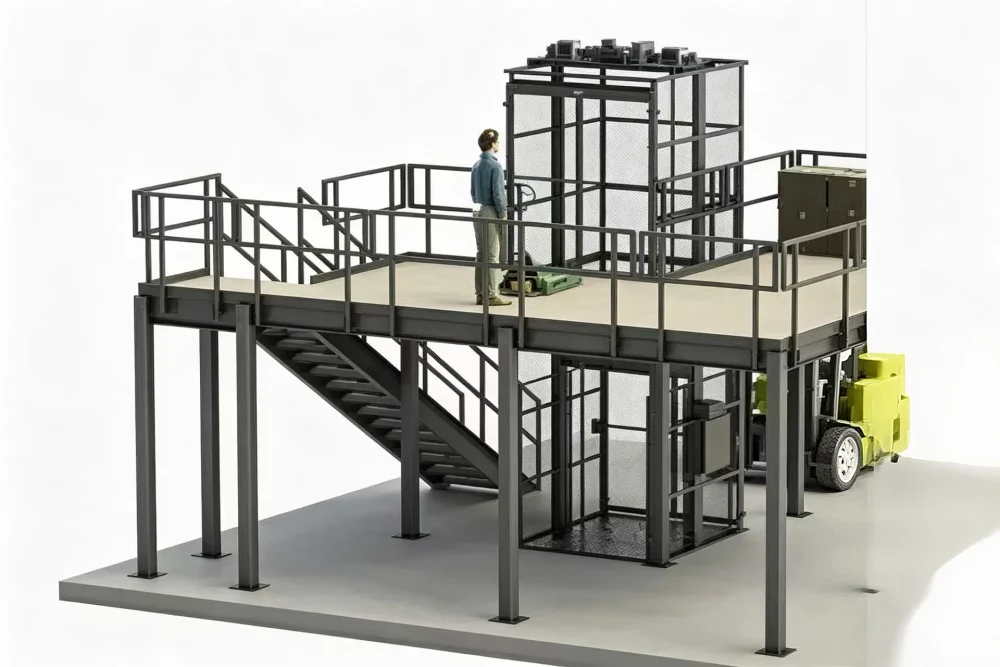
Integrating a heavy-duty vertical cargo freight lift into a warehouse, manufacturing facility, distribution center, fulfillment hub, or commercial mezzanine structure represents a high-impact, strategic investment in internal material handling efficiency, vertical throughput, and workplace safety. Vertical material movement within modern multi-level industrial facilities requires robust engineering capable of transferring palletized inventory, raw manufacturing materials, heavy industrial machinery, and bulk packaged goods seamlessly across multiple building elevations. Installing a high-performance vertical cargo freight lift enables plant operations managers, logistics directors, and facility engineers to eliminate material handling bottlenecks, optimize vertical footprint utilization, and drastically reduce manual labor hazards associated with dangerous forklift transfers and manual stair-climbing transport methods.
Selecting an optimal vertical cargo freight lift requires a thorough, systematic evaluation of driving mechanisms, platform spatial dimensions, maximum payload load ratings, foundation pit depth requirements, structural wall anchors, and strict national safety code compliance standards. Modern industrial material equipment options span from compact guide-rail hydraulic platform systems up to heavy-duty multi-floor continuous chain traction freight elevators. Evaluating floor-to-floor vertical travel heights, structural concrete site conditions, building clearances, and operational daily cycle frequencies ensures business managers invest in a fully customized material handling solution engineered specifically to maximize operational profitability, enhance worker safety, and withstand relentless industrial usage.
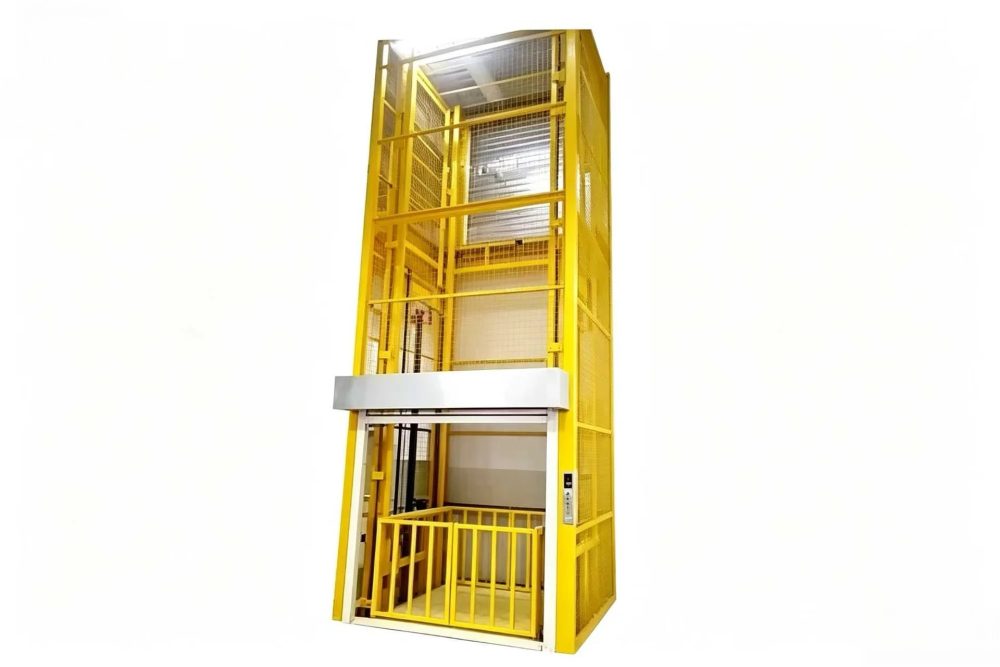
Technical Specifications and Architecture Comparison Matrix
Evaluate the comprehensive technical comparison matrix below to analyze baseline equipment cost ranges, structural foundation pit depth needs, electrical power requirements, maximum vertical travel limits, and ideal application scenarios across primary industrial platform drive architectures:
| Lift Architecture | Baseline Equipment Cost (USD) | Pit Depth Requirement | Electrical Power Specs | Max Vertical Travel | Optimal Application Scenario |
| Single-Cylinder Rail Hydraulic | $5,500 – $9,500 | 4″ to 8″ Shallow Pit | 380V / 415V 3-Phase (15A) | Up to 25 Feet | Mezzanine storage, small factory parts transport |
| Double-Cylinder Rail Hydraulic | $9,000 – $18,000 | 6″ to 12″ Concrete Pit | 380V / 415V 3-Phase (25A) | Up to 45 Feet | Heavy pallet transfers, multi-level logistics warehouses |
| Scissor Drive Hydraulic Lift | $6,000 – $14,000 | 10″ to 18″ Pit (Slab-cut) | 220V / 380V 3-Phase | Up to 20 Feet | High-capacity loading dock transfers, stage lifts |
| Heavy Traction Chain Lift | $16,000 – $32,000 | 12″ to 20″ Standard Pit | 380V / 480V 3-Phase (30A) | Up to 80 Feet | High-rise commercial freight towers, continuous high cycles |
Exploring Core Drive Mechanisms for Industrial Material Lifts
Understanding mechanical propulsion systems and drive dynamics allows logistics managers, plant engineers, architects, and building owners to select the precise vertical cargo freight lift configuration matching their facility layout and site workflow demands.
Hydraulic Rail Drive Platform Systems ($5,500 – $18,000)
Hydraulic guide-rail freight lifts utilize dual heavy-duty fluid cylinders combined with high-tensile leaf chain or wire rope assemblies to hoist the cargo platform smoothly along rigid vertical structural steel H-beam rails.
Heavy Payload Capacity: Designed to support heavy industrial load ratings ranging routinely from 1,000 kg (2,200 lbs) up to over 10,000 kg (22,000 lbs) per lifting cycle.
Low Operational Energy Consumption: Electric energy is consumed exclusively during platform elevation; platform descent relies on gravity-assisted hydraulic valve discharge, keeping overall facility operating power costs exceptionally low.
Structural Flexibility: Does not require a overhead elevator machine room, keeping roof clearance modifications and structural civil engineering expenses minimal.
Scissor-Drive Vertical Cargo Freight Lift Assemblies ($6,000 – $14,000)
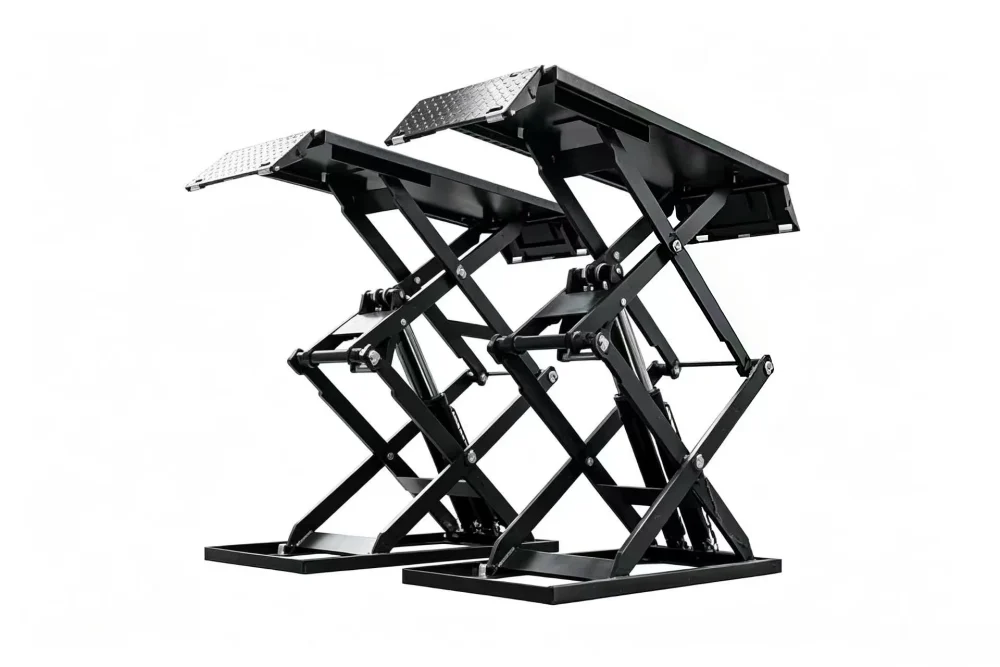
Scissor-action freight platform lifts employ cross-pivoting steel support legs extended by heavy hydraulic rams mounted directly underneath the lifting bed assembly.
High Torsional Rigidity: Exceptional structural stability ensures minimal platform tipping or deflection during heavy electric pallet jack and forklift loading cycles.
Low Overhead Profile: Folds flat into a compact retracted height profile, making it ideal for ground-level outdoor loading docks, pit installations, and short vertical travel spans between split levels.
Traction-Driven Vertical Cargo Freight Lift Elevators ($16,000 – $32,000)
Traction-driven freight elevators use high-torque geared or gearless motor hoists to pull heavy steel cables or double-pitch roller chains over overhead drive sheaves.
High Vertical Reach: Best suited for multi-story industrial logistics complexes, manufacturing towers, and commercial processing facilities requiring travel distances exceeding 40 feet.
Continuous Cycle Endurance: Engineered specifically for heavy-duty, near-continuous 24/7 operational duty cycles in high-throughput fulfillment hubs.
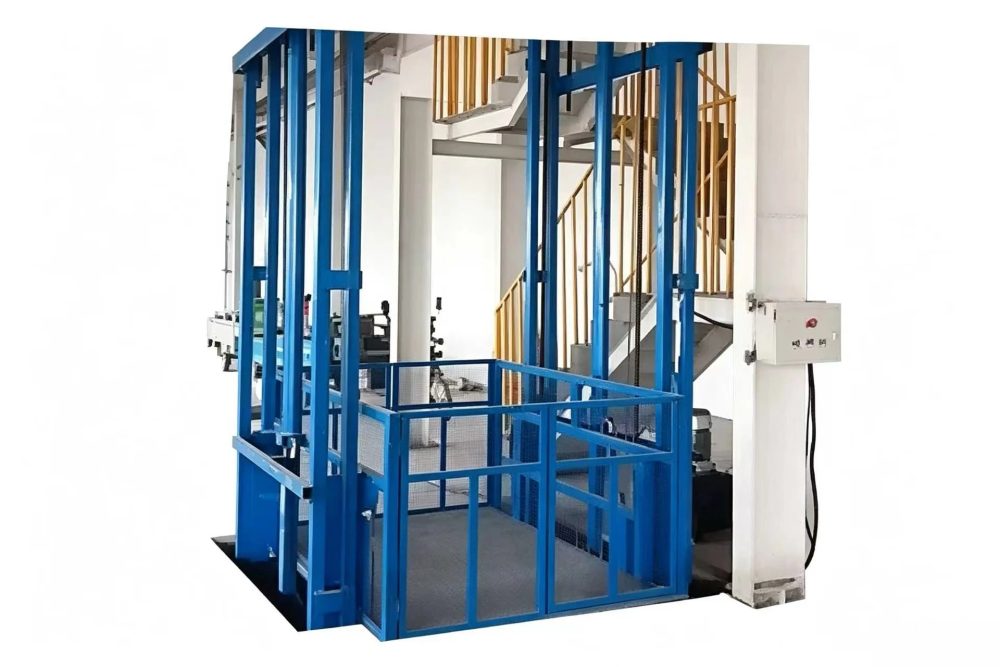
Critical Structural Engineering & Site Preparation Factors
Successfully installing a durable vertical cargo freight lift requires evaluating key site infrastructure requirements prior to factory equipment fabrication and site delivery.
Pit Excavation vs. Surface-Mounted Entry Ramps
Flush Floor Pit Installation: Excavating a shallow concrete pit (typically 4 to 12 inches deep) allows the platform steel surface to rest completely flush with the surrounding finished floor level. This enables manual pallet jacks, hand trucks, and heavy motorized forklifts to drive directly onto the lift bed without structural obstruction.
Surface Mounting with Ramps: Where floor slab cutting or concrete pit excavation is prohibited by structural engineering constraints or leased building terms, mounting the lift directly onto existing concrete floors accompanied by a low-profile steel entry ramp avoids foundation modification costs completely.
Enclosure Walls and Hoistway Guarding Structures
Industrial safety regulations and OSHA standards mandate full vertical shaft protection around any operational vertical cargo freight lift to protect workplace personnel from moving mechanical components:
Expanded Steel Mesh Enclosures: Heavy-duty steel wire mesh wall panels keep freight securely contained within the travel hoistway while maintaining clear visual line-of-sight for machine operators.
Electromechanical Interlocked Landing Doors: Safety-interlocked landing gates ensure shaft enclosure doors cannot open unless the cargo platform is stationary and aligned flush at the designated landing floor level.
Power Infrastructure & Electrical Control Panels
Standard commercial material lifts require dedicated three-phase industrial electrical power (380V, 415V, or 480V at 50/60 Hz). Control panels incorporate Programmable Logic Controllers (PLC) to manage multi-floor stopping accuracy, emergency descent protocols, motor thermal protection, and digital floor display indicators.
Industrial Safety Features & Code Compliance
Equipping a vertical cargo freight lift with multi-tiered redundant safety systems protects factory personnel, prevents inventory damage, and maintains compliance with global industrial material handling regulations (such as ASME B20.1 in North America or CE directives in Europe).
Hydraulic Burst Protection Valves: Hydraulic velocity fuses instantaneously lock hydraulic fluid flow if a hose rupture or pressure drop occurs, preventing platform free-fall.
Electronic Overload Warning Sensors: Load cells and pressure transducers automatically disable lift operation if the maximum rated payload capacity is exceeded, sounding an audible alert.
Mechanical Anti-Drop Safety Pawls: Heavy-duty mechanical safety catches lock the platform carriage directly onto structural steel guide rails if lifting chain tension drops below safety limits.
Emergency Stop Switches and Limit Switches: Prominent emergency stop buttons installed on external wall panels and inside the platform carriage allow immediate shutdown. Dual upper and lower limit switches prevent over-travel past floor levels.
Full-Height Safety Light Curtains: Infrared photo-electric light curtains installed across platform entrances automatically stop lift movement if cargo or personnel breach the perimeter during travel.
Step-by-Step Vertical Cargo Freight Lift Procurement Checklist
Following a systematic checklist ensures your vertical cargo freight lift procurement matches project timelines, engineering specifications, and daily facility throughput requirements:
1. Calculate Maximum Cargo Dimensions and Tonnage Requirements
Measure peak pallet dimensions, container sizes, machinery footprints, and maximum combined load weights (including transport vehicles like motorized pallet jacks or forklift axles).
2. Verify Available Overhead Clearance and Floor Opening Dimensions
Measure available vertical ceiling clearance heights at the top landing floor to ensure sufficient hoistway head room for full platform travel and overhead guard structure clearance.
3. Establish Site Electrical Power Specifications
Confirm standard 3-phase industrial power availability (220V, 380V, or 480V) at the installation site to power high-torque hydraulic pumping stations or electric gearmotors.
4. Review Local Building Codes and Permitting Needs
Verify municipal building permits and material handling lift registration requirements with local safety authorities prior to finalizing equipment layout drawings.
5. Select Warranty Coverage and After-Sales Support Contracts
Partner directly with established manufacturers offering multi-year structural steel warranties (5+ years), ready availability of replacement spare parts, and dedicated technical support.
Long-Term Vertical Cargo Freight Lift Maintenance & Optimization
Establishing a proactive maintenance program ensures peak operational efficiency, minimizes unplanned operational downtime, and extends equipment lifespans across demanding factory production environments.
Scheduled Maintenance Protocol and Inspection Timelines
Monthly Inspection Routine: Inspect lifting chains, steel cable tension, hydraulic hose fittings, oil reservoir levels, and landing door interlock switches for signs of wear or misalignment.
Quarterly Fluid & Electrical Analysis: Test hydraulic oil viscosity and cleanliness to protect pump control valves and cylinder seals from premature abrasive wear. Inspect relay switches and electrical terminals.
Annual Safety Load Tests: Perform full-capacity load drop tests and mechanical brake safety switch calibrations to verify structural safety mechanisms function under load conditions.
Replacement Part Availability and Technical Support
Working directly with an established factory manufacturer guarantees immediate access to critical replacement parts. Stocking essential spare components locally—including replacement control relays, hydraulic solenoid valves, limit switches, oil filter cartridges, and seal kits—ensures fast resolution during routine maintenance or unforeseen operational halts.
Comprehensive Project Investment Budgeting Overview
When planning a facility upgrade, business owners should account for the complete turnkey investment involved in acquiring a high-capacity vertical cargo freight lift:
Core Factory Equipment: $5,500 – $32,000 depending on platform size, travel height, capacity, and drive configuration.
International Freight & Logistics: Shipping, container loading, and customs clearance depending on destination port.
Civil Site Preparation: $800 – $3,000 for concrete pad pouring, floor slab cutting, or pit excavation.
Electrical Line Wiring: $400 – $1,200 for dedicated 3-phase power drops and circuit breakers.
Professional Mechanical Installation: $1,500 – $4,500 for local mechanical assembly, rail alignment, and safety testing.
Accounting for these budgeting factors upfront provides clear capital expenditure visibility and ensures a seamless project execution timeline.
Frequently Asked Questions (FAQ)
Q1: Can personnel ride on a vertical cargo freight lift?
No. Standard vertical material lifts (VRCs) are engineered exclusively for unattended freight, equipment, and goods transport. Transporting human passengers requires full commercial freight elevator certification with additional passenger enclosure standards.
Q2: What is the typical lead time for custom freight lift manufacturing?
Factory engineering design and custom fabrication generally require 20 to 25 business days, depending on platform dimension customizations, vertical travel height, capacity requirements, and landing door interlock configurations.
Q3: Is a deep concrete elevator pit required for installation?
No. Most hydraulic rail lifts require only a shallow pit depth between 4 inches and 12 inches. If pit excavation is impossible due to building constraints, an entry ramp can be installed instead.
Q4: Can a vertical cargo freight lift be installed outdoors?
Yes. Outdoor installations feature hot-dip galvanized structural steel rails, IP65-rated weatherproof control boxes, stainless steel hardware, rain covers, and water-resistant drive enclosures for harsh weather conditions.
Q5: How often should hydraulic fluid be replaced?
Under normal single-shift operating conditions, hydraulic fluid should be refreshed every 12 to 18 months to ensure optimum valve actuation, smooth platform travel, and extended pump life.
Q6: What is the maximum lifting capacity for custom cargo lifts?
Custom hydraulic guide rail lifts can be engineered to support heavy payloads ranging from 1,000 kg (2,200 lbs) up to over 20,000 kg (44,000 lbs) for heavy industrial and vehicular transfer applications.
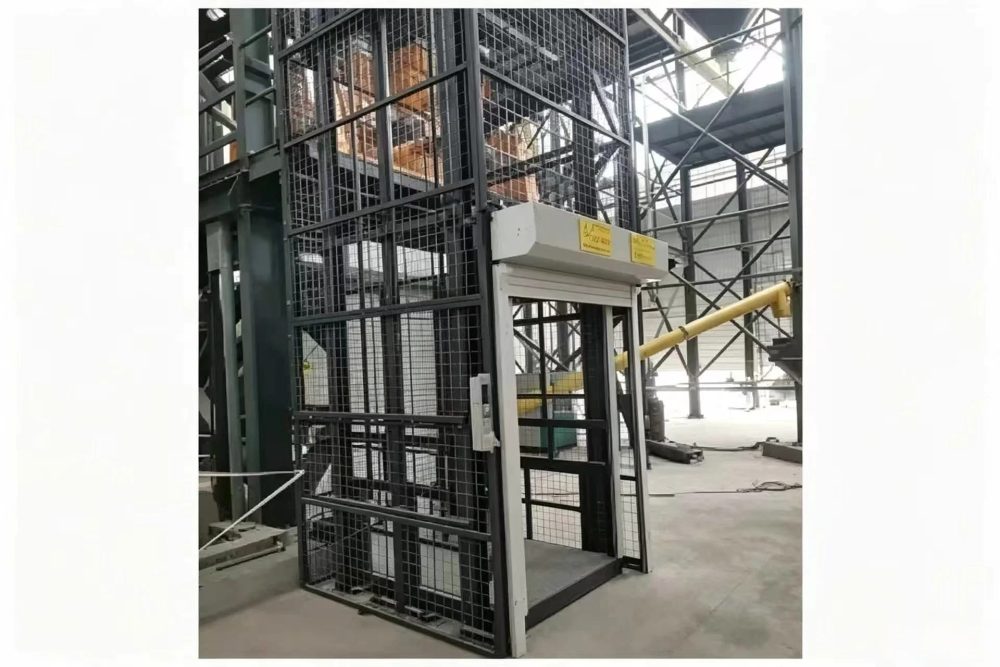
Upgrade Your Facility Vertical Logistics Today
Investing in a high-capacity vertical cargo freight lift restores operational efficiency, eliminates internal logistics bottlenecks, improves workplace safety, and maximizes multi-story facility space utilization.
For custom engineering CAD dimensional drawings, structural loading specifications, site assessment assistance, or direct factory pricing on a tailored vertical cargo freight lift, contact our technical specialists today:
Email: [email protected]
Phone / WhatsApp: +86 189 5417 1380
 French
 English
 Arabic
 Korean
 Spanish
 German
 Russian