
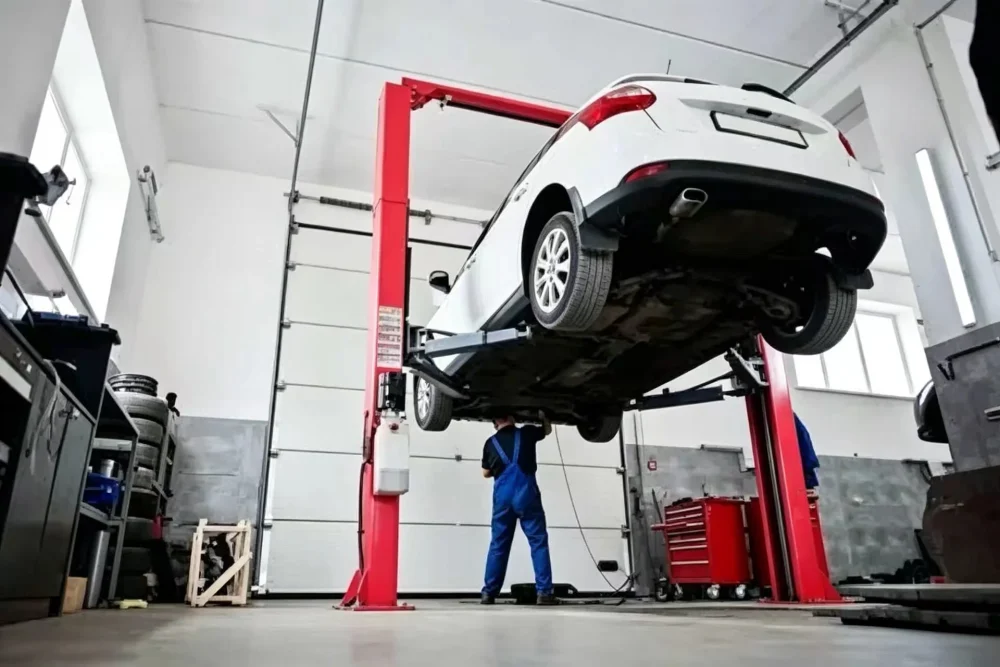
Maximizing operational efficiency in an automotive facility goes beyond purchasing premium diagnostic software or high-end air tools; it fundamentally requires choosing the right machinery to raise vehicles safely. Whether you run a high-volume commercial service station or manage a dedicated home garage project, finding the proper car repair lift is one of the most critical structural decisions you will make. Having a dependable car repair lift ensures smooth daily workflows, protects technician safety, and opens up unrestricted access to the undercarriage for complex assemblies.
However, selecting from the vast array of automotive hoists on the market can be daunting. Because different lifting setups are engineered around specific space limitations, floor weight requirements, and vehicle profiles, a single “perfect” solution for every garage does not exist. Instead, the modern industry relies on a strategic spectrum of designs—ranging from clear-floor two-post units to heavy-duty four-post drive-on platforms—tailored to specific bay sizes and servicing goals. Choosing a factory-verified car repair lift model means balancing your current throughput with potential future expansion.
Why the Right Hoist Selection Matters
Investing in a high-quality vehicle hoisting system directly impacts your bay’s weekly throughput, operational safety, and long-term business overhead. Installing an underpowered or poorly sized car repair lift can create immediate bottlenecks, forcing your crew to turn away larger passenger trucks or work in cramped, dangerous conditions beneath a low-clearance setup. Conversely, purchasing an oversized commercial car repair lift without analyzing your floor slab thickness wastes budget on unnecessary structural concrete modifications.
When evaluating a potential automotive hoist, you cannot look solely at the maximum load capacity. You must also consider how the physical structure of the car repair lift interacts with your shop’s architecture—specifically the ceiling height, concrete depth, and overall bay width. Aligning your operational needs with a proven, industry-standard car repair lift design allows your team to complete tire changes, brake work, and exhaust repairs faster, dramatically boosting your facility’s earning potential. Furthermore, opting for a regular car repair lift layout makes it easier for building inspectors to review and approve your blueprints.
Major Types of Vehicle Lifts and Their Applications
Automotive hoists are generally categorized by their structural framework and how they hold a vehicle. As you look through options, understanding these core designs will help you determine which car repair lift fits your specific space.
Two-Post Lifts
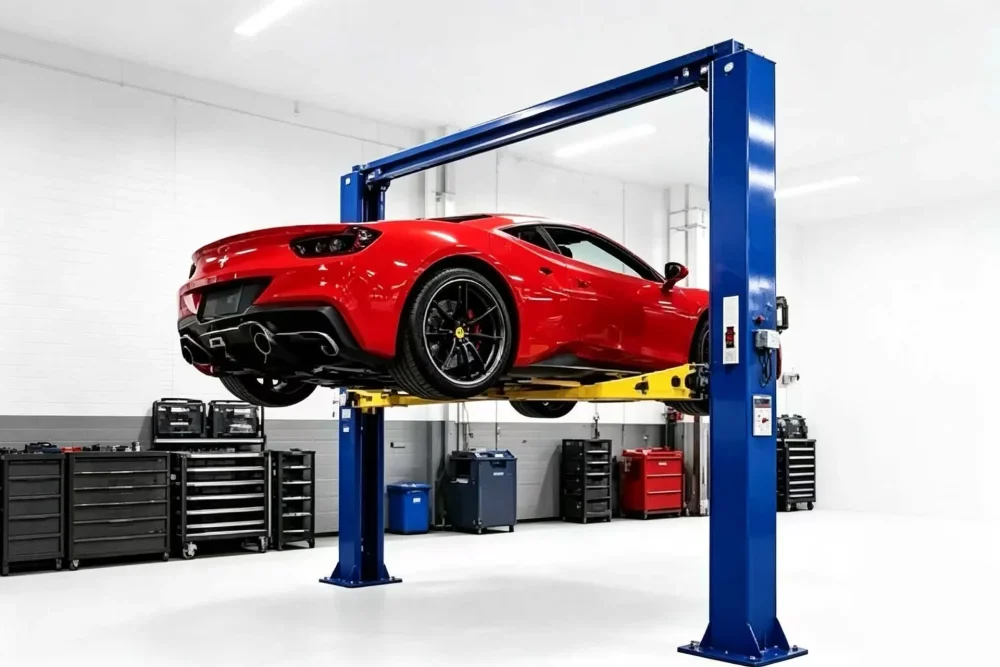
Widely recognized as the absolute backbone of commercial repair facilities, two-post systems offer unbeatable undercarriage access by lifting vehicles by their frame.
Key Benefit: Leaves all four wheels completely free for suspension, brake, and drivetrain work.
Slab Requirement: Typically requires a thick, reinforced concrete foundation to support the anchor bolts safely.
Best Use Case: High-volume service centers handling general mechanical repairs on passenger sedans and light SUVs using a flexible car repair lift setup.
Four-Post Lifts
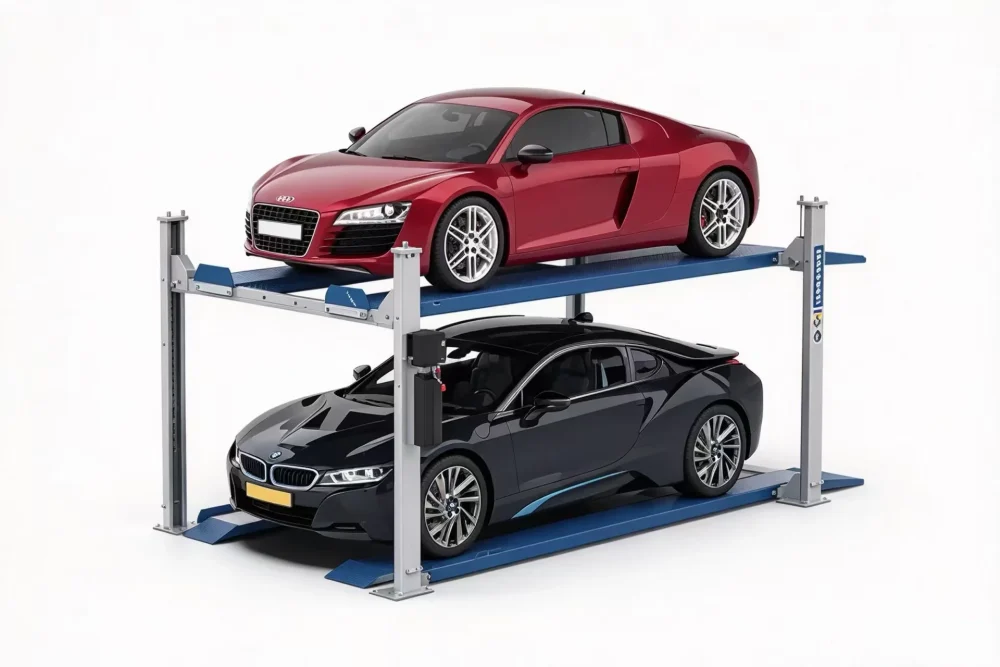
Featuring drive-on runways, four-post systems offer exceptional stability and ease of loading. They are highly favored for wheel alignment procedures and long-term storage configurations.
Key Benefit: Incredibly easy to load since you simply drive the vehicle onto the tracks without positioning swing arms.
Slab Requirement: Distributes vehicle weight across four wide baseplates, making them less demanding on concrete thickness.
Best Use Case: Quick-lube centers, alignment bays, and home hobbyists looking to stack two vehicles in a single bay slot with a stable car repair lift platform.
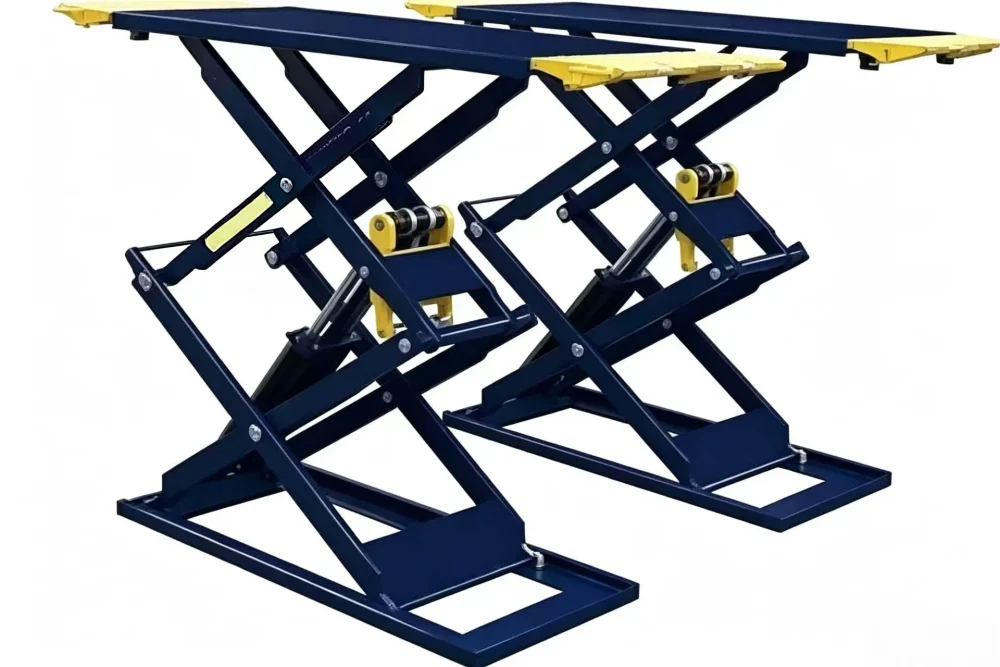
시저스 리프트
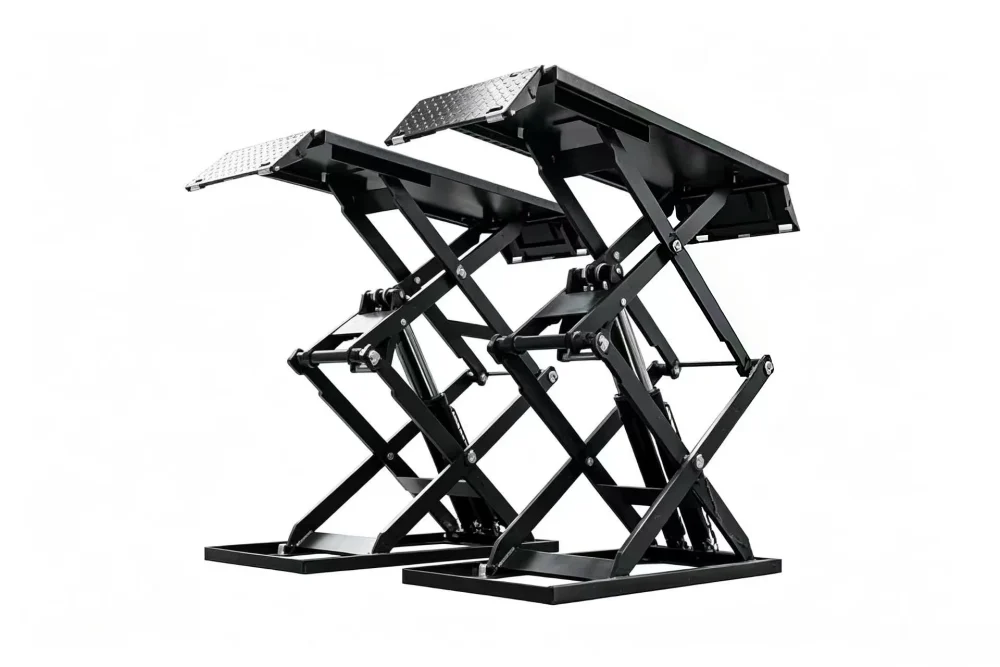
If you are operating out of a facility with narrow bays or low ceilings, a mid-rise or full-rise scissor style car repair lift might be the ideal option.
Key Benefit: Features a low-profile footprint that retracts flat against the floor or sits completely flush when recessed.
Slab Requirement: Spreads weight across a wide metal frame footprint, minimizing concentrated stress points on the floor.
Best Use Case: Autobody paint shops, detailing bays, and tire service stations where center-undercarriage access isn’t the primary focus.
Core Specifications and Comparison Overview
To help you visualize how different styles dictate your bay footprint and structural needs, the following table outlines the general technical specifications commonly found across modern shop installations. Choosing a factory-verified car repair lift ensures that all structural components line up perfectly during the assembly phase.
| Lift Configuration | Average Weight Capacity | Minimum Ceiling Height Required | Floor Concrete Minimum Thickness | Best Suited Applications |
| Two-Post Symmetric | 4,000 kg – 5,000 kg | 3,600 mm – 4,000 mm | 100 mm – 150 mm | Drivetrain, suspension, general mechanics |
| Two-Post Asymmetric | 3,500 kg – 4,500 kg | 3,600 mm – 3,900 mm | 100 mm – 150 mm | Passenger cars, easy door-opening clearance |
| Four-Post Drive-On | 4,500 kg – 6,500 kg | 3,200 mm – 3,500 mm | 100 mm | Wheel alignments, vehicle storage, oil changes |
| Mid-Rise Scissor | 3,000 kg – 3,500 kg | 2,600 mm – 2,800 mm | 100 mm | Detailing, brake service, wheel swaps |
| Heavy-Duty Mobile Column | 15,000 kg+ (Combined) | Variable (Outdoor capable) | 150 mm+ | Transit buses, municipal trucks, heavy fleets |
Note: The specifications listed above serve as a general benchmark. Always consult with a structural engineer and review the manufacturer’s exact product documentation before drilling anchor holes or installing your new car repair lift system.
Critical Factors Influencing Your Shop Layout
Selecting the ideal car repair lift requires a detailed analysis that reaches far beyond the curb weight of the vehicles you service. You must look closely at your workflow and physical environment to ensure the new car repair lift functions smoothly.
1. Concrete Strength and Anchor Integrity
A commercial car repair lift is only as safe as the floor beneath it. For two-post models, the massive leverage exerted by a suspended vehicle places immense tension on the anchor bolts. Most manufacturers require a minimum concrete rating of 3,000 PSI, free of cracks or major seams near the columns. If your floor does not meet these criteria, you may need to cut out a section of the slab and pour reinforced footings before completing the setup of your car repair lift.
2. Ceiling Clearance and Overhead Obstructions
Before finalizing a purchase, measure from the floor to the lowest hanging ceiling joist, fire sprinkler line, or light fixture. If you choose a clear-floor two-post model, the overhead equalization bar requires significant height. For lower structures, a baseplate model or a mid-rise scissor layout keeps the mechanism closer to the floor while ensuring your car repair lift has enough clearance at its highest point.
3. Vehicle Variety and Arm Configuration
Are you working on compact electric vehicles, low-slung sports cars, or long-wheelbase diesel trucks? A versatile car repair lift must feature adjustable swing arms and a selection of drop-in height adapters to safely reach the designated factory lifting points without damaging side skirts, batteries, or running boards.
Maximizing Operational Efficiency and Traffic Flow
Integrating a professional car repair lift into your workshop requires clever planning to avoid internal traffic jams. Beyond the static footprint of the metal columns, you need to account for the dynamic space required when vehicle doors are wide open or when a technician is maneuvering a heavy transmission jack around the raised car repair lift platform.
A frequent planning mistake is crowding the hoist too close to a back wall or tool storage area. For maximum safety and tool accessibility, it is highly recommended to maintain at least 1.2 meters of open walkway entirely around the perimeter of the vehicle when it is raised. This allows technicians to roll tool carts, oil drains, and tire changers through the workspace without bumping into structural supports, keeping the shop floor organized and highly productive.
Hydraulic vs. Pneumatic Locking Mechanisms
The internal safety lock system of your chosen machinery plays a major role in your daily shop operations and maintenance schedules.
Hydraulic and Mechanical Lock Systems
Most standard two-post and four-post setups utilize a heavy-duty hydraulic pump to raise the carriages, paired with automatic mechanical safety locks that drop into pre-machined slots inside the columns.
Operation Style: As the vehicle rises, you will hear a distinct mechanical clicking sound. Once reached, the operator lowers the lift slightly so it rests securely on the hard metal locks, relieving hydraulic system pressure.
Maintenance Profile: Extremely reliable and simple to maintain, requiring only routine cleaning of the columns and periodic checks on the lock return springs of your car repair lift.
Air-Release Safety Systems
Premium versions of the modern car repair lift often incorporate pneumatic push-button safety releases to speed up workflows.
Operation Style: Instead of pulling a manual release cable at each column, the technician simply holds a button on the main control box, using shop air pressure to disengage the safety latches automatically.
Maintenance Profile: Requires a clean, dry shop air connection to prevent moisture from degrading the internal pneumatic cylinders over time.
Adhering to Rigorous Safety and Compliance Protocols
Prioritizing safety compliance when selecting shop equipment shields your business from costly liability and ensures your workforce stays protected. Reputable car repair lift models undergo third-party testing to earn strict safety certifications, verifying that their structural frames, hydraulic hoses, and load-holding valves can handle extreme conditions. Investing in a compliant car repair lift safeguards your workforce and minimizes liability.
When your shop utilizes a certified car repair lift, scheduling annual safety inspections and sourcing genuine replacement components becomes a seamless process. Standardized components ensure that if a seal kit or hydraulic hose needs replacement, the turnaround time is minimal. This structural reliability keeps your bay up and running, ensuring you don’t lose valuable service hours to unexpected mechanical failures.
Practical Checklist for Measuring Your Service Bay
If you are getting ready to consult with an equipment supplier or request a formal quote for an automotive hoist, gathering precise spatial dimensions beforehand will make the process much smoother. Take the time to complete this checklist:
Bay Width: Measure the total clear horizontal distance from wall to wall to ensure the car repair lift columns fit comfortably.
Bay Depth: Determine the total drive-in depth to ensure the longest vehicle you plan to service can fit completely inside the building with the shop doors closed.
Ceiling Height: Note the minimum vertical clearance, paying close attention to overhead door tracks and hanging heaters that might obstruct the raised vehicle.
Slab Verification: Core-drill or inspect your shop floor blueprints to verify the depth and structural capacity of the concrete slab before anchoring your car repair lift.
Conclusion: Elevating Your Automotive Capabilities
Finding the perfect balance between lift capacity, budget, and bay dimensions doesn’t have to be a complicated puzzle. By accurately assessing your daily vehicle mix, inspecting your concrete base, and choosing an appropriate car repair lift, you can transform your workspace into a highly efficient environment. A well-chosen car repair lift remains an asset that scales alongside your enterprise, paying dividends in speed, convenience, and technician safety for years to come.
자주 묻는 질문
What is the main difference between an asymmetric and symmetric two-post lift?
Symmetric models feature columns facing directly toward each other, dividing the vehicle weight evenly (50/50) across the columns. Asymmetric models feature rotated columns and angled arms, positioning the vehicle slightly rearward. This allows you to open the vehicle doors much wider, providing easy access to the interior while the car is positioned on the car repair lift.
Can a standard car repair lift be installed on an outdoor concrete pad?
While some heavy-duty mobile columns or specially coated four-post systems are rated for outdoor use, standard shop lifts are engineered for indoor installation. Exposing a standard car repair lift to wind, rain, and temperature swings can trigger rapid corrosion and premature component failure.
How often should my automotive hoist undergo a professional safety inspection?
To maintain a safe working environment and comply with regional workplace safety mandates, your car repair lift should undergo a comprehensive professional inspection at least once every 12 months. This includes testing the mechanical safety locks, checking for hydraulic fluid leaks, and inspecting anchor bolt torque.
What is the best type of lift if I have a low ceiling in my garage?
If your ceiling height is under 3 meters, a mid-rise scissor hoist or a low-clearance baseplate model is usually the best option. These configurations allow you to safely utilize a car repair lift to raise passenger cars high enough to perform wheel, brake, and body work without risking contact with the ceiling structure.
Need Expert Guidance?
Finding the ideal balance between your garage layout and equipment specifications is key to a successful, safe installation. For personalized engineering support, detailed technical drawings, or a tailored quote based on your specific workshop requirements, feel free to reach out to our technical team:
Email: [email protected]
Phone / WhatsApp: +86 189 5417 1380
Contact Us
 Korean
 English
 Arabic
 French
 Spanish
 German
 Russian