
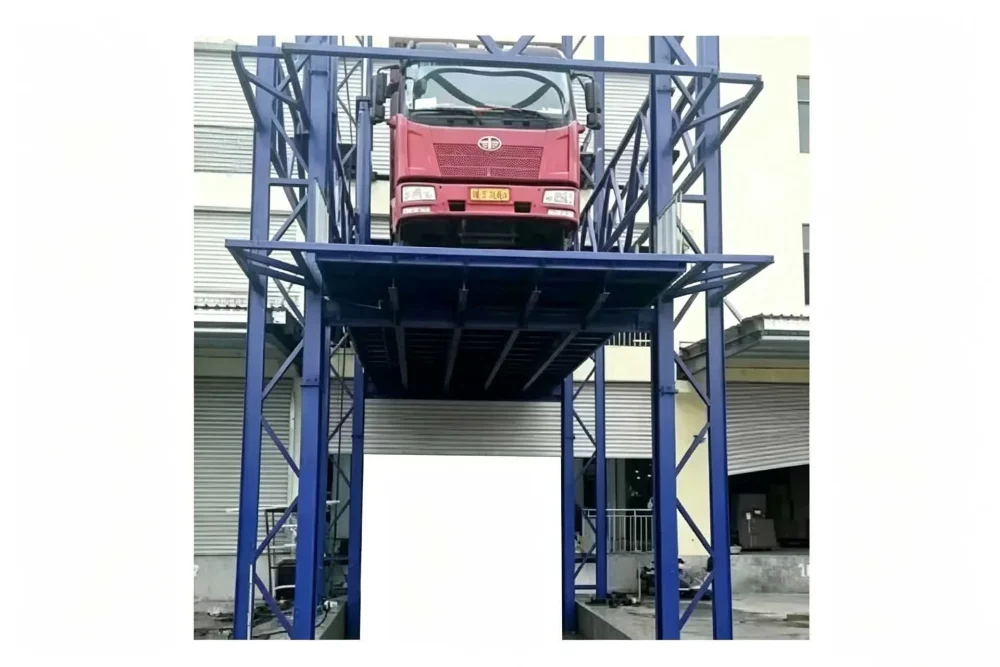
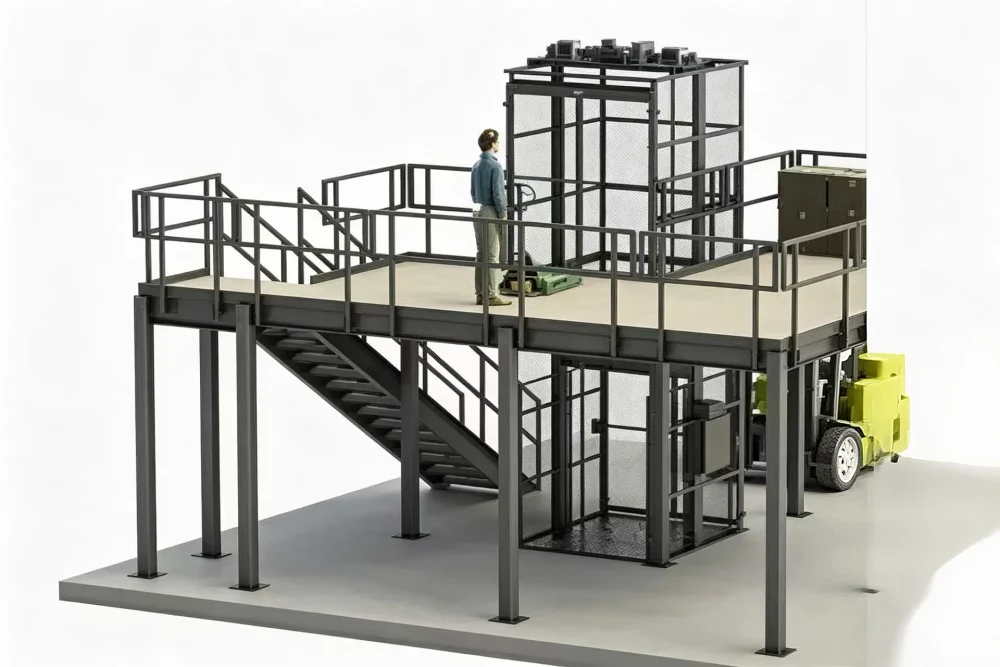
Modern warehousing, manufacturing hubs, and multi-tier distribution centers require continuous material flow across elevated mezzanine floors and storage levels. Moving bulk pallets, heavy machinery, and dense cargo manually up freight stairs is slow, labor-intensive, and hazardous. Installing a custom heavy duty cargo lift for warehouse facilities provides a high-capacity vertical transport channel that streamlines internal supply chain movement while maximizing vertical storage space.
Understanding the Operational Impact of Heavy Duty Warehouse Freight Lifts
Industrial material handling relies on speed, structural safety, and high equipment uptime. Replacing traditional forklift-only elevation methods with a dedicated heavy duty cargo lift for warehouse operations reduces forklift traffic, prevents floor congestion, and minimizes costly goods damage.
Whether incorporated into new logistics parks or retrofitted onto existing industrial warehouse floors, vertical freight platforms maximize usable cubic space. By connecting ground floor unloading bays directly with upper mezzanine racks, integrating an engineered heavy duty cargo lift for warehouse use boosts daily throughput and reduces operational overhead.
Primary Industrial Application Environments
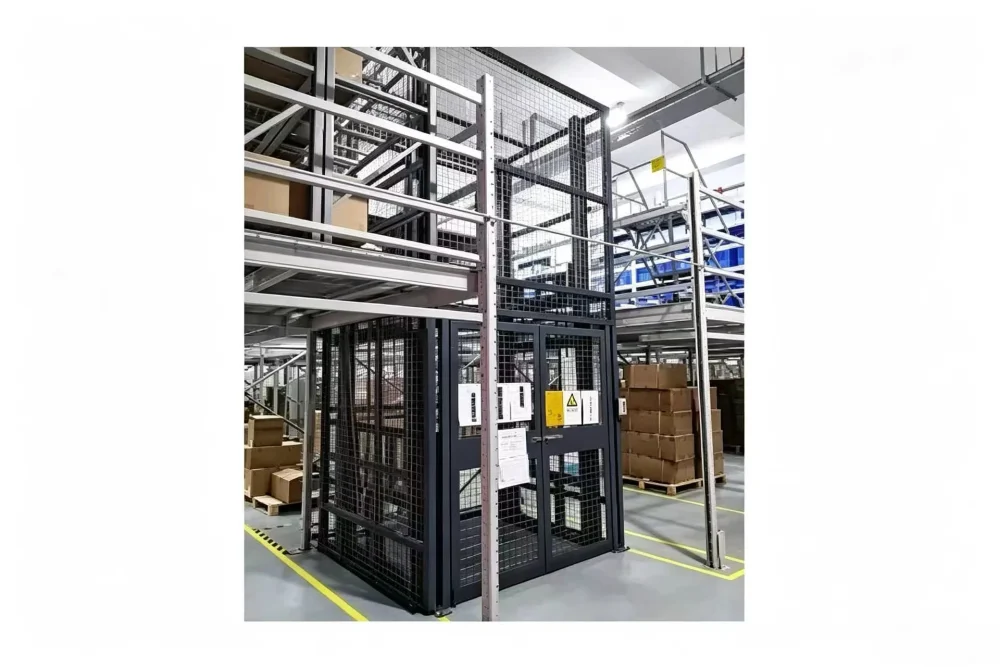
Multi-Tier Warehouse Mezzanines: Moves heavy palletized inventory directly from ground loading docks to upper storage floors using a heavy duty cargo lift for warehouse operations.
Manufacturing Assembly Facilities: Delivers raw materials and heavy tooling across multi-story production lines efficiently.
Logistics Distribution Hubs: Speeds up freight sorting, pallet transfer, and outbound staging during peak peak-demand cycles.
Industrial Cold Storage Vaults: Provides heavy-duty vertical transport inside climate-controlled commercial refrigeration facilities.
Technical Features That Define High-Capacity Cargo Lift Performance
Selecting an industrial freight platform requires understanding drive mechanisms, platform structural reinforcement, and automated safety systems. Long-term reliability under heavy load cycles relies on robust steel framing, precision hydraulic cylinders, and industrial guide rails built into your heavy duty cargo lift for warehouse.
Advanced Hydraulic and Guide Rail Engineering
The primary drive and support framework determine lifting smooth capacity, platform stability, and service longevity:
Heavy-Duty Hydraulic Cylinder Drives: High-pressure hydraulic rams paired with chain equalization networks provide smooth vertical lifting for loads up to 10,000 kg. Hydraulic systems deliver high durability and low energy consumption during descent.
Precision Structural Guide Rail Columns: Dual or quad H-beam steel guide columns prevent platform sway and tilt during uneven pallet loading by heavy forklift trucks.
Reinforced Heavy-Duty Platform Construction
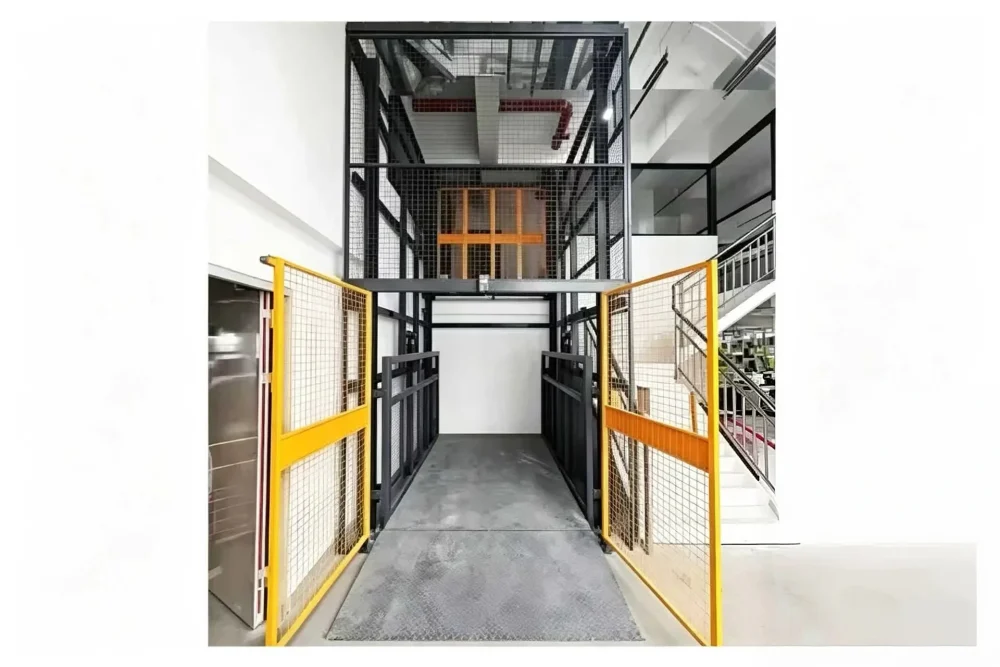
Industrial platform floors face severe point-loading forces during loading. Quality units use heavy-gauge steel diamond plate, reinforced channel sub-framing, and perimeter safety enclosures. Choosing an engineered heavy duty cargo lift for warehouse applications with non-skid flooring ensures safe transit for heavy motorized pallet jacks.
Comprehensive Technical Specifications Matrix
Review the comparison matrix below to evaluate standard technical configurations across industrial freight platform options:
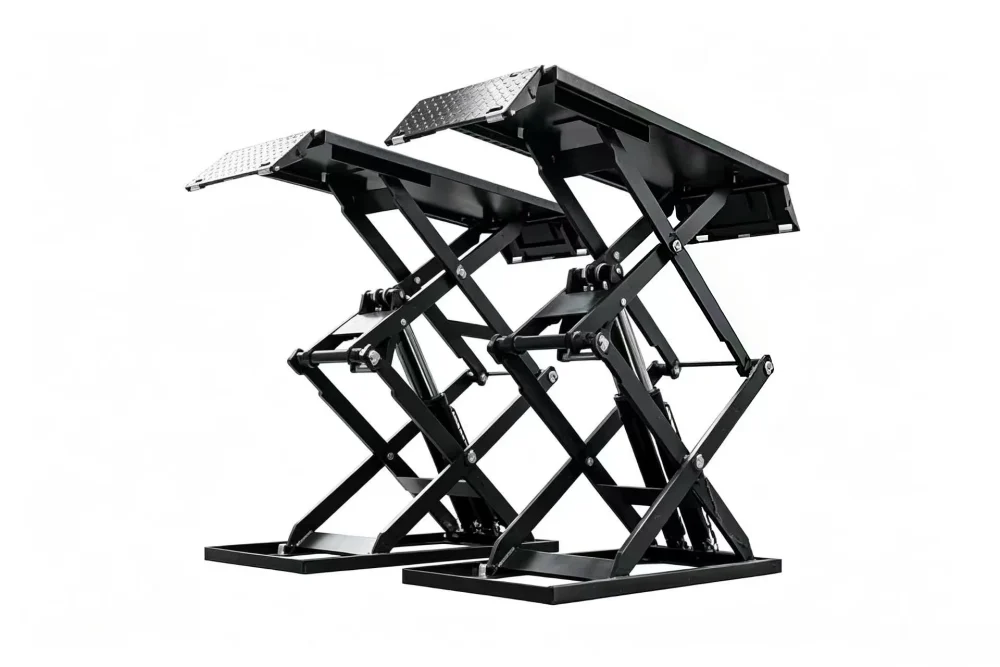
| Performance Metric | Heavy-Duty Hydraulic Rail Lift | Multi-Scissor Freight Lift | Fully Enclosed Industrial Shaft Lift |
| Maximum Load Capacity | 1,000 kg – 10,000 kg | 2,000 kg – 8,000 kg | 3,000 kg – 15,000 kg |
| Max Lifting Height | Up to 20.0 m | Up to 6.0 m | Up to 30.0 m |
| Platform Deck Dimensions | 2,000 mm × 3,000 mm | 2,500 mm × 4,000 mm | 3,000 mm × 6,000 mm |
| Drive Mechanism Type | Hydraulic Cylinder & Chain | Hydraulic Scissor Arm | Heavy Hydraulic / Traction |
| Pit Depth Requirement | Shallow Pit (150–300 mm) or Ramp | Recessed Pit (300–600 mm) | Standard Pit (500–1,200 mm) |
| Enclosure Protection | Steel Wire Mesh / Sheet Enclosure | Bellows Shield / Mesh | Solid Steel Shaft Enclosure |
| Primary Advantage | High vertical rise & small footprint | Extreme stability at low heights | Maximum payload & full shaft protection |
Key Operational Advantages for Modern Warehousing
Investing in a dedicated industrial freight platform brings clear productivity, safety, and floor space benefits to busy commercial facilities.
1. Maximizing Vertical Storage Footprints
Constructing horizontal warehouse extensions requires expensive land acquisition and high building costs. Deploying a vertical heavy duty cargo lift for warehouse logistics allows businesses to build upward, utilizing high-ceiling mezzanine levels and maximizing storage density within existing building footprints.
2. Streamlining Heavy Pallet and Machinery Transfer
Moving heavy machinery, large crates, or bulk pallets between floors using forklifts presents severe tip-over risks at high mast elevations. Utilizing a dedicated heavy duty cargo lift for warehouse transport provides a stable, fully enclosed platform designed specifically for safe multi-ton load capacity.
3. Enhancing Workplace Safety for Industrial Operators
Manual material handling on industrial stairs causes frequent workplace injuries and lost-time claims. Operating an automated heavy duty cargo lift for warehouse inventory keeps workers off stairs, utilizing simple push-button floor call controls to transfer materials safely.
4. Customizing Modular Enclosures and Gates
Industrial facilities feature varied loading bay configurations, overhead clearances, and forklift traffic paths. Modern lifts offer flexible entry-exit options, including opposite, side, or adjacent loading doors, wire mesh enclosures, and automated interlocking vertical doors tailored to your heavy duty cargo lift for warehouse floor layout.
Essential Site Planning and Civil Pre-Installation Steps
Achieving a safe installation requires simple site preparation before equipment arrives on site. Plant managers, facility engineers, and general contractors planning for a heavy duty cargo lift for warehouse integration should coordinate several key civil steps:
Concrete Floor Slab and Pit Preparation
Poured Concrete Pit Foundation: Heavy-duty lifts require a level concrete pit (typically 150 mm to 300 mm deep) so the platform floor rests flush with the surrounding warehouse slab when lowered.
Surface Ramp Alternative: If floor excavation is impossible due to post-tensioned slabs, a durable steel ramp provides smooth ground-level roll-on access for your heavy duty cargo lift for warehouse.
Structural Support and Wall Anchor Verification
The vertical guide rail columns must anchor securely to concrete floor slabs, mezzanine steel framing, or structural building columns. Contractors must verify wall loading capacities to support lateral forces from the heavy duty cargo lift for warehouse.
Electrical Supply and Utility Routing
Industrial lifts require heavy single-phase or three-phase power (220V/380V/440V) to run high-torque hydraulic pump motors. Route dedicated power lines directly to the main system control panel adjacent to the lift base.
Critical Safety Features for Industrial Material Handling
Industrial cargo platforms incorporate comprehensive safety systems to protect operators, equipment, and facility infrastructure:
Overload Warning and Cut-Off Sensors: Electronic weight sensors prevent platform activation if cargo exceeds the rated payload capacity of your heavy duty cargo lift for warehouse.
Anti-Fall Mechanical Safety Locks: Heavy-duty mechanical safety latches engage with guide rail slots automatically, preventing platform drop in the event of hydraulic pressure loss.
Electro-Mechanical Gate Interlocks: Enclosure gates remain securely locked until the platform settles level with the selected landing floor on your heavy duty cargo lift for warehouse.
Emergency Stop Buttons and Hose Burst Valves: Control panels feature prominent emergency stop buttons, while velocity fuses halt fluid drainage instantly if a hydraulic line fails.
Comprehensive Preventive Maintenance Strategy
Following a regular maintenance schedule keeps industrial freight lifts operating efficiently and prevents unplanned facility downtime:
Monthly Mechanical Inspections
Clean guide rail channels and apply fresh lithium grease to roller chains and guide bearings on your heavy duty cargo lift for warehouse.
Inspect hydraulic fluid levels, hose fittings, and pump pressure output for leaks.
Test floor interlocks, gate switches, and emergency stop buttons.
Inspect wire rope equalizer tension and safety latch engagement.
Annual Systems Auditing
Conduct full-capacity load testing on your heavy duty cargo lift for warehouse to verify hydraulic cylinder pressure and safety lock response.
Inspect concrete anchor bolts, floor welds, and wall brackets.
Audit electrical motor relays, terminal connections, and hydraulic oil clarity, replacing fluid filters as required.
Comparing Industrial Cargo Lifts with Alternative Freight Options
Evaluating how dedicated hydraulic cargo lifts compare to alternative vertical transport systems helps clarify facility purchasing choices:
Versus Traditional Freight Elevators
Traditional commercial passenger/freight elevators require deep pit construction, heavy overhead machine rooms, and substantial financial investment. Installing an industrial heavy duty cargo lift for warehouse material handling delivers high payload capacity at a fraction of the cost, installing rapidly with minimal building modification.
Versus Overhead Bridge Cranes and Forklifts
Using forklifts or bridge cranes to elevate pallets to second-floor mezzanines occupies valuable floor space and exposes workers to overhead hazards. Utilizing a vertical heavy duty cargo lift for warehouse transport confines material movement within an enclosed safety shaft, protecting nearby personnel.
Frequently Asked Questions (FAQ)
Q1: What is the maximum load capacity for a heavy duty cargo lift for warehouse applications?
Custom hydraulic freight lifts support payloads ranging from 1,000 kg up to 10,000 kg (approx. 2,200 to 22,000 lbs) or more, depending on structural column configurations.
Q2: Can a heavy duty cargo lift for warehouse be installed without a pit?
Yes. If floor excavation is restricted, a shallow platform can be surface-mounted on the warehouse slab using a low-profile steel entry ramp.
Q3: Are these lifts rated to transport human passengers?
No. Cargo lifts are engineered strictly for material transport, bulk goods, and machinery. Floor call-and-send stations allow operators to send goods safely between floors without riding inside.
Q4: How long does field installation typically take?
Field assembly and mechanical alignment of a standard two-stop heavy duty cargo lift for warehouse system usually take between 3 and 5 working days once pit and electrical prep are complete.
Q5: Can the platform deck size be customized to fit specific pallet dimensions?
Yes. Platform deck sizes are fully customizable to accommodate oversized machinery, double-pallet configurations, or motorized forklift equipment.
Q6: What safety protections prevent the lift from falling if a hydraulic hose fails?
Integrated hydraulic velocity fuses automatically seal fluid flow if pressure drops rapidly, while mechanical anti-fall locks grip the guide rails to prevent platform movement.
Q7: Can a heavy duty cargo lift for warehouse be installed outdoors against an exterior wall?
Yes. Exterior models feature IP65 weather-sealed control boxes, waterproof motors, anti-corrosion paint finishes, and protective mesh or sheet cladding.
Enhance Your Facility Logistics and Productivity Today
Upgrading your warehouse with an engineered vertical freight platform boosts material throughput, protects workers from handling hazards, and maximizes space utilization. Selecting a custom heavy duty cargo lift for warehouse operations tailored to your floor layout guarantees reliable, heavy-duty performance for years to come.
For technical advice, dimensional site drawings, or pricing details, contact our engineering team:
Email: [email protected]
Phone / WhatsApp: +86 189 5417 1380
 Korean
 English
 Arabic
 French
 Spanish
 German
 Russian