
When expanding vertical storage in a modern industrial facility, optimizing unused overhead space often becomes the highest-priority operational challenge. Expanding horizontally by leasing or purchasing additional square footage incurs substantial overhead costs, long transition timelines, and ongoing real estate tax burdens. Building a structural mezzanine level offers a cost-effective alternative for adding floor space without enlarging your building footprint. However, an elevated platform is only as efficient as the vertical material transport system supporting it. Moving heavy pallets, bulk raw materials, and machinery components between the ground level and upper decks using forklifts or manual handling creates unnecessary hazards and bottlenecks.
Integrating a custom cargo lift for mezzanine floor operations establishes a dedicated, reliable vertical bridge, transforming elevated space into an active, seamlessly accessible work zone.
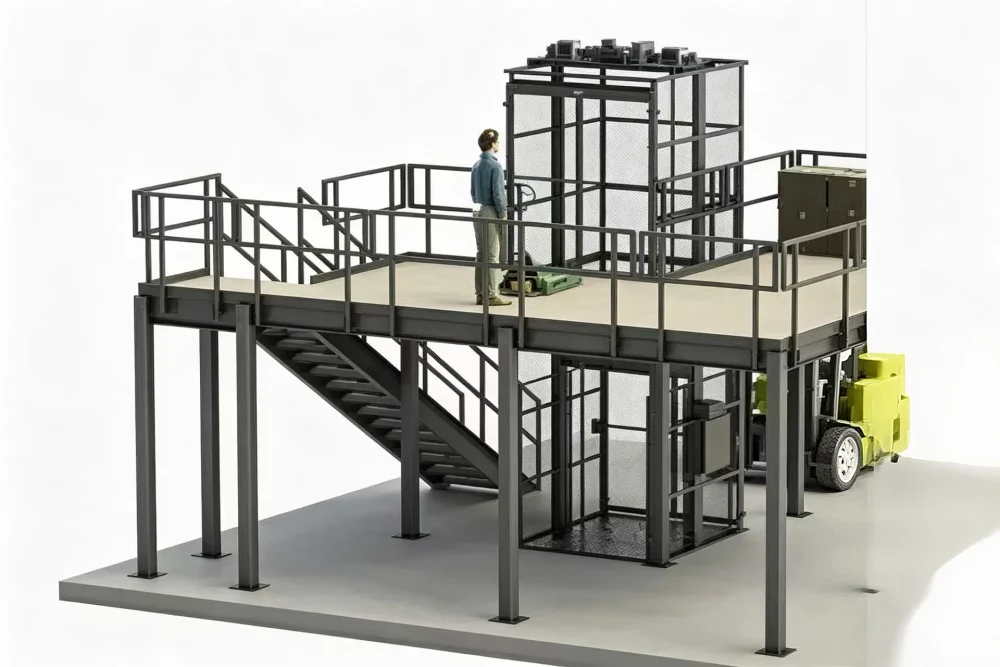
Understanding Custom Cargo Lift Systems for Elevated Platforms
A mezzanine goods elevator—often referred to as a vertical reciprocating conveyor (VRC)—is an industrial lifting system engineered specifically to move heavy loads, equipment, and bulk inventory between elevated floor levels. Unlike traditional passenger elevators, these vertical transport solutions focus exclusively on material transfer, operating under distinct safety standards and industrial machinery guidelines.
While standard, off-the-shelf lifting platforms exist, most industrial facilities present unique spatial constraints: restricted ceiling clearances, specific door entry orientations, precise platform dimension limits, or heavy load capacity requirements. Ordering a rigid, standardized model often forces costly structural modifications to the facility itself. Choosing a custom cargo lift for mezzanine floor applications eliminates these operational compromises by aligning every structural element—from carriage dimensions to hydraulic drive power units—directly with your site geometry and daily material throughput.
Key Operational Benefits of Custom Vertical Freight Lifts
Maximizing Usable Storage Density
Installing an elevated platform naturally doubles functional operational area. However, if goods accumulate on the lower level due to sluggish transfer methods, the upper deck remains underutilized. A customized cargo lift ensures continuous vertical throughput, allowing facilities to safely store slow-moving inventory, heavy spare parts, and bulk raw stock on upper levels without workflow delays.
Elevating Workplace Safety Standards
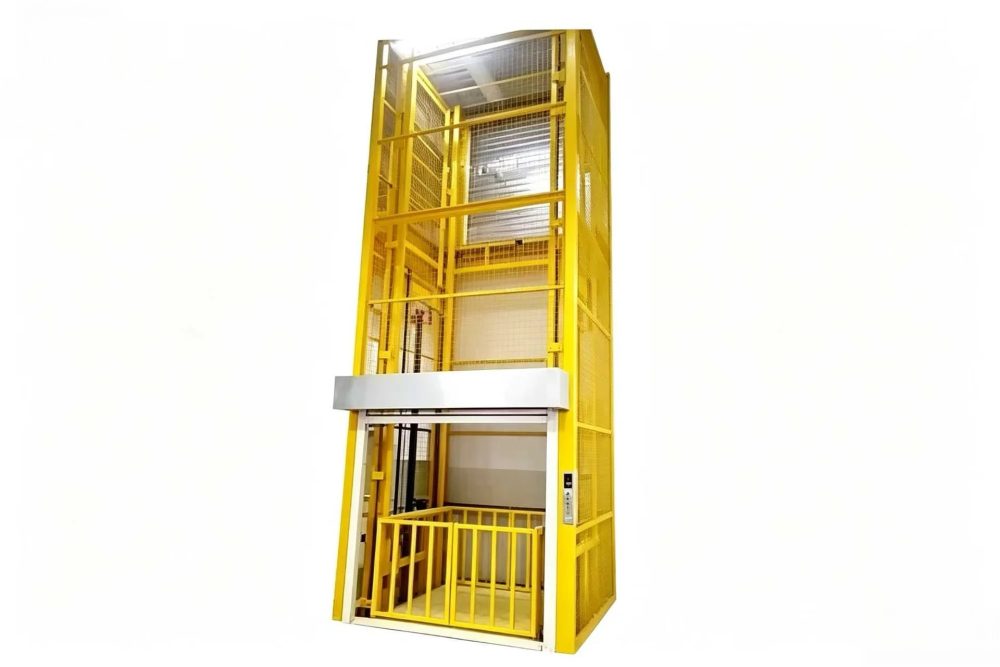
Using forklifts to raise unstable pallet loads to high platform edges presents continuous risks to surrounding personnel. Accidents involving fallen materials, vehicle collisions, or structural impacts lead to severe injuries and costly operational disruption. Implementing a custom cargo lift for mezzanine floor setups encloses the entire vertical travel path with heavy-duty mesh shielding, interlocked safety gates, and automatic drop-stop mechanisms, fully isolating material movement from human walkways.
Streamlining Daily Material Workflow
Manual material handling wastes hundreds of labor hours annually. Transporting heavy crates, automotive components, or packaged goods up staircases or using temporary hoist setups severely throttles output. Heavy-duty vertical lifts transport large capacities at steady speeds, allowing a single operator to load, elevate, and unload inventory in a fraction of the time.
Adapting to Complex Architectural Layouts
No two industrial facilities share identical floor plans. Every custom cargo lift for mezzanine floor configuration can be tailored for:
Through-floor penetration: Elevating directly through structural deck cutouts in concrete or steel platforms.
Adjacent-to-mezzanine mounting: Securing the lift mast structure along the outer edge of the steel mezzanine framework.
Multi-stop accessibility: Seamlessly connecting ground floors with multiple elevated platform levels.
Technical Specifications & Engineering Options
When planning a custom cargo lift for mezzanine floor projects, structural engineers adapt several critical design elements to match site conditions:
| Parameter / Feature | Engineering Options & Range | Primary Operational Benefit |
| Drive Mechanism | Heavy-duty Hydraulic Cylinders or Traction Motor | Hydraulic drives suit heavy payloads at mid-rise heights; traction offers high-speed cycles for multi-level sites. |
| Грузоподъемность | 500 kg to 10,000+ kg (Custom rated) | Accommodates everything from hand-trolley packages to heavy palletized machinery. |
| Platform Dimensions | Custom width, depth, and vertical clearance | Tailored to fit exact pallet dimensions, oversized crates, or tight structural bay limits. |
| Access Configuration | C-Type (Same side in/out), Z-Type (Through), or L-Type (90° corner) | Adapts cleanly to existing aisle ways and production line flow without requiring building layout changes. |
| Enclosure & Gates | Wire mesh panels, sheet steel panels, bi-parting doors, vertical roll-up gates | Encloses lifting path to prevent items from falling and prevents entry while the lift is in motion. |
| Control Interface | Call-and-Send push button stations at each level, remote controls | Enables seamless operation from either floor level without requiring an operator inside the carriage. |
Hydraulic vs. Electric Traction Systems
Selecting the proper drive mechanism is vital for long-term operational performance:
1. Heavy-Duty Hydraulic Lift Drives
A hydraulic cargo lift utilizes high-strength fluid cylinders, heavy lifting chains, and a compact hydraulic power unit to raise the platform cleanly.
Best Suited For: Low to medium lifting heights (typically up to 10–12 meters) with heavy payload demands.
Advantages: High mechanical reliability, minimal overhead clearance required above the top platform, simplified maintenance requirements, and lower initial hardware investment.
2. Electric Traction Drive Motors
Electric drum-winding or traction-driven cargo lift configurations rely on counterweights, steel wire ropes, and gearboxes to move the carriage along steel guide rails.
Best Suited For: High-frequency, multi-stop industrial facilities with vertical travel heights exceeding 12 meters.
Advantages: Faster continuous travel speeds, smooth acceleration profiles, and reduced energy consumption per cycle across long vertical travel distances.
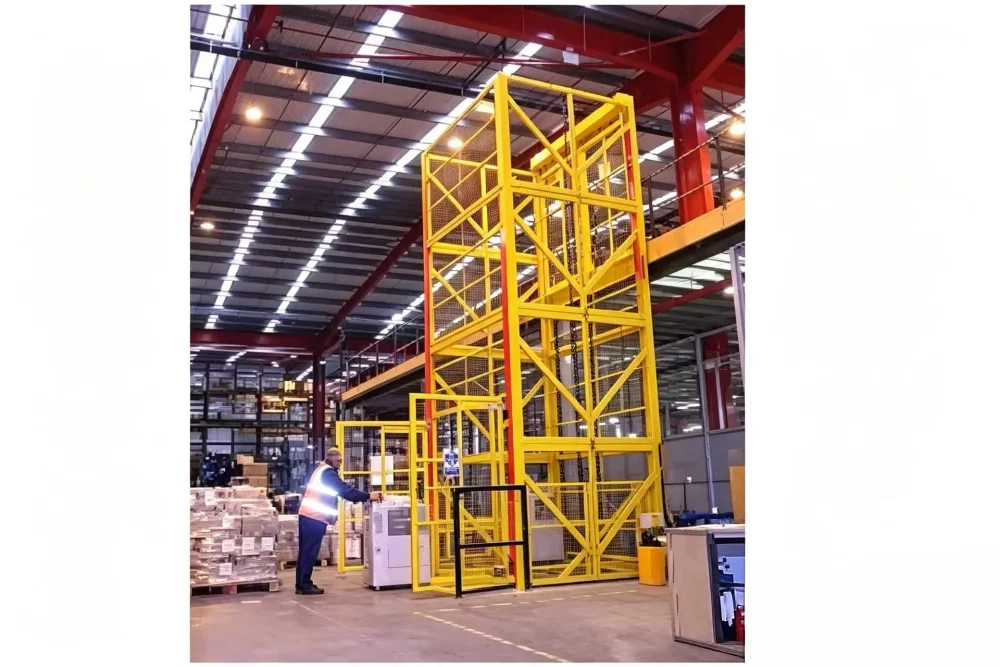
Site Preparation & Installation Considerations
Installing a custom cargo lift for mezzanine floor operations requires close coordination between facility managers, mezzanine fabricators, and vertical lift engineers. Addressing key physical factors early keeps installation on schedule and within budget:
Key Installation Requirements:
Pit Depth Verification: Casting a shallow pit (150 mm to 300 mm deep) allows the platform to sit flush with the floor for easy pallet truck loading. Alternatively, an inclined loading ramp can be installed at ground level.
Floor Slab Load Bearing Capacity: The foundation slab must support both the static weight of the cargo lift structure and the dynamic forces during heavy payload travel. Structural steel distribution plates under guide rails help spread concentrated loads.
Overhead Clearance Measurement: Sufficient headroom above the top platform level is required to clear guide rail structures and top-mounted mechanical components. A custom cargo lift for mezzanine floor design allows guide rail heights to adjust around ceiling trusses, ductwork, or overhead cranes.
Interlocked Barrier Gates: Safety codes mandate that all landing access points feature mechanical or electrical interlocks, preventing gate operation unless the cargo lift platform is safely parked at that specific floor.
Industrial Applications Across Diverse Sectors
Versatile material handling lifts serve diverse commercial and industrial environments, adapting to unique spatial constraints and transport loads:
Automotive Warehouses & Dealerships: Transporting heavy engine blocks, tires, transmissions, and spare parts up to elevated mezzanine storage decks.
E-Commerce & Fulfillment Centers: Supporting multi-level order picking workflows by swiftly moving order carts, cartons, and packaging supplies.
Manufacturing & Assembly Plants: Delivering raw stock directly to upper assembly lines and returning finished goods to ground-level shipping areas using a dedicated cargo lift.
Cleanrooms & Chemical Facilities: Utilizing stainless-steel platform enclosures, sealed hydraulic fluids, and corrosion-resistant surfaces tailored for strict sanitation standards.
Step-by-Step Customization Process
To build a vertical transport solution tailored to your facility, manufacturers follow a structured engineering workflow:
Initial Assessment & Site Mapping: Engineers gather physical dimensions, structural load limits, preferred access configurations (C-Type, Z-Type, or L-Type), power supply parameters, and daily duty cycle requirements.
CAD Modeling & Stress Analysis: Engineering teams create 3D CAD models and structural calculations to verify stress points, deflection tolerances, and safety factors before fabrication begins.
Precision Fabrication: Heavy-gauge steel guide rails, platform frames, and safety enclosures for the custom cargo lift for mezzanine floor project are precision welded, painted or galvanized, and quality-tested.
On-Site Installation & Calibration: Certified technicians erect guide masts, mount drive assemblies, wire control panels, calibrate level sensors, and integrate gate interlocks.
Safety Load Testing & Staff Training: Rigorous load tests verify smooth operation at full rated capacity. On-site operators receive comprehensive training on safe loading procedures and daily safety checks.
Essential Safety Features Checklist
Industrial material handling platforms operate under demanding conditions, making safety engineering paramount. Ensure your custom cargo lift for mezzanine floor system includes these critical protective components:
Anti-Drop Safety Arrestors: Mechanical safety cams or hydraulic velocity fuses that immediately lock the platform to guide rails if a lifting chain or cable loses tension.
Overload Detection Sensors: Automated sensors that sound an alarm and halt cargo lift movement if payload weight exceeds safe rated limits.
Emergency Stop Control Stations: High-visibility mushroom buttons installed at every landing control panel to allow immediate power shutdown in an emergency.
Electromechanical Door Interlocks: Heavy-duty locks that keep enclosure doors securely locked unless the carriage is safely stopped at that landing.
Full-Height Mesh Enclosures: High-density steel wire enclosures surrounding the vertical shaft to keep materials safely contained within the carriage during travel.
Frequently Asked Questions (FAQ)
What is the main difference between a freight elevator and a custom cargo lift for mezzanine floor applications?
Freight elevators are certified under passenger elevator codes (such as ASME A17.1) to transport personnel alongside heavy goods inside a fully enclosed shaft, requiring deep pits, machine rooms, and high installation costs. A mezzanine cargo lift (VRC) is built exclusively for moving materials under dedicated conveyor safety standards (such as ASME B20.1). This distinction significantly reduces structural modification requirements, installation lead times, and ongoing maintenance expenses.
Can a custom cargo lift for mezzanine floor projects be retrofitted into existing facilities without a concrete shaft?
Yes. Custom material platforms are self-supporting steel structures designed specifically to retrofit into existing facilities. They anchor directly to the concrete floor slab and mezzanine framework without requiring a pre-built concrete hoistway or masonry shaft.
How much weight capacity can a custom cargo lift for mezzanine floor setups accommodate?
A custom cargo lift for mezzanine floor system can be engineered for virtually any weight class. Standard light-to-medium models comfortably transport payloads between 500 kg and 2,000 kg, while heavy industrial designs handle capacities exceeding 10,000 kg.
What maintenance routine is required to keep a vertical cargo lift operating reliably?
Routine preventative maintenance should be performed quarterly or semi-annually based on usage intensity. Essential maintenance steps include inspecting hydraulic hose fittings, checking chain/wire rope tension, lubricating guide tracks, testing gate interlocks, and verifying emergency stop functions.
Can a cargo lift be installed outdoors against an exterior mezzanine loading dock?
Yes. For facilities with tight indoor floor space, weather-proofed outdoor cargo lift units feature hot-dip galvanized steel frames, IP65-rated electrical enclosures, waterproof control stations, and protective cladding to withstand rain, wind, and temperature fluctuations.
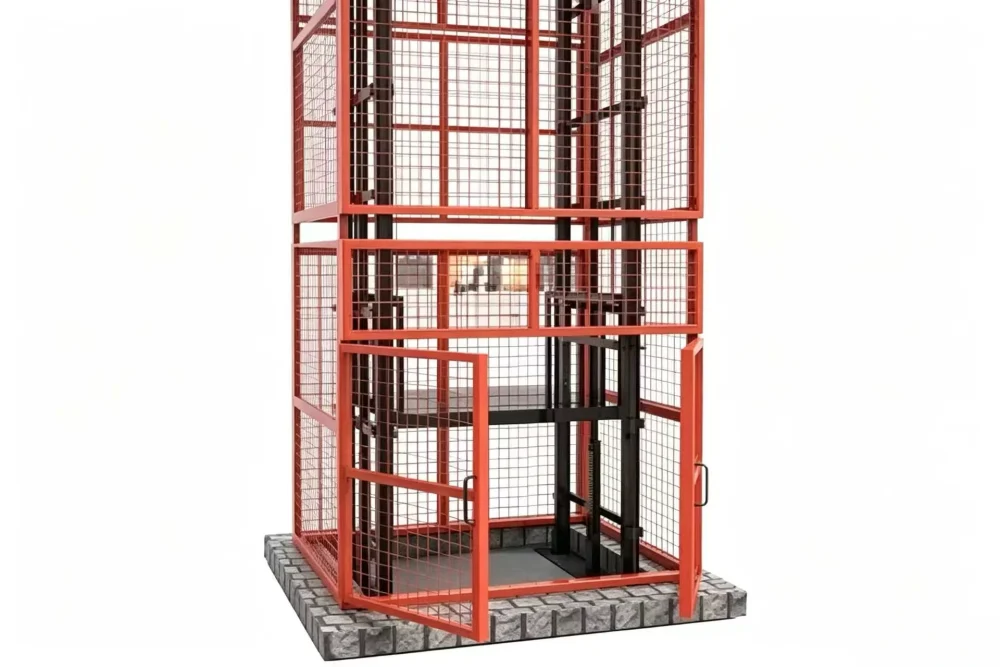
Optimize Your Vertical Material Handling Today
Investing in a custom cargo lift for mezzanine floor operations eliminates internal logistical bottlenecks, protects worker safety, and maximizes the return on your elevated storage investment. By choosing tailored platform dimensions, optimal drive mechanisms, and fully integrated safety enclosures, you ensure smooth, reliable material flow for years to come.
For detailed technical advice, custom CAD layout designs, or a project quotation tailored to your facility specifications, reach out to our engineering team today:
Email: [email protected]
Phone / WhatsApp: +86 189 5417 1380
 Russian
 English
 Arabic
 French
 Korean
 Spanish
 German