
For automotive enthusiasts and professional mechanics, there is a defining moment when rolling around on a cold concrete floor on a creeper simply loses its charm. Raising a vehicle safely to a comfortable working height makes oil changes, suspension tuning, brake jobs, and detailing infinitely easier. However, not everyone has a commercial-grade shop with 12-foot ceilings to accommodate a massive two-post overhead lift. When ceiling height or floor space is limited, finding the best mid rise car lift becomes the ultimate goal for home mechanics and professional detailers alike.
If you have an 8- to 10-foot ceiling, a full-size two-post lift is out of the question. That is where searching for the best mid rise car lift pays off, offering up to 48 inches of lifting height without demanding permanent anchoring or massive overhead clearance. This comprehensive guide breaks down the top models on the market, explores the critical engineering factors you must consider, and helps you select the perfect lift for your specific space and workflow.
Defining the Mid-Rise Standard
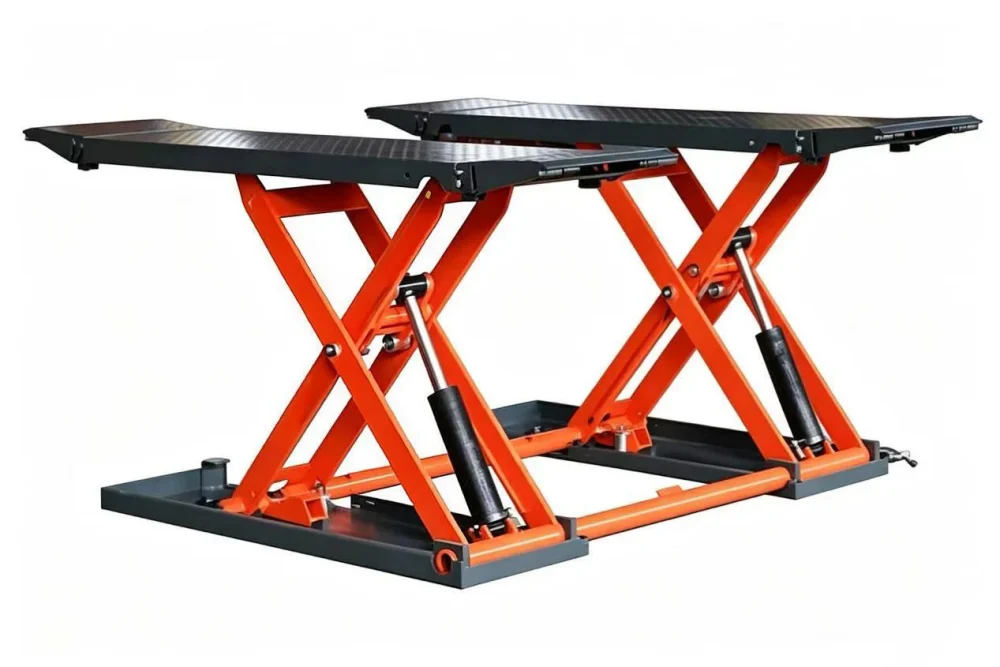
Before diving into specific models, we need to clarify what makes a lift fall into the “mid-rise” category. Car lifts generally come in three height tiers: low-rise (which elevates a car 20 to 29 inches), mid-rise (36 to 48 inches), and full-rise (70+ inches).
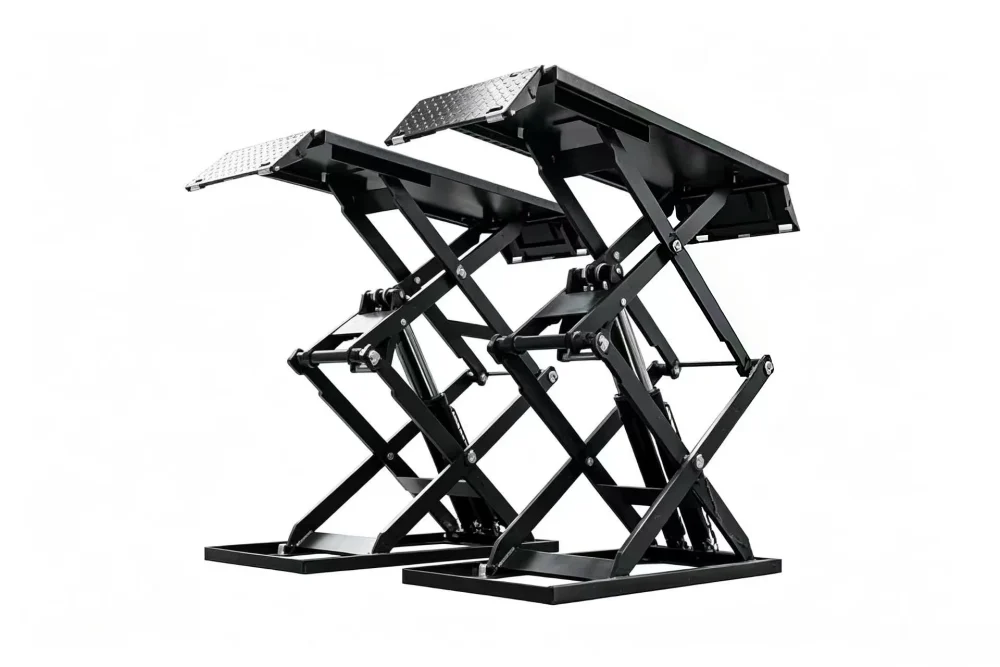
To choose the best mid rise car lift, it helps to understand what defines this category. Typically designed around a scissor-arm geometry, these systems utilize dual hydraulic cylinders to push the lifting platforms upward. The mid-rise configuration provides a sweet spot. It gets the vehicle high enough off the ground so you can sit comfortably on a rolling stool to work on wheel wells, rocker panels, suspension components, and brakes. At the same time, because the maximum height is capped around 48 inches, the vehicle’s roof won’t crash into a standard residential garage ceiling.
Why You Need a Mid-Rise Lift
First, consider the sheer convenience. Many DIYers realize that the best mid rise car lift provides an ideal balance between low-profile storage and ergonomic working height. If you frequently change tires, perform brake flushes, swap out struts, or spend hours detailing paint, keeping the vehicle at waist-level eliminates a massive amount of back strain.
Additionally, portability is a massive selling point. Unlike permanent structures, the best mid rise car lift models often feature portable power units and wheel kits. When you are finished working, you can simply lower the lift, attach the tow bar/caster assembly, and roll the entire unit out of the way to park your daily driver. This level of space-saving versatility is hard to find in traditional two-post or four-post options.
Deep Dive: Top Mid-Rise Car Lifts Reviewed
Let’s take a look at the five strongest contenders currently dominating the market. Each of these models excels in specific areas, from build quality to raw lifting capacity.
1. BendPak MD-6XP
For years, many shop owners have pointed to the BendPak MD-6XP as the best mid rise car lift on the market. BendPak is an industry heavyweight known for rugged engineering and strict safety adherence. The MD-6XP offers a solid 6,000-pound lifting capacity and lifts up to 48 inches (or 53 inches when using the included tall truck adapters).
The Pros: It features a heavy-duty steel frame, a portable power cart that doubles as a tow handle, and multiple safety lock positions.
The Cons: Because it features a solid cross-member design, centerline access under the vehicle is somewhat obstructed. Doing center exhaust work or transmission drops requires careful positioning.
2. Atlas Automotive Equipment 6MR
If you are looking for an alternative that balances rugged construction with a budget-friendly price, the Atlas 6MR is frequently ranked among the options for the best mid rise car lift. Lighter and slightly more compact than some of its commercial-grade rivals, the Atlas 6MR still handles up to 6,000 pounds with ease.
The Pros: It comes with a set of quick-adjust swing arms that make spotting frame lifting points incredibly simple. The price point is highly competitive for home hobbyists.
The Cons: The hydraulic hoses and fittings require careful assembly during the initial setup to ensure a perfect, leak-free seal.
3. APlusLift Mid Rise Scissor Lift
Another strong contender in the market is the APlusLift Mid Rise Scissor Lift, widely celebrated as the best mid rise car lift for low-clearance home shops. Offering a slightly higher capacity of 6,600 pounds, this model is built for those who work on heavier modern SUVs and electric vehicles.
The Pros: The extra 600 pounds of capacity provides excellent peace of mind when raising mid-size trucks and heavy EVs. It is shipped with solid rubber lifting blocks and a mobile power unit.
The Cons: It has a slightly larger footprint on the floor, meaning you will need a bit more dedicated space to store it flat when driving over it.
4. Titan Lifts PREMIER Series SL-6600
The Titan Lifts SL-6600 is engineered for those who need a bit of extra lifting capacity, making it a prime candidate for the best mid rise car lift in the 6,600-pound class. Known for its ultra-smooth hydraulic flow, the SL-6600 features dual hydraulic cylinders that distribute weight evenly across the platforms.
The Pros: Its build quality is exceptionally clean, with high-end welds and a durable powder-coated finish. The safety lock mechanism engages crisply and releases reliably via a manual lever.
The Cons: The manual safety release requires you to walk to the lift to pull the bar, rather than releasing it pneumatically or electronically from the console.
5. Amgo MR06 Portable Mid-Rise Lift
Rounding out our top reviews is the Amgo MR06, which makes a strong case for being the best mid rise car lift for enthusiasts who value fast, smooth hydraulic cycles. It features a portable design, 6,000-pound capacity, and is built by a brand known for commercial-grade engineering.
The Pros: Fast lift time (around 30 seconds) and excellent structural rigidity. The low-profile approach ramps make driving lowered sports cars over the lift painless.
The Cons: It is physically heavy, making manual relocation around the shop a bit of a workout despite the wheel kit.
Technical Comparison Table
To help you visualize how these options stack up, let us look at a breakdown of the technical specifications for each best mid rise car lift contender.
| Brand & Model | Lifting Capacity | Max Lifting Height | Minimum Collapsed Height | Power Supply Requirement |
| BendPak MD-6XP | 6,000 lbs (2,722 kg) | 48″ – 53″ (with adapters) | 4.75″ | 110V / 220V AC |
| Atlas 6MR | 6,000 lbs (2,722 kg) | 52″ | 5.5″ | 110V AC |
| APlusLift Mid Rise | 6,600 lbs (2,993 kg) | 47″ | 5.0″ | 110V AC |
| Titan SL-6600 | 6,600 lbs (2,993 kg) | 48″ | 5.12″ | 110V AC |
| Amgo MR06 | 6,000 lbs (2,722 kg) | 49″ | 4.25″ | 110V AC |
How to Choose the Right Model for Your Garage
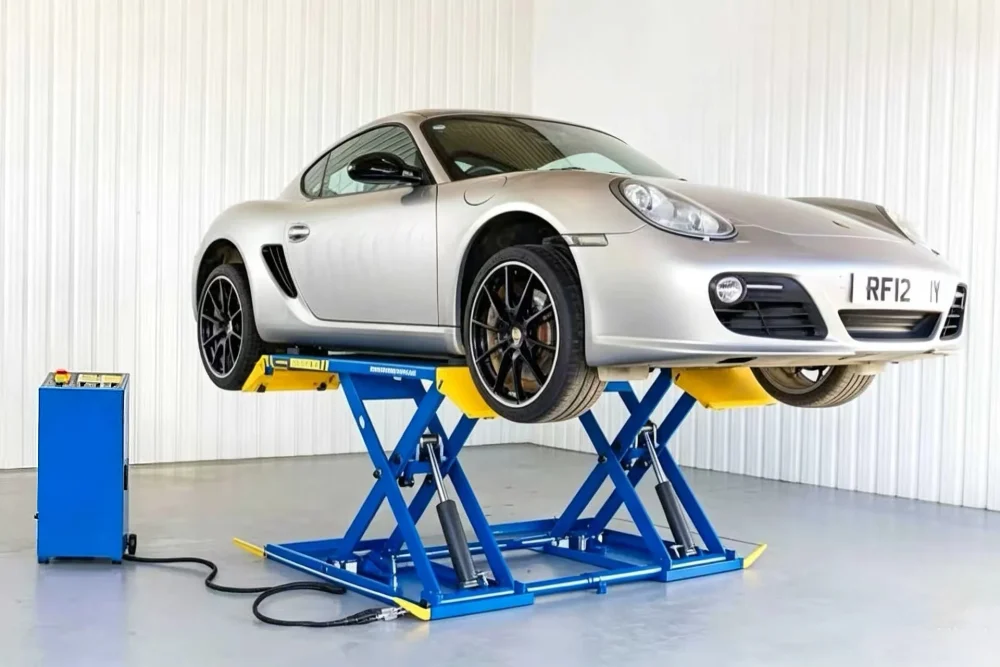
When shopping for the best mid rise car lift, several key factors should dictate your purchasing decision. Do not simply buy the most expensive model; instead, map the lift’s technical specifications to your physical space and the types of vehicles you own.
1. Weight Capacity and Safety Margins
To select the best mid rise car lift for your garage, always calculate a safety margin of at least 25% above your heaviest vehicle’s weight. If you drive a 5,000-pound half-ton truck or a heavy battery-electric vehicle (BEV), a 6,000-pound lift is technically sufficient but leaves narrow tolerances. In those cases, opting for a 6,600-pound capacity model like the APlusLift or Titan SL-6600 is the smarter, safer move.
2. Under-Car Accessibility
Scissor lifts fall into two main design types:
Solid Frame Scissor Lifts: These feature a central torsion bar or structural plate linking the two sides together (like the BendPak MD-6XP). This provides extreme structural rigidity but blocks access to the exact middle of the car’s undercarriage.
Open-Center Scissor Lifts: These feature two completely independent runways synced via hydraulic lines or a synchronized flow divider. They offer fantastic centerline access for dropped exhausts, driveshafts, and oil pans, but they are generally more expensive and require more floor prep.
3. Safety Lock Configurations
Safety should never be compromised, and the best mid rise car lift units always come equipped with heavy-duty mechanical safety lock bars. Never, under any circumstances, leave a vehicle supported purely by hydraulic pressure. When evaluating a lift, check how many lock intervals it offers. A lift with 3 to 5 distinct locking steps gives you much more flexibility in adjusting your preferred working height than one with only a single top lock.
4. Power Requirements
Keep in mind that the best mid rise car lift models typically run on either standard 110-volt household power or 220-volt single-phase electricity. If your garage only has standard 15-amp outlets, a 110V power unit is essential. However, if you have a 220V outlet (like the one used for heavy compressors or welders), a 220V hydraulic pump will lift your vehicle much faster and put less strain on your home’s electrical circuits.
Installation & Maintenance Best Practices
Even the best mid rise car lift requires ongoing maintenance to ensure safe, reliable operations over its lifespan. If you want your investment to last for decades, incorporate these steps into your garage routine:
Keep It Level: Scissor lifts perform best on flat, level concrete surfaces. Unbalanced floors cause unequal load distribution, putting lateral stress on the scissor pivots.
Inspect Hydraulic Fluid: Check the hydraulic fluid level in your power unit reservoir regularly. Use high-quality anti-wear hydraulic oil to ensure smooth, stutter-free lifting cycles.
Lubricate Pivot Points: Mid-rise lifts rely on multiple pin joints and sliding tracks. Grease these pivot points periodically to prevent metal-on-metal wear and squealing.
Check the Hoses: Inspect your hydraulic lines for any signs of cracking, crimping, or dry rot. A damaged hose can lead to pressure drops or catastrophic leaks.
Frequently Asked Questions About the Best Mid Rise Car Lift
What is the ceiling height required for the best mid rise car lift?
Generally, you need at least an 8- to 9-foot ceiling to safely use a mid-rise lift. The exact formula is simple: add your car’s height to the maximum rise of the lift (usually around 48 inches), and add an extra 6 to 12 inches of safety clearance. If your car is 55 inches tall and your lift rises 48 inches, you will need at least 110 to 115 inches of ceiling clearance (around 9.5 feet).
Can I leave a car on a mid-rise lift indefinitely?
Yes, provided the lift is fully lowered onto its physical mechanical safety locks. The hydraulic cylinders should not hold the weight of the vehicle over long periods. Resting the lift on its steel locks relieves the hydraulic pressure, allowing you to safely store a car on the lift for weeks or months.
Can I perform an oil change on the best mid rise car lift?
Yes, absolutely. While some solid-frame models have structural steel components running through the center, most are designed to leave enough clearance to access the oil drain plug and filter. For maximum under-car access, look for open-center scissor configurations.
Final Verdict
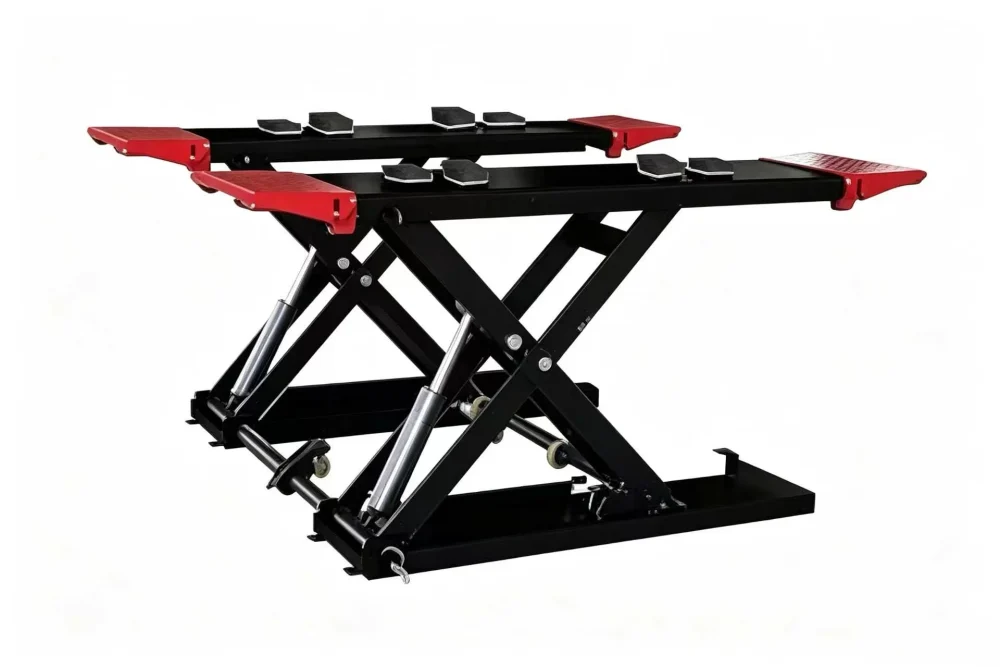
Choosing the best mid rise car lift ultimately depends on your garage space, budget, and the types of vehicles you work on. If you want a top-tier, commercial-grade portable unit backed by legendary service, the BendPak MD-6XP is an incredibly tough benchmark to beat. On the other hand, if you need a bit more lifting muscle for larger modern crossovers and EVs, the Titan SL-6600 or APlusLift offer fantastic alternative paths.
Whichever path you choose, stepping up to a mid-rise scissor lift will completely change how you view automotive DIY and professional garage maintenance.
If you are looking for premium lifting equipment tailored to your workshop or commercial bay, please do not hesitate to contact our technical advisors:
Email: [email protected]
Phone / WhatsApp: +86 189 5417 1380
 Arabic
 English
 French
 Korean
 Spanish
 German
 Russian