
For car enthusiasts, DIY mechanics, and commercial shop owners alike, installing a hydraulic hoist is the ultimate garage upgrade. It saves your back, makes undercarriage work a breeze, and can even double your parking capacity by stacking vehicles vertically. However, before ordering any heavy equipment, the very first critical question you must answer is logistical: how high of a ceiling for a car lift is required to operate safely?
Many people assume they need a massive, commercial-grade industrial workshop to house automotive lifting equipment, but that is a common misconception. The exact architectural height requirements depend entirely on your specific vehicle dimensions, your own physical height, and—most importantly—the specific engineering design of the equipment you choose.
Whether you are looking into a classic 2 post car lift, a storage-friendly 4 post car lift, or a compact scissor car lift, this guide will break down the precise math, clearances, and hidden factors you must consider before making an investment.
1. The Golden Mathematical Formula for Ceiling Clearance
To determine how high of a ceiling for a car lift installation in your home garage, you cannot rely on guesswork. You need to use a straightforward mathematical formula that accounts for the physical limits of the vehicle and the mechanics of the machinery.
When stacking or fully raising a vehicle, use this standard equation:
Required Ceiling Height =Height of Vehicle 1 + Height of Vehicle 2 + Thickness of Platform + Safety Buffer
If you are not stacking two cars but simply want to lift a single vehicle high enough to walk underneath it comfortably, the math shifts slightly:
Required Ceiling Height=Lifting Height of the Equipment+Total Height of the Vehicle+Safety Buffer
Critical Note on the Safety Buffer: Always add a minimum of 4 to 6 inches to your vertical calculations. This buffer accounts for the “lock-clearance factor”—the physical reality that a hydraulic system must rise slightly above its mechanical locking point before it can be lowered securely onto its safety locks. It also prevents your vehicle’s roof or antenna from accidentally crushing against structural ceiling drywall or exposed rafters.
2. Analyzing Height Requirements by Lift Type
Different equipment designs have vastly different structural footprints. Let’s look at how the style of equipment alters your architectural needs and spatial planning.
2.1 The Overhead Standard: 2 Post Car Lift
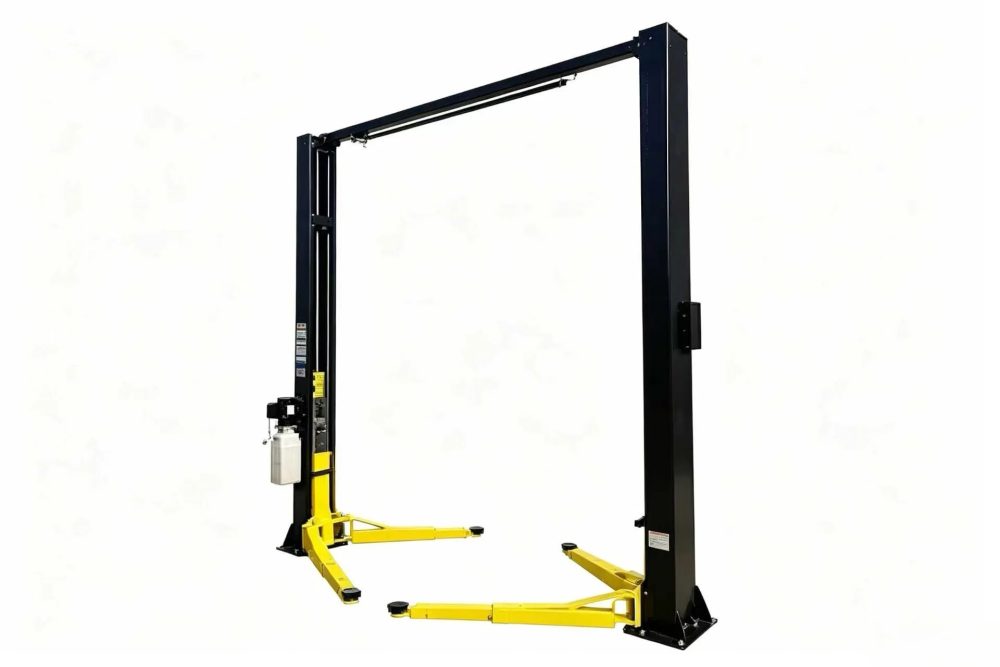
An overhead 2 post car lift is the favorite choice for active mechanics because it leaves the wheels completely free and provides unobstructed access to brakes, suspension components, and the entire drivetrain. However, because the structural columns are typically tied together by an overhead crossbar (which houses hydraulic lines and safety shut-off cables), it usually requires the most vertical clearance.
To house a standard clear-floor framework, you generally need a minimum building clearance of 11.5 to 12 feet. The physical steel columns themselves often stand between 114 and 144 inches tall. If you are dealing with a lower residential ceiling space, some manufacturers offer “baseplate” models that route the hydraulic lines along the floor under a low metal cover plate, allowing the columns to stand a bit shorter.
2.2 The Stacking Champion: 4 Post Car Lift
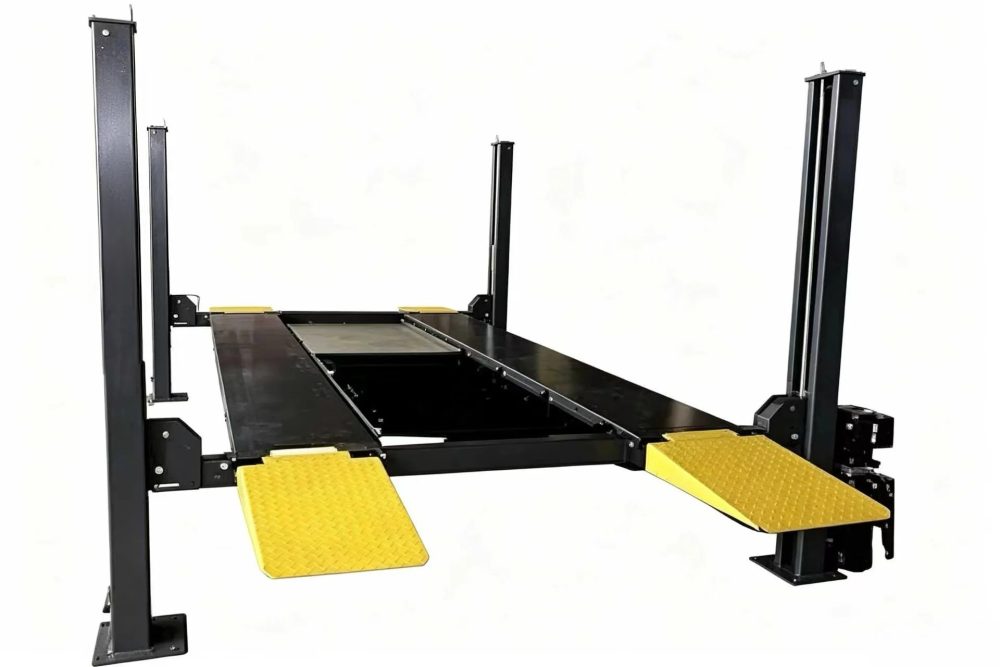
If your primary goal is seasonal vehicle optimization, long-term storage, or double-parking in a single bay, a 4 post car lift is the ideal solution. These units feature drive-on runways, making them incredibly stable and easy to load without needing to position swing arms under precise lifting points on the vehicle chassis.
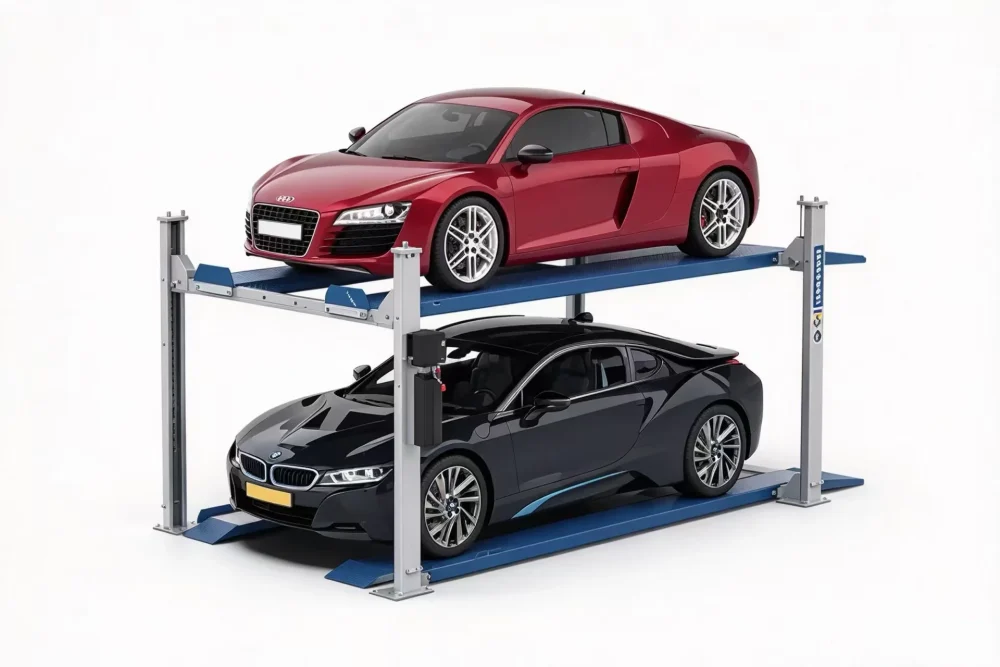
When calculating how high of a ceiling for a car lift of this variety, the stacking formula becomes vital. For instance, if you want to store a sports car that is 50 inches tall underneath another vehicle that is also 50 inches tall, your minimum requirement would look like this:
50 in + 50 in + 4 in (tracks) + 6 in (buffer) = 110 (9.16)
Therefore, a low-profile storage unit can often function successfully in a standard residential garage with a modest 9-foot to 10-foot ceiling, provided you are only stacking low-clearance sedans rather than full-sized pickup trucks.
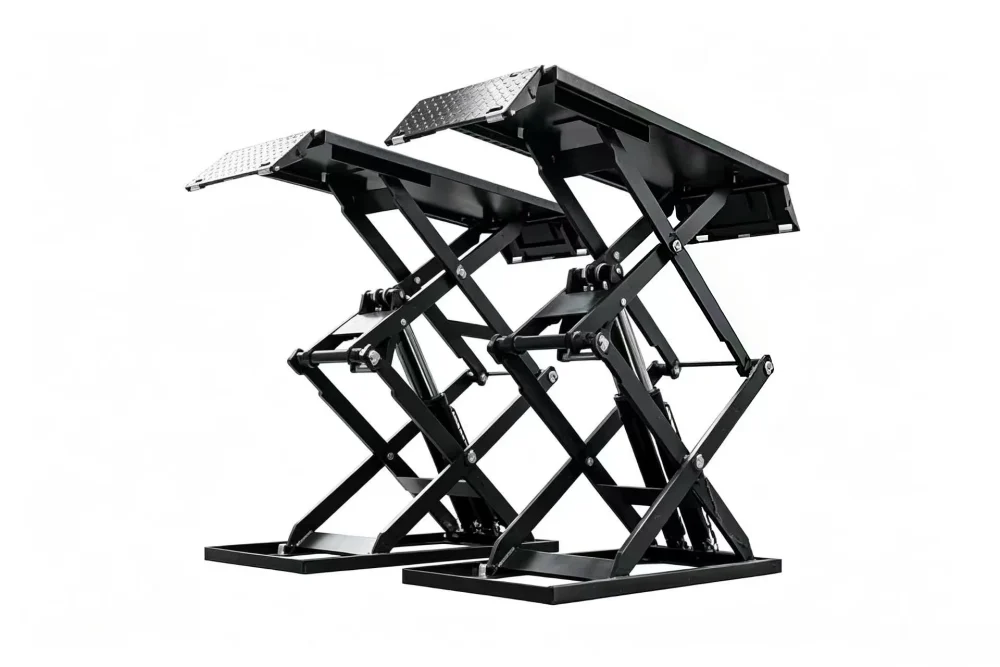
2.3 The Low-Ceiling Alternative: Scissor Car Lift
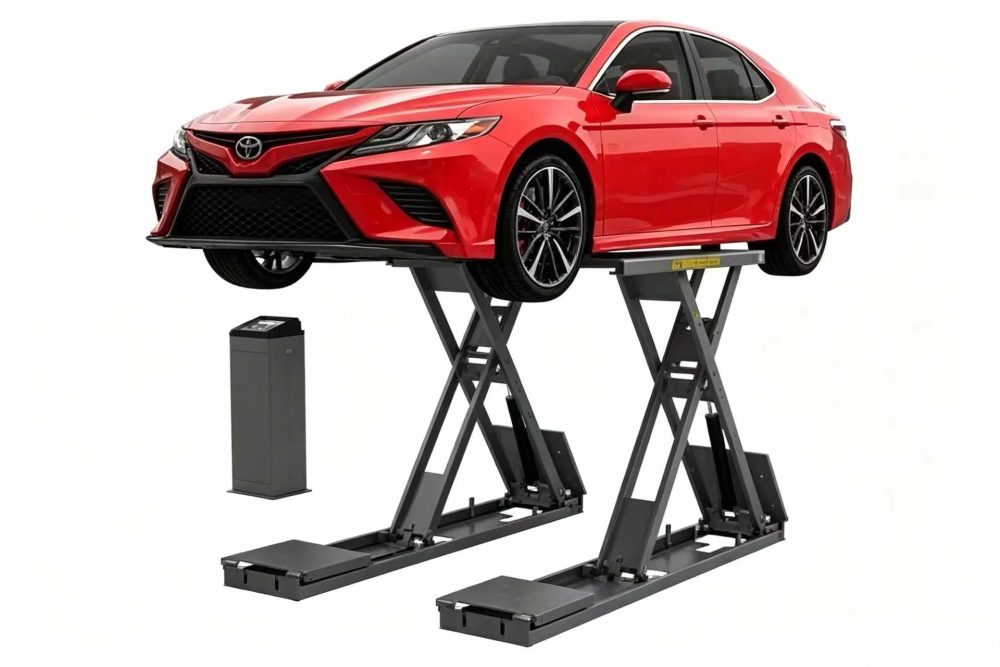
What happens if you measure your garage and realize you only have a standard, unalterable 8-foot ceiling? This is where a mid-rise or full-rise scissor car lift becomes your best vertical option.
Because this style of machinery does not rely on tall perimeter columns or overhead bars, it retracts completely flat against the concrete floor when not in use. A mid-rise unit usually lifts a vehicle around 36 to 48 inches off the ground. This height is perfect for wheel swaps, brake jobs, bodywork, and detailing, allowing you to work comfortably from a rolling mechanic’s stool without ever risking vehicle-to-ceiling contact.
3. Comparative Technical Breakdown
To give you an immediate overview of how these three primary configurations stack up against each other, review the technical allocation matrix below:
| Configuration Style | Average Equipment Height | Minimum Garage Ceiling Needed | Primary Automotive Use Case |
| Standard 2 Post Car Lift | 11′ 6″ – 12′ 0″ (Columns) | 12 Feet minimum | Suspension work, brake repairs, and drivetrain swaps. |
| Standard 4 Post Car Lift | 7′ 0″ – 7′ 6″ (Posts) | 10 – 11 Feet (Vehicle dependent) | Vehicle storage, double-parking, and oil changes. |
| Mid-Rise Scissor Car Lift | Collapses down to 4″ – 6″ | 8 Feet (Standard residential) | Detailing, tire service, and bodywork in tight spaces. |
4. Hidden Factors Most People Forget to Measure
When determining how high of a ceiling for a car lift installation, the flat measurement from your floor to your drywall is only part of the puzzle. There are three critical, hidden interferences that trap unsuspecting buyers:
4.1 Garage Door Tracks and Openers
This is the single most common oversight. When your residential garage door opens, it rolls back horizontally along tracks that sit significantly lower than the actual ceiling height. Furthermore, standard center-mounted garage door openers hang right down in the middle of the bay—exactly where your vehicle’s roof needs to go when raised.
The Fix: You will likely need to convert your existing door tracks to a high-lift track system that guides the door up against the wall before curving back. You should also replace your traditional hanging motor with a wall-mounted jackshaft opener that connects directly to the side of the torsion bar.
4.2 Light Fixtures and Structural Joists
Take a close look at your ceiling infrastructure. Are there hanging fluorescent shop lights, heating ducts, or structural beams running across the bay? Even a modern 4 post car lift can push a vehicle into a hanging object if you aren’t careful. Ensure all lighting in the active lifting bay is converted to flush-mount LED panels.
4.3 Concrete Slab Thickness and Strength
While it does not affect vertical height, slab integrity directly affects operational safety. A heavy-duty 2 post car lift concentrates immense anchoring stress onto two small footprints, typically requiring a minimum of 4 inches of 3000 PSI concrete to anchor securely. Conversely, a portable scissor car lift distributes weight over a much larger surface area, making it far more forgiving on standard residential concrete floors.
5. Frequently Asked Questions (FAQ)
Q1: Can I install a 2 post car lift in a garage with a 10-foot ceiling?
A1: Yes, but you will need to purchase a specific low-ceiling model, which usually stands around 9 feet, 3 inches tall. Keep in mind that with a 10-foot ceiling, you will not be able to lift a standard passenger car to its full extension to walk underneath it. However, it will give you plenty of height to perform wheel and brake work comfortably from a mechanic’s stool.
Q2: What happens if I try to use a 4 post car lift for wheel and brake work?
A2: Because that system supports the vehicle by its tires on runways, the suspension remains compressed under the car’s weight. To perform wheel, brake, or suspension work, you will need to purchase optional rolling bridge jacks or sliding jack trays that sit between the runways, allowing you to lift the frame of the vehicle off the tracks.
Q3: Is a scissor car lift completely safe for under-vehicle engine work?
A3: Yes, a high-quality unit with mechanical safety locks is highly secure. However, because the structural frame and hydraulic cylinders sit directly underneath the center of the vehicle, center access can be restricted. If your main goal is removing transmissions or exhaust lines, alternative frame-engaging options offer superior layout access.
6. Conclusion & Expert Support
Determining how high of a ceiling for a car lift comes down to balancing your spatial realities with your mechanical goals. If you have 12 feet or more of vertical room, a robust 2 post car lift will yield total mechanical freedom. If you have 10 feet and want to park two vehicles in one bay, a 4 post car lift is your perfect match. For tighter spaces down to 8 feet, a scissor car lift keeps your projects moving forward without requiring structural renovations.
If you are planning your garage layout, evaluating structural drawings, or need custom dimension consulting for a commercial project, our engineering support team is here to help you get the exact fit.
Contact us for customized dimension planning and equipment quotes:
Phone: +86 18954171380
Email: [email protected]
 Arabic
 English
 French
 Korean
 Spanish
 German
 Russian