
In professional auto repair facilities, dealership service bays, and home enthusiast workshops, floor space and under-vehicle accessibility determine daily operational efficiency. Traditional two-post lifts often rely on a raised metal floor plate that covers hydraulic hoses and equalizer cables stretching between the two columns. While functional, that bottom floor bar presents a constant obstacle for rolling oil drainers, transmission jacks, toolboxes, and low-clearance sports cars.
To solve these spatial limitations, workshop owners are increasingly opting for an overhead configuration. A clear floor car lift relocates all hydraulic lines and equalization cables to an overhead crossbar connecting the top of the columns. By keeping the concrete floor between the posts completely unobstructed, technicians gain an open, smooth workspace that improves workflow safety and shop productivity.
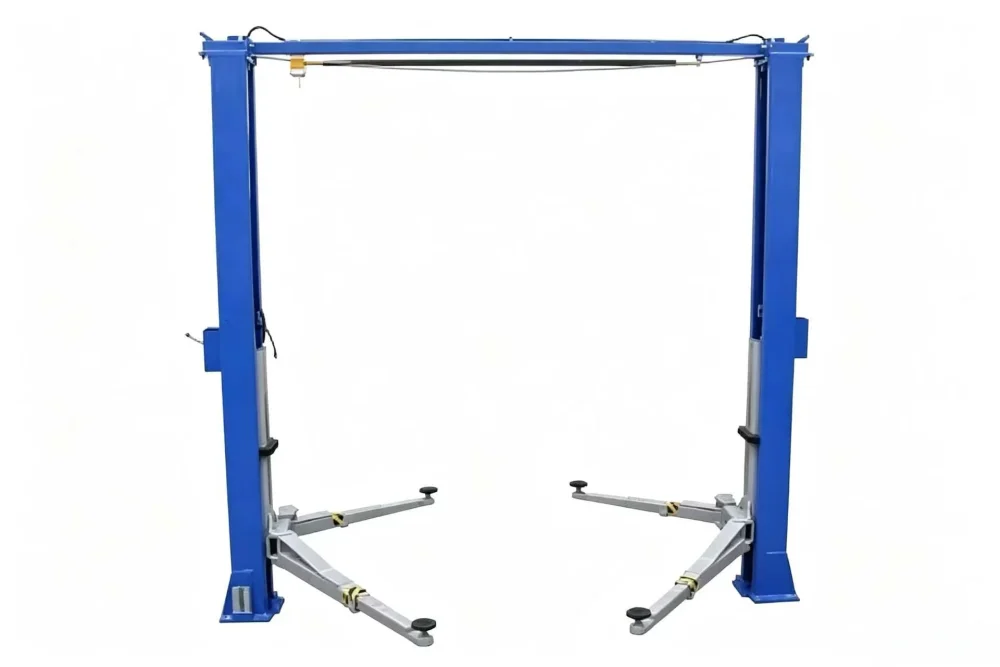
Understanding the Design and Mechanics of an Overhead Two-Post System
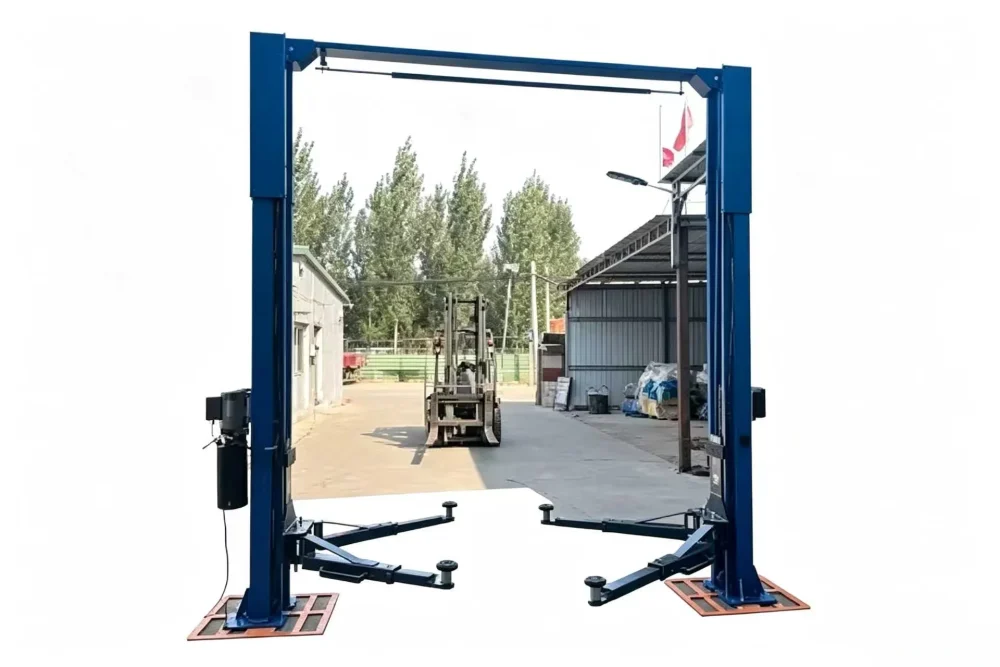
The primary distinction of a clear floor car lift lies in its structural layout. Instead of routing essential hydraulic hoses and synchronization cables along the ground underneath a protective floor plate, the entire mechanism is elevated. A heavy-duty steel bridge beam spans across the top of the two vertical columns, housing the equalization cables and hydraulic lines high above the vehicle bay.
This overhead design allows a clear floor car lift to deliver a completely flat floor surface between columns. Mechanics can easily roll heavy equipment, low-profile tool chests, and engine cranes underneath a raised vehicle without tripping over a base plate or damaging expensive floor covers.
Key Structural Components:
Overhead Equalization Crossbeam: Houses steel synchronization cables and hydraulic hoses overhead, keeping the ground bay entirely clear.
Overhead Padded Shut-Off Bar: An integrated micro-switch safety feature that halts lifting automatically if a tall vehicle’s roof contacts the upper beam.
Dual Hydraulic Cylinders: High-pressure cylinders housed inside rigid steel columns to deliver smooth, reliable vertical force.
Asymmetric or Symmetric Swing Arms: Telescoping lifting arms equipped with adjustable rubber pads to accommodate diverse frame pick-up points.
Why Auto Repair Facilities Prefer a Clear Floor Car Lift
1. Unobstructed Ground Accessibility for Rolling Equipment
In a busy automotive workshop, technicians constantly move bulky servicing equipment back and forth beneath vehicles. A clear floor car lift eliminates the bottom hump, enabling seamless movement for oil drain barrels, jack stands, transmission jacks, and mechanics’ creepers. This uninterrupted floor area reduces physical strain and speeds up routine maintenance tasks.
2. Prevention of Equipment Damage and Vehicle Scratches
Driving low-slung performance vehicles, modified sports cars, or lowered sedans over a traditional floor-plate lift can cause scraping or undercarriage damage. Since a clear floor car lift leaves the ground level flat, low-clearance vehicles can drive straight into the bay without bottoming out. Furthermore, technicians don’t have to push heavy wheel carts over a floor plate hump.
3. Enhanced Safety with Overhead Automatic Shut-Off
Safety is a crucial factor in vehicle lifting operations. Modern clear floor car lift models feature a padded overhead safety limit bar. If an operator raises a tall SUV, van, or high-roof truck too high, the roof gently contacts the padded bar, instantly tripping an electrical limit switch that cuts power to the hydraulic pump. This automated safety mechanism prevents costly roof denting or overhead structural damage.
4. Superior Structural Stability and Professional Appearance
By bracing the two vertical columns at the top with a heavy-duty crossbeam, a clear floor car lift forms a rigid rectangular frame. This overhead structure minimizes column flex under heavy payloads. Beyond structural strength, the sleek, open floor layout provides auto repair bays with a clean, modern aesthetic that instills customer confidence.
Comparing Two-Post Vehicle Lift Configurations
Choosing between a floor-plate model and an overhead model depends on ceiling clearance, shop layout, and vehicle servicing needs. Below is a detailed technical comparison highlighting key operational differences.
| Operational Feature | Clear Floor Car Lift | Floor-Plate Two-Post Lift | Four-Post Service Lift |
| Ground Clearance | Completely obstruction-free floor | Metal floor plate hump between posts | Full drive-on runways |
| Ceiling Height Requirement | High (Typically 3.6m – 4.2m+) | Standard / Low (Typically 2.8m – 3.2m) | Moderate (3.0m – 3.5m) |
| Under-Vehicle Access | Excellent for oil drains & gear jacks | Good, but hindered by floor plate | Restricted by wide runways |
| Low-Rider Suitability | Excellent (No floor hump to scrape) | Fair (Risk of bottoming out) | Good (Dependent on ramp angle) |
| Overhead Safety Protection | Integrated limit switch bar | None (No upper beam limit) | Top-of-travel mechanical stops |
| Structural Rigidness | Superior (Tied together at top) | Good (Base plate anchor stability) | Excellent (Four anchored posts) |
| Ideal Application | Commercial bays & high-ceiling garages | Low-ceiling home shops & small bays | Wheel alignment & long-term storage |
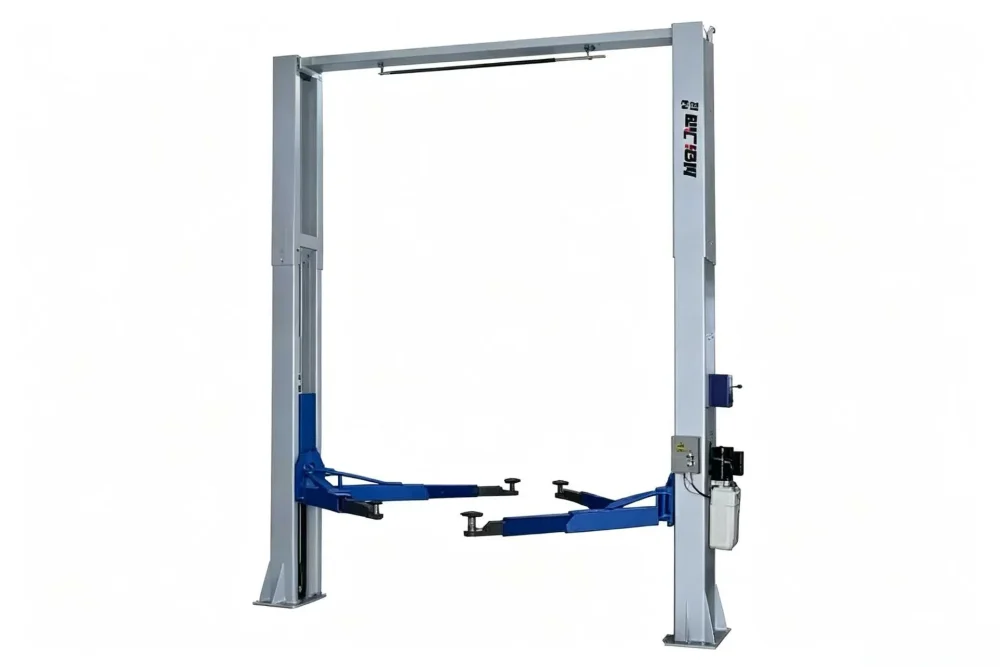
Technical Considerations Before Installation
Installing an overhead lifting system requires proper site evaluation to ensure safety and long-term durability. Facility managers should review the following critical requirements prior to purchasing a clear floor car lift:
Overhead Ceiling Clearance: Because the equalization beam sits atop the columns, a clear floor car lift generally requires a minimum vertical ceiling height between 3.6 meters and 4.2 meters (12 to 14 feet), depending on maximum lifting rise and vehicle height.
Concrete Slab Thickness and Strength: Heavy-duty two-post equipment places concentrated stress on floor anchor bolts. Most standard models require a reinforced concrete slab at least 100mm to 150mm (4 to 6 inches) thick with a minimum rating of 3000 PSI.
Electrical Power Supply: Verify whether your facility uses single-phase 220V power or three-phase commercial power (380V) to match the hydraulic power unit’s motor specifications.
Arm Configuration (Asymmetric vs. Symmetric): Asymmetric arm layouts angle vehicles slightly backward, allowing car doors to open wider for easier cabin entry, whereas symmetric arms are ideal for balancing heavy trucks and long-wheelbase vans.
Essential Safety Features in Overhead Lifting Equipment
Modern automotive lifting standards require multiple built-in safeguards to protect both technicians and vehicles during operation:
Dual-Point Mechanical Safety Locks: Automatic mechanical locks engage at regular height intervals along the columns, taking weight off the hydraulic system once elevated.
Overhead Micro-Switch Cut-Off: Prevents accidental roof contact by stopping hydraulic flow the instant a vehicle touches the upper foam-padded bar.
Steel Equalization Cables: High-tensile aircraft-grade steel cables pass overhead to ensure both lifting arms ascend and descend at perfectly synchronized speeds.
Rubber Door Protection Pads: Column-mounted rubber guards protect vehicle doors from accidental paint chipping when technicians enter or exit the cabin.
Application Scenarios Across Various Auto Service Sectors
The versatile design of the clear floor car lift makes it a preferred choice across diverse automotive operations:
1. High-Volume Commercial Auto Repair Shops
In fast-paced general repair facilities, technicians frequently move transmission jacks and oil drain tanks between bays. Eliminating ground barriers speeds up service times and streamlines daily workflow.
2. Performance Tuning and Custom Shops
Sports cars and modified vehicles feature low ground clearance and delicate body kits. A clear floor car lift permits easy bay entry without damaging low-hanging splitters or exhaust pipes.
3. Dealership Service Centers
Official brand dealerships prioritize speed, safety, and clean aesthetics. Installing overhead two-post equipment keeps service floors immaculate while complying with strict manufacturer ergonomic guidelines.
4. Private Enthusiast Garages
Home mechanics with high-ceiling residential garages favor clear floor models because they can sweep, mop, or park daily drivers underneath without driving over floor humps.
Maintenance Guidelines for Optimal Long-Term Performance
Regular preventative service ensures your clear floor car lift operates safely and extends component lifespan:
Daily Pre-Operation Checks: Inspect lifting arm pads for wear, verify arm restraint locks engage properly, and check for hydraulic fluid leaks around cylinder seals.
Monthly Cable and Pulley Maintenance: Inspect overhead steel equalization cables for fraying or tension imbalance. Lubricate internal column tracks and overhead sheaves with heavy grease.
Semi-Annual Safety Inspection: Check concrete anchor bolt torque, test the overhead shut-off micro-switch functionality, and inspect hydraulic hoses for signs of abrasion or weathering.
Frequently Asked Questions (FAQ)
Q1: What ceiling height is needed to install a clear floor car lift?
Most standard overhead models require a minimum ceiling clearance of 3.6 meters to 3.8 meters (approx. 12 feet). Extended height models designed for high-roof vans may require 4.2 meters (14 feet) or more. Always measure your garage height before purchasing.
Q2: Can a clear floor car lift be installed on a standard garage floor?
Yes, provided the concrete slab meets manufacturer specifications. Typically, a clear floor car lift requires a level concrete slab at least 100mm to 150mm thick with a rating of 3000 PSI or higher. Damaged, thin, or cracked concrete must be repoured before installation.
Q3: How does a clear floor car lift compare to a base-plate lift?
While both are two-post lifts, an overhead model routes cables and hoses over the top, leaving the ground completely flat. A base-plate model routes them along the floor under a metal hump. Overhead models offer better mobility for rolling jacks and low cars, but require higher ceilings.
Q4: What happens if a vehicle roof touches the top bar of a clear floor car lift?
All quality overhead lifts feature a padded safety bar connected to an electrical limit switch. If a vehicle’s roof touches the bar, the micro-switch instantly cuts power to the hydraulic pump, stopping elevation immediately before any damage occurs.
Conclusion & Contact Information
For commercial repair bays and enthusiast garages seeking maximum under-car access, superior safety, and efficient workflow, the clear floor car lift stands as an indispensable lifting solution. By eliminating floor obstructions and utilizing overhead cable routing, shop owners preserve floor space and protect high-value vehicles during routine maintenance.
For detailed technical specs, customized layout advice, or factory-direct quotes on a reliable clear floor car lift, contact our technical team today:
Phone / WhatsApp: +86 189 5417 1380
Email: [email protected]
 English
 Arabic
 French
 Korean
 Spanish
 German
 Russian