
Upgrading a shop floor or residential garage with a 10000 pound car lift represents one of the most transformative investments an automotive professional, commercial fleet owner, or dedicated home mechanic can make. A top-tier heavy-duty hoist drastically reduces physical strain, speeds up underneath maintenance routines, turns frustrating ground-level work into manageable repairs, and doubles usable service capacity without adding physical square footage to your workshop.
As contemporary vehicle manufacturing shifts drastically toward heavier architectures—driven by massive high-capacity battery packs in electric vehicles (EVs), luxury full-sized SUVs, and work-ready dual-cab pickup trucks—having a reliable 10000 pound car lift ensures that your facility maintains the exact lifting structural threshold required to service modern fleets safely and efficiently.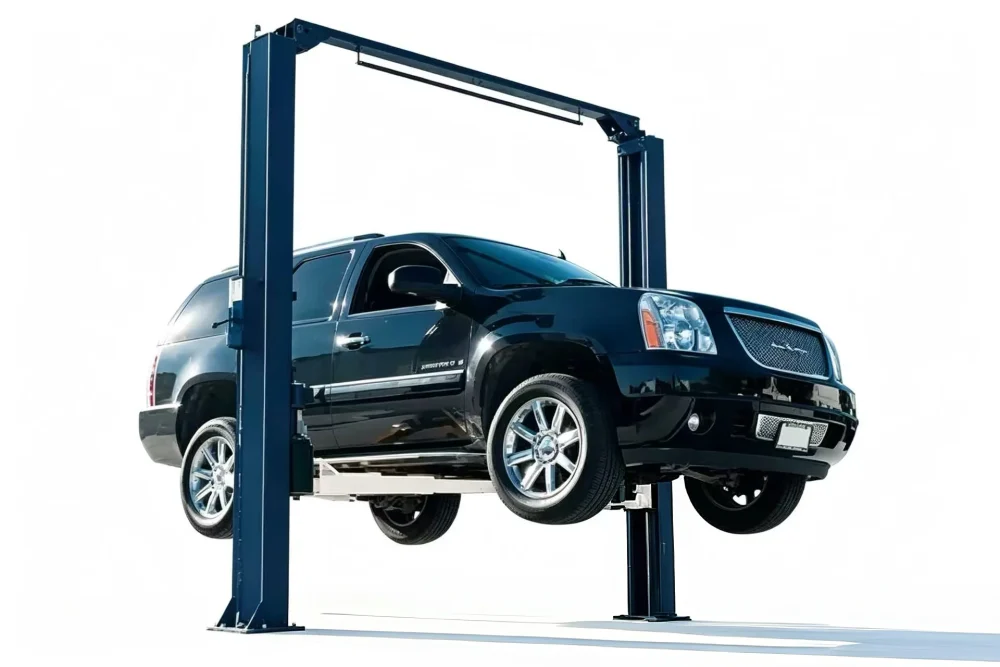
Why 10,000 lb Is the Essential Gold Standard for Today’s Workshops
Selecting garage service equipment requires balancing present physical bay constraints with emerging long-term vehicle design shifts. While lighter 7,000 lb or 8,000 lb lifts were once sufficient for classic cars and light compact sedans, modern curb weights have raised the structural safety baseline across the automotive industry.
Typical Vehicle Weight Landscape
Compact & Mid-Size Sedans: 3,000 – 3,800 lbs
Crossover & Small Luxury SUVs: 3,800 – 4,800 lbs
Full-Size Half-Ton Trucks & Large SUVs: 5,200 – 6,800 lbs
Modern EV Light Trucks & Vans: 6,500 – 9,200 lbs
A high-performance 10000 pound car lift provides an vital margin of structural headroom when raising everyday consumer vehicles while leaving ample capacity for heavier commercial fleets and electric drivetrains.
1. The Heavy Battery and EV Factor
Electric vehicles present unprecedented engineering considerations for shop hoists. Modern floor-mounted battery packs contribute an additional 1,000 to 2,800 pounds of deadweight over traditional internal combustion engine vehicles. Servicing these heavy platforms demands uncompromising frame stability. Deploying a heavy-duty 10000 pound car lift guarantees that technicians can pull battery trays or execute suspension overhauls without overloading hydraulic pistons or stressing vertical steel columns.
2. Commercial Fleet Versatility
If your garage handles a diverse client vehicle roster—ranging from low-clearance performance sports cars to extended wheelbase delivery vans—versatility is essential. Utilizing a 10000 pound car lift permits seamlessly transitioning between wildly different vehicle classes on the very same service bay without demanding labor-intensive arm reconfigurations or additional specialized equipment.
Exploring the Main Architectural Types of 10,000 lb Hoists
Selecting the ideal configuration hinges on matching your facility floor plan, ceiling height, and routine repair tasks with the right structural hoist geometry.
Two-Post Lifts (Asymmetric vs. Symmetric)
Two-post vehicle hoists remain the unquestioned industry standard for general mechanical repair, brake jobs, wheel service, and underbody diagnostics because they leave wheels hanging free and underbody access open.
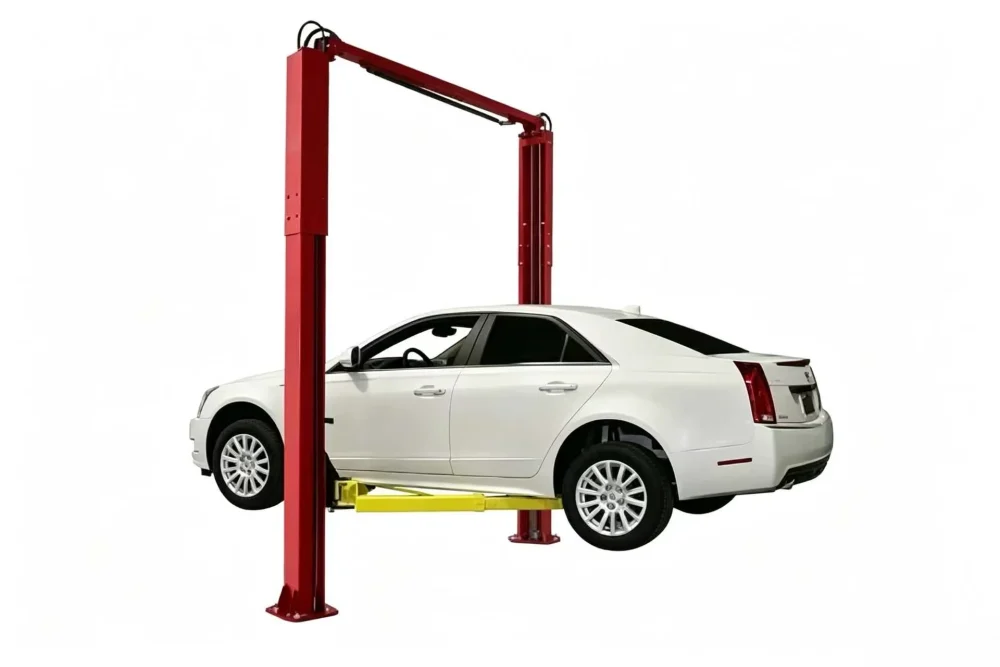
Asymmetric Two-Post Design: Incorporates turned columns and unequal-length swing arms. By angling the vehicle slightly backward, it shifts the overall balance point behind the columns, allowing vehicle doors to swing open wider so technicians can enter and exit the interior easily.
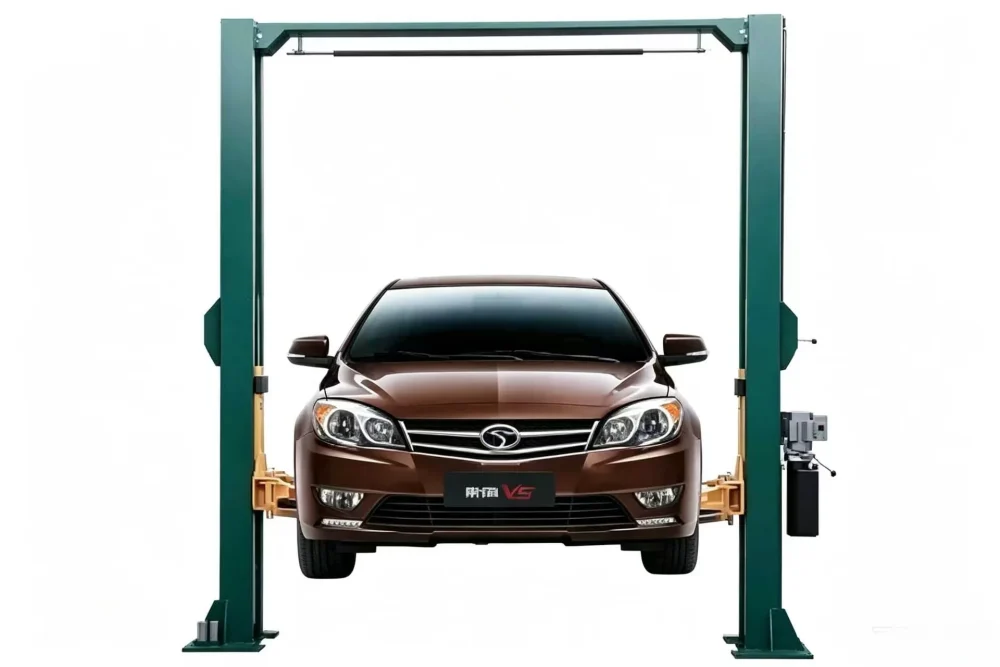
Symmetric Two-Post Design: Features directly facing posts with equal-length arms. This setup centers the vehicle evenly between columns, providing balanced support for long-wheelbase cargo vans, heavy trucks, and utility vehicles.
Four-Post Drive-On Lifts
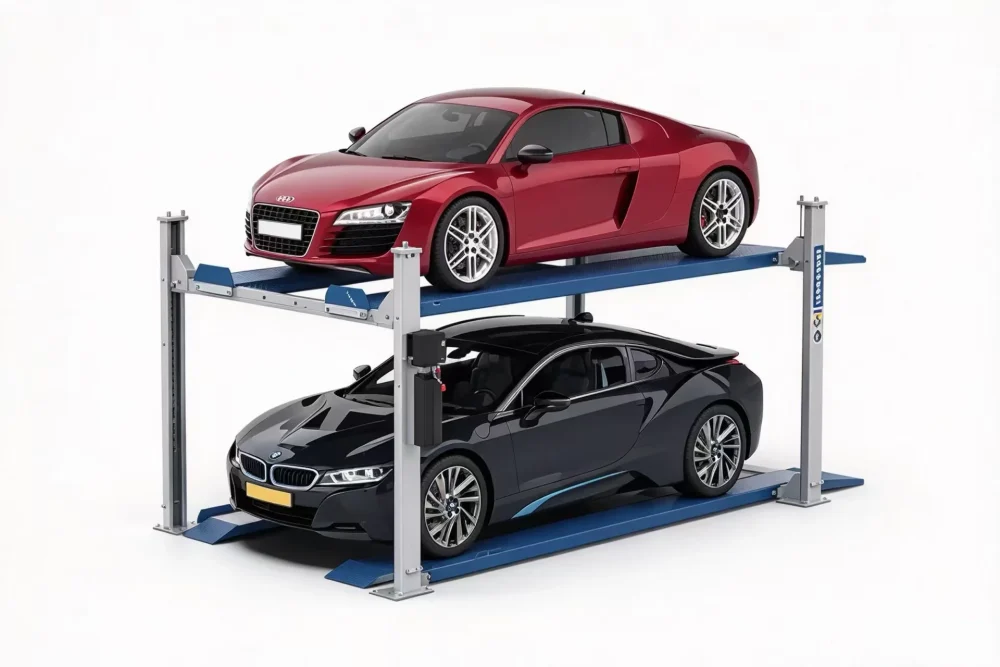
Four-post setups excel in drive-on loading speed, secondary parking storage, and heavy drivetrain component service. While standard ramps obscure suspension assemblies, adding rolling hydraulic bridge jacks converts a four-post 10000 pound car lift into a versatile platform capable of complete wheel-off brake and tire maintenance.
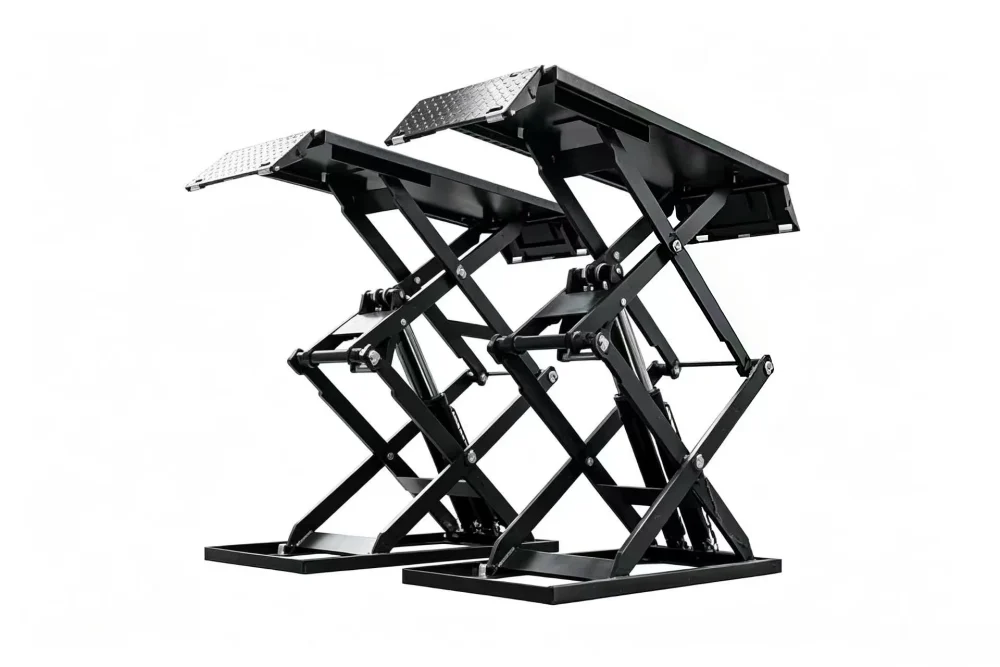
Heavy-Duty Mid-Rise Scissor Lifts
For facilities with lower overhead ceilings or shops focused primarily on tire changing, detailing, body panels, and brake maintenance, a scissor-style 10000 pound car lift offers an effective solution that minimizes bay footprint while retaining maximum lifting strength.
Technical Comparison Matrix
Evaluating core specifications allows shop managers to match structural parameters against physical building layouts before finalizing procurement:
| Feature & Technical Parameter | Asymmetric 2-Post Lift | Symmetric 2-Post Lift | 4-Post Storage/Service Hoist | Mid-Rise Scissor Lift |
| Rated Lifting Capacity | 10,000 lbs (4,535 kg) | 10,000 lbs (4,535 kg) | 10,000 lbs (4,535 kg) | 10,000 lbs (4,535 kg) |
| Primary Application | General repair, brakes, oil swaps | Heavy trucks, fleet vans, pickups | Vehicle storage, wheel alignments | Tire shop, bodywork, detailing |
| Underbody Accessibility | Maximum (Full center access) | Maximum (Full center access) | Moderate (Requires bridge jack) | Partial (Center frame obstructed) |
| Door Opening Clearance | Superior clearance | Standard clearance | Unlimited (No vertical posts) | Unlimited (No side columns) |
| Concrete Depth Minimum | 4″ to 6″ (3,000 PSI concrete) | 4″ to 6″ (3,000 PSI concrete) | 4″ standard (Anchoring optional) | 4″ standard level concrete |
| Ceiling Height Requirement | 11.5 ft to 14 ft | 11.5 ft to 14 ft | 9.5 ft to 12 ft | 7.5 ft to 9 ft |
| Average Lifting Time | 45 to 60 seconds | 45 to 60 seconds | 50 to 65 seconds | 35 to 50 seconds |
Critical Features to Evaluate Before Purchasing
Not every hoist on the market built for ten thousand pounds offers the same level of long-term durability, structural integrity, or operating safety. Here are key engineering features to demand when investing in a 10000 pound car lift:
1. High-Grade Steel Columns & Single-Piece Uprights
Look for heavy gauge, cold-formed structural steel columns. One-piece column designs eliminate weak welded seam joints, ensuring long-term resistance to bending stresses under maximum loads.
2. Dual Hydraulic Cylinders & Direct-Drive / Cable Equalization
Premium lifts utilize heavy-duty hydraulic cylinders paired with aircraft-grade stainless steel equalizer cables. This ensures smooth carriage travel and prevents uneven raising if load weights are distributed unevenly across front and rear axles.
3. Automatic Mechanical Lock Release Systems
Safety latch systems must be absolute and responsive. Opt for models featuring automatic multi-position safety locks that engage automatically as the carriage ascends. Single-point safety lock release levers or pneumatic disengagement controls streamline operations compared to manual dual-column lock pulls.
4. Direct-Fit Lifting Pad Adapters
To safely service high-clearance trucks alongside low-slung sedans, ensure your 10000 pound car lift package includes stackable height adapters, drop-in rubber contact pads, and frame-cradle pads tailored for truck frame rails.
Facility Installation Requirements: Concrete, Power, and Clearance
Proper site preparation prevents costly installation delays and guarantees that your 10000 pound car lift performs safely throughout its operational lifespan.
Floor Concrete Depth and Structural Integrity
Two-post hoists exert tremendous leverage on concrete floor anchor points. Standard commercial specifications require:
Minimum concrete depth of 4 to 6 inches across the entire mounting zone.
Concrete cured to at least 3,000 PSI tensile strength.
Reinforced steel mesh embedded within the slab.
Zero expansion joints, major cracks, or slab seams within 8 to 12 inches of anchor bolt locations.
Ceiling Height and Bay Footprint
Measure total clear overhead space, accounting for light fixtures, heating ducts, garage door tracks, and open roll-up doors. An overhead clear-floor 10000 pound car lift generally demands a minimum 12-foot overhead ceiling clearance. Always account for the full height of your tallest commercial vehicle when raised to the highest mechanical lock setting.
Electrical Power Setup
Most heavy-duty 10,000 lb hydraulic power units require a dedicated 208-230V single-phase electrical circuit on a 20 to 30-amp circuit breaker. Verify that your electrical panel can support the initial motor surge current during maximum-capacity lifts.
Step-by-Step Operating Procedures and Safety Best Practices
Safely operating heavy machinery requires consistent habits. Adheres to these steps whenever operating your 10000 pound car lift:
Daily Pre-Operation Checklist
Fluid Leak Check: Inspect hydraulic hoses, fittings, and cylinder seals for fluid leaks or weeping.
Cable & Sheave Inspection: Verify equalizing steel cables rest centered in their sheaves and show no signs of fraying or rust.
Arm Restraint Verification: Ensure automatic gear arm restraints lock firmly into position when the arms leave the ground.
Pad Condition Check: Inspect rubber arm pads for excessive wear, tears, or embedded debris.
Proper Loading and Lifting Routine
Center the Vehicle: Drive the vehicle centered between the hoist columns, aligning its center of gravity with the lift arms.
Position Swing Arms: Swing arms under designated OEM vehicle jacking points, pinch welds, or heavy frame rails.
Initial Contact & Shake Test: Elevate the vehicle until contact pads engage the frame. Raise the vehicle roughly 6 inches off the ground and gently rock it at the bumper to verify balance before raising it further.
Raise to Working Height: Elevate the vehicle smoothly to desired height, ensuring lock safety latches click in unison on both columns.
Lower onto Locks: Once target height is reached, lower the 10000 pound car lift slightly until mechanical locks rest firmly inside column stops. Never perform work supported only by hydraulic pressure.
Preventive Maintenance and Troubleshooting Guidelines
Routine preventive care maximizes equipment service life and prevents unexpected shop downtime.
Monthly Maintenance Protocols
Grease column slide tracks and arm hinge pins using high-grade lithium grease.
Inspect anchor bolt torque settings; re-torque anchors to manufacturer foot-pound specifications if needed.
Check hydraulic fluid reservoir level and top off with clean ISO VG 32 or ISO VG 46 hydraulic oil.
Common Troubleshooting Scenarios
Lift Raises Slow or Jerky: Bleed air trapped within hydraulic cylinders; check for low hydraulic oil levels; inspect suction filters inside the power unit.
Safety Locks Will Not Disengage: Raise the lift slightly off lock latches before pulling the safety disengagement cable or lever to relieve mechanical tension.
Carriages Lift Unevenly: Adjust equalizer cable tension nut on top of carriages until both sides rise in complete synchronization.
Frequently Asked Questions (FAQ)
What grade of hydraulic oil should I use in my 10000 pound car lift?
Standard ISO VG 32 or ISO VG 46 high-grade hydraulic oil is recommended. These fluids offer reliable viscosity, anti-foaming characteristics, and seal protection across broad operating thermal ranges.
Can I install a 10000 pound car lift in a residential garage?
Yes, provided your residential garage floor meets minimum concrete thickness (4 to 6 inches, 3,000 PSI) and your ceiling height can accommodate the hoist column height (typically requiring at least 12 feet of overhead clearance).
How often should equalizer cables be adjusted on a two-post lift?
Equalizer cables should be visually inspected monthly and re-tensioned during bi-annual routine maintenance checks to ensure both lifting carriages remain balanced and safety latches engage simultaneously.
What is the main difference between symmetric and asymmetric arm setups?
Asymmetric configurations feature shorter front arms and longer rear arms to shift vehicle weight rearward, enabling vehicle doors to open wider for easier cabin access. Symmetric configurations feature four arms of equal length designed to support centered long-wheelbase trucks and vans.
How often do safety locks require mechanical maintenance?
Safety latches must be visually checked daily and cleaned and lubricated monthly with light oil or silicone spray to ensure smooth, reliable locking action.
Do I need a 10000 pound car lift if I only service standard cars?
Yes. Purchasing a higher-capacity lift provides essential safety headroom, structural stability, reduced mechanical wear on components, and future-proofs your garage for heavier modern SUVs, trucks, and electric vehicles.
Partner with Premier Lifting Equipment Engineers
Selecting durable vehicle lifting systems demands reliable manufacturing quality, precise structural design, and responsive post-sale support. Whether you are equipping a commercial auto repair facility or building your dream residential workshop, partnering with industry experts guarantees that your service bays operate efficiently, safely, and dependably.
To explore tailored equipment options, request technical specifications, or consult directly on selecting the ideal 10000 pound car lift for your layout, reach out to our engineering support team today:
Email: [email protected]
Phone / WhatsApp: +86 189 5417 1380
 German
 English
 Arabic
 French
 Korean
 Spanish
 Russian