
Understanding the full financial scope of commercial car lift cost is essential for auto repair shop owners, dealership service directors, fleet maintenance managers, and commercial garage operators looking to expand capacity, replace aging hoists, or equip a brand-new automotive facility. The initial purchase price tag of a heavy-duty hoist represents only one portion of the total investment. A comprehensive budget evaluation must incorporate equipment specifications, concrete floor preparation, high-voltage electrical utility upgrades, freight delivery logistics, certified professional installation, and ongoing maintenance lifecycle expenses.
A professional automotive hoist directly impacts shop throughput, technician safety, labor ergonomics, and daily revenue generation. Evaluating every variable that drives commercial car lift cost ensures shop owners make well-informed purchasing decisions that deliver fast payback cycles and long-term operating profitability.
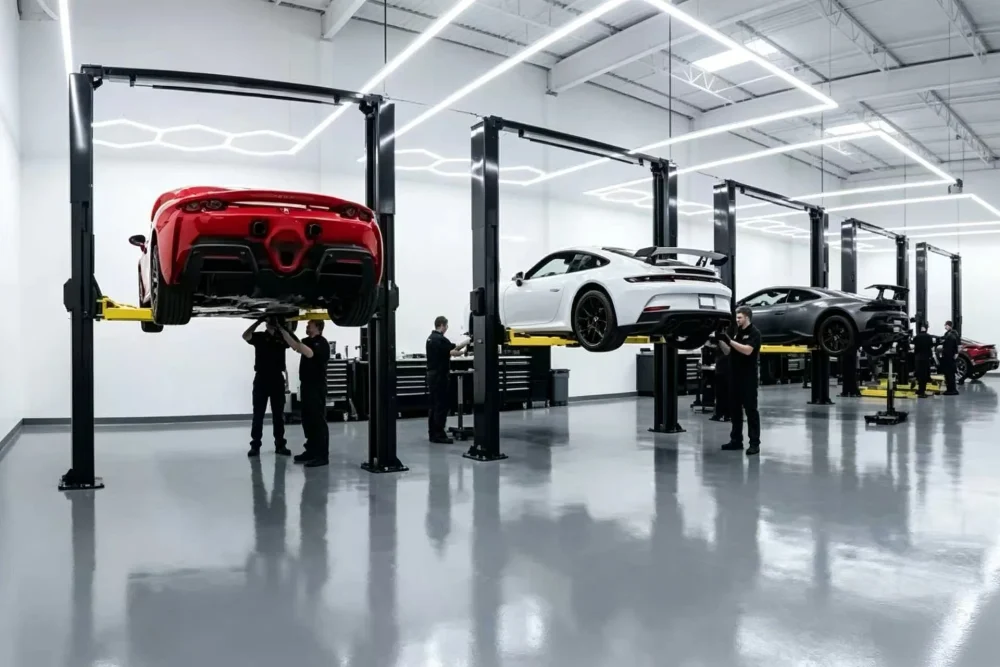
Breakdown of Commercial Car Lift Costs by Lift Type
The baseline equipment purchase price of a commercial vehicle hoist varies significantly depending on structural engineering designs, maximum weight capacities, hydraulic power units, and built-in safety features. Below is a detailed cost comparison breakdown across primary commercial lift categories:
| Commercial Lift Type | Typical Weight Capacity Range | Average Equipment Cost ($ USD) | Primary Commercial Application |
| Two-Post Commercial Lift | 4,500 kg – 6,800 kg (10,000 – 15,000 lbs) | $3,500 – $8,500 | General mechanical service, brakes, tires, oil changes, transmission repairs |
| Four-Post Heavy Duty Lift | 6,000 kg – 18,000 kg (14,000 – 40,000 lbs) | $5,500 – $18,500 | Quick inspections, commercial fleet maintenance, alignment work, long-term storage |
| In-Ground Hydraulic Lift | 4,500 kg – 12,000 kg (10,000 – 26,000 lbs) | $10,000 – $28,000 | Clean bay aesthetic, high-volume dealerships, space-constrained service bays |
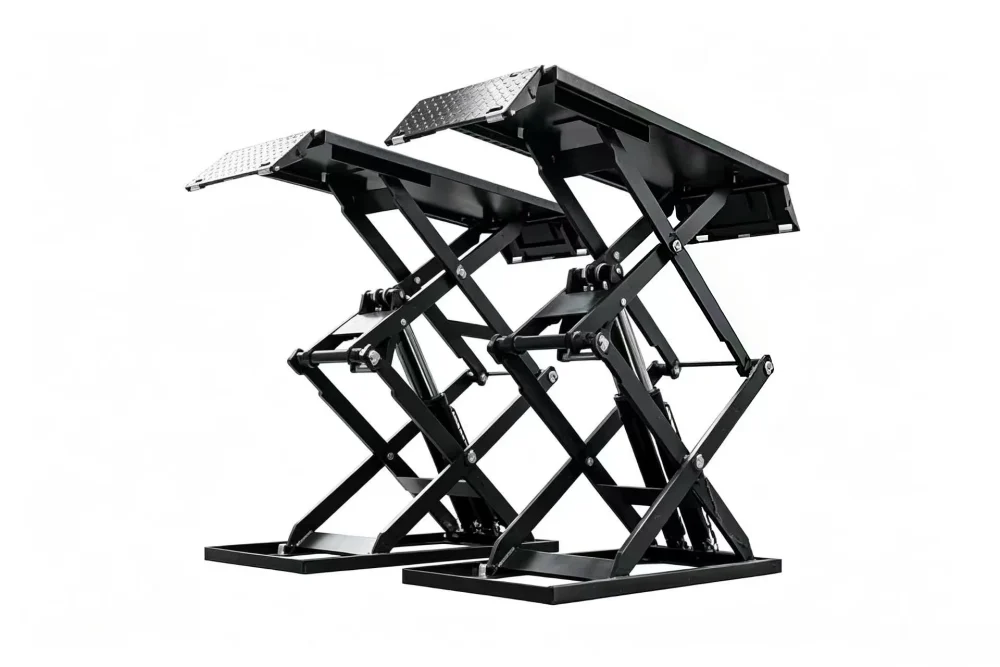
| Commercial Scissor Lift | 3,500 kg – 6,000 kg (8,000 – 14,000 lbs) | $4,500 – $12,000 | Wheel alignment bays, quick tire rotation, body shops, detailing operations |
| Mobile Column Lift System | 20,000 kg – 45,000 kg (45,000 – 100,000+ lbs) | $24,000 – $55,000 | Heavy municipal transit buses, semi-trucks, agricultural machinery, construction fleets |
| Heavy Commercial Bus & Truck Lift | 14,000 kg – 30,000 kg (30,000 – 66,000 lbs) | $18,000 – $45,000 | Heavy commercial vehicle maintenance, logistics fleets, highway tractors |
Primary Factors Influencing Commercial Car Lift Cost
Not all hoists are manufactured equal. Several engineering specifications directly drive equipment prices up or down across the commercial automotive market:
- Rated Lifting Capacity & Steel Thickness
Heavy-duty lifts built to service 1-ton diesel trucks, armored vehicles, or electric vehicles with heavy lithium battery packs require thicker manganese or Q345 structural steel posts, wider cross-beams, reinforced swing arms, and oversized hydraulic cylinders. Higher weight ratings naturally increase manufacturing material costs.
- Certification & Safety Standards (ALI / CE Compliance)
Lifts certified by official safety bodies (such as the Automotive Lift Institute / ALI) undergo rigorous third-party testing, including load verification up to 150% of rated capacity and strict mechanical lock checks. ALI-certified commercial lifts typically cost 15% to 30% more than uncertified models, but they are frequently mandatory for commercial shop insurance compliance and OSHA safety standards.
- Hydraulic Power Unit & Motor Horsepower
Commercial service bays operate hoists continuously throughout 8-to-12-hour shifts. Industrial-grade 3-phase 380V/480V motor power packs designed for fast 30-second rise cycles cost more than standard single-phase residential motors, but they provide faster customer turnaround and long-term motor durability.
- Specialized Accessories & Drive Options
Adding integrated wheel alignment turntables, slip plates, pneumatic rolling jack bridges, LED runway lighting packages, or specialized arm adapters directly increases initial equipment purchase quotes.
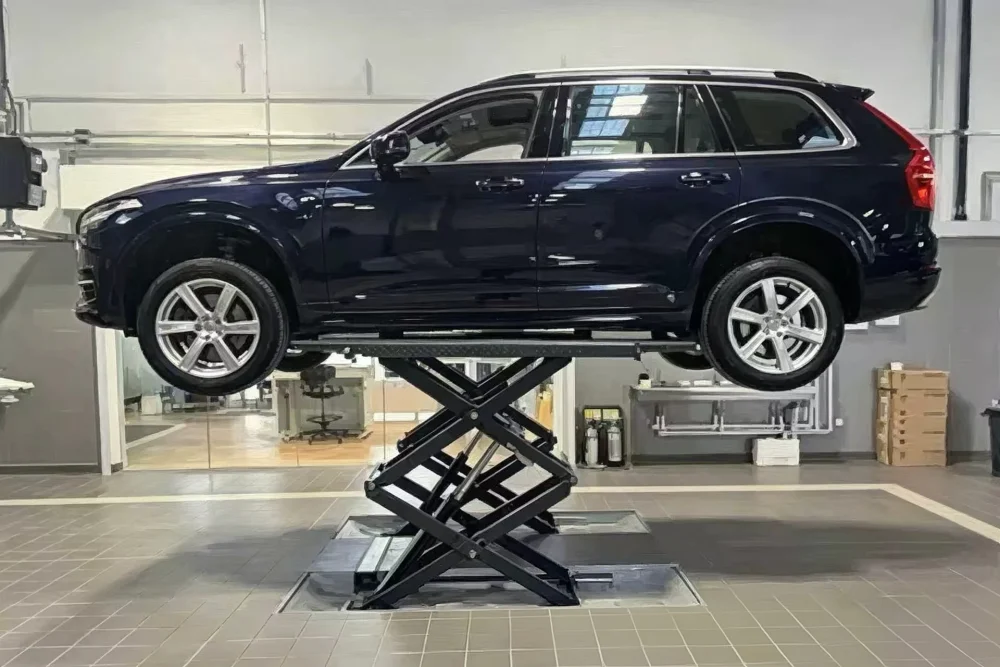
Hidden Costs: Installation, Delivery, and Site Preparation
When calculating the true total commercial car lift cost, business owners must look beyond the base equipment price quote. Additional installation and civil engineering expenses typically include:
Total Investment Formula: Total Investment = Base Equipment Price + Shipping Freight + Concrete Slabs + Electrical Wiring + Certified Installation
Shipping & Freight Logistics ($500 – $2,000 per unit): Heavy steel columns and hydraulic power packs weigh anywhere from 1,000 kg to over 4,000 kg. Flatbed freight delivery, liftgate service, or offloading crane rentals add to overall delivery budgets.
Concrete Foundation Testing & Slab Modifications ($800 – $4,500): Two-post commercial lifts place heavy concentrated pulling torque on shop floors. If existing concrete slabs are under 150 mm thick or under 3,000 PSI compressive rating, cutting out floor sections and pouring reinforced concrete footings is mandatory before post installation.
Electrical Panel Upgrades ($500 – $2,500): Running high-voltage 220V single-phase or 380V/480V 3-phase dedicated electrical lines, circuit breakers, and wall disconnect boxes to each lift bay requires licensed commercial electrician services.
Professional Certified Installation ($800 – $2,500 per unit): Assembling heavy columns, routing equalizer cables, bleeding hydraulic lines, setting safety locks, and setting expansion anchors properly requires certified lift technicians to ensure safety compliance and protect factory warranty coverage.
Long-Term Maintenance & Operational Lifecycle Expenses
Maintaining low lifetime ownership costs requires accounting for routine preventive maintenance, wear-and-tear replacement parts, and annual safety inspections:
Annual OSHA / ALI Safety Inspections ($200 – $450 per lift annually): Most commercial shop insurance policies require mandatory annual inspections performed by certified lift inspectors to verify cable tension, safety latches, and hydraulic integrity.
Preventive Maintenance Supplies ($150 – $300 annually): Periodic replacement of ISO AW32/46 hydraulic oil, grease for inner column slider tracks, filter flushes, and rubber arm lifting pads prevents premature mechanical failures.
Wear-and-Tear Replacement Parts ($300 – $1,200 over 5 years): Over extended commercial use, items like equalizer cables, rubber arm pads, hydraulic seals, and micro-switches will require periodic service replacement.
Return on Investment (ROI) & Revenue Generation Calculation
While evaluating commercial car lift cost involves substantial capital expenditure, a commercial hoist is an active income-generating asset. Modern hydraulic lifts boost shop productivity by saving technician time on every repair job:
Time Efficiency Gains: A high-speed commercial hoist saves technicians an average of 15 to 20 minutes per vehicle compared to floor jacks or low-rise ramps when accessing oil pans, exhausts, suspensions, and brakes.
Direct Labor Revenue Impact: Saving 20 minutes per job allows a single technician to perform 2 to 3 additional repair jobs per day. At a standard labor rate of $120/hour, one lift bay can generate an extra $200 to $360 in gross daily labor revenue.
Payback Period: A standard $5,000 two-post commercial lift (installed for $7,000 total) frequently pays for itself completely within 3 to 6 months of continuous commercial shop operation.
Cost-Saving Strategies When Purchasing Commercial Car Lifts
Commercial garage operators can optimize their capital equipment budgets by applying strategic procurement methods:
Multi-Bay Bulk Wholesale Ordering: Purchasing multiple hoists simultaneously directly from OEM factory manufacturers or authorized commercial distributors significantly reduces per-unit equipment prices and consolidated container freight costs.
Leasing & Equipment Financing Programs: Financing commercial lifts through monthly lease-to-own programs spreads capital expenditure over 36 to 60 months, preserving shop working capital while allowing equipment to pay for itself through daily labor billing.
Tax Deductions (Section 179 / Capital Allowance): In many jurisdictions, commercial auto repair equipment purchases qualify for full first-year tax write-offs under capital depreciation rules, lowering net equipment costs significantly.
Selecting Versatile Dual-Purpose Models: Installing asymmetric two-post lifts or four-post lifts with rolling jacks allows a single bay to handle both general maintenance and specialized wheel/suspension jobs without requiring separate equipment investments.
Comparative Analysis: New vs. Used Commercial Car Lifts
Purchasing pre-owned commercial equipment may seem like an attractive way to lower initial cash outlay, but it carries distinct operational risks:
| Cost & Risk Variable | Brand New Commercial Lift | Pre-Owned / Used Commercial Lift |
| Initial Purchase Price | Standard Market Value ($3,500 – $12,000) | 30% to 50% Lower ($1,500 – $5,000) |
| Factory Warranty Protection | Full 1 to 5 Year Warranty on Structure & Hydraulics | Zero Warranty Coverage (Sold “As-Is”) |
| Safety & Inspection Compliance | Fully compliant with current ALI / CE safety standards | May fail modern OSHA / insurance safety inspections |
| Hidden Wear & Fatigue | Zero steel fatigue or hidden cable wear | Risk of hairline steel cracks, worn cables, leaky cylinders |
| Replacement Parts Availability | Original factory replacement parts readily available | Risk of obsolete parts or discontinued manufacturer support |
Purchasing brand-new equipment provides factory warranty protection, long service life, and guaranteed compliance with commercial shop safety regulations, making it the safer long-term investment.
Frequently Asked Questions (FAQ)
Q1: What is the average cost to install a commercial car lift?
On average, professional installation for a standard two-post or four-post commercial car lift costs between $800 and $2,500 per unit, excluding specialized concrete pouring or high-voltage electrical panel upgrades.
Q2: How thick must my garage concrete floor be for a commercial two-post lift?
Most commercial two-post lifts require a solid concrete slab at least 150 mm (6 inches) thick with a minimum compressive strength of 3,000 PSI. Heavy-duty 12,000+ lb capacity lifts may require 200 mm (8 inches) or dedicated reinforced concrete footings.
Q3: Is an ALI certification worth the extra cost for commercial shops?
Yes. Automotive Lift Institute (ALI) certification verifies that the lift meets strict structural safety and load testing standards. Most commercial auto shop insurance providers and OSHA inspectors require ALI-certified equipment to maintain coverage and code compliance.
Q4: Should I buy a single-phase or 3-phase power unit for a commercial garage?
If 3-phase electrical utility power (380V / 480V) is available in your commercial building, select a 3-phase power pack. 3-phase motors offer faster lifting cycles, lower electrical current draw, and higher motor longevity under continuous heavy daily use.
Q5: How long does a commercial hydraulic car lift last?
With routine maintenance, timely cable replacements, and proper fluid changes, a commercial-grade hydraulic car lift lasts between 10 and 20+ years of continuous service in high-volume auto repair facilities.
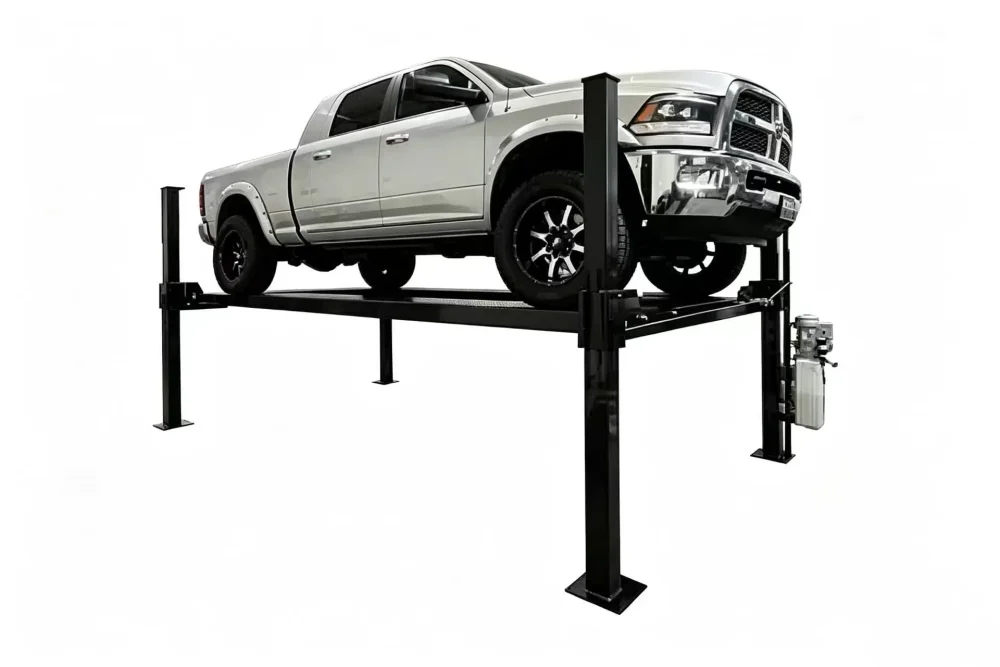
Request Direct Factory Wholesale Pricing & CAD Bay Planning
Navigating commercial car lift cost requires balancing structural durability, lifting capacity, installation scope, and long-term shop revenue potential. For custom facility CAD layouts, bulk equipment quote packages, or direct factory pricing, contact our commercial engineering team today:
Email: [email protected]
Phone / WhatsApp: +86 189 5417 1380
 German
 English
 Arabic
 French
 Korean
 Spanish
 Russian