
When you’re planning a new warehouse or retrofitting an old factory, one question tends to pop up late in the conversation—usually after budgets are already set.Will my forklift actually fit inside the lift? I’ve seen this mistake more times than I’d like to admit. A brand-new freight lift gets installed, and on day one, the operator discovers that the pallet jack can’t turn around, or that the door opening is two inches narrower than the widest skid.
That’s why getting the freight lift dimensions right from the beginning is not just a technical detail—it’s the foundation of your daily workflow. Get them wrong, and you’ll be living with a bottleneck for the next 15 years.
In this guide, I’ll walk you through exactly how to determine the correct internal sizes for your operation. You’ll learn how to measure properly, what hidden clearances matter, and how to avoid the most expensive mistakes. We’ll also look at a real-world reference table, answer frequently asked questions, and give you a simple path forward.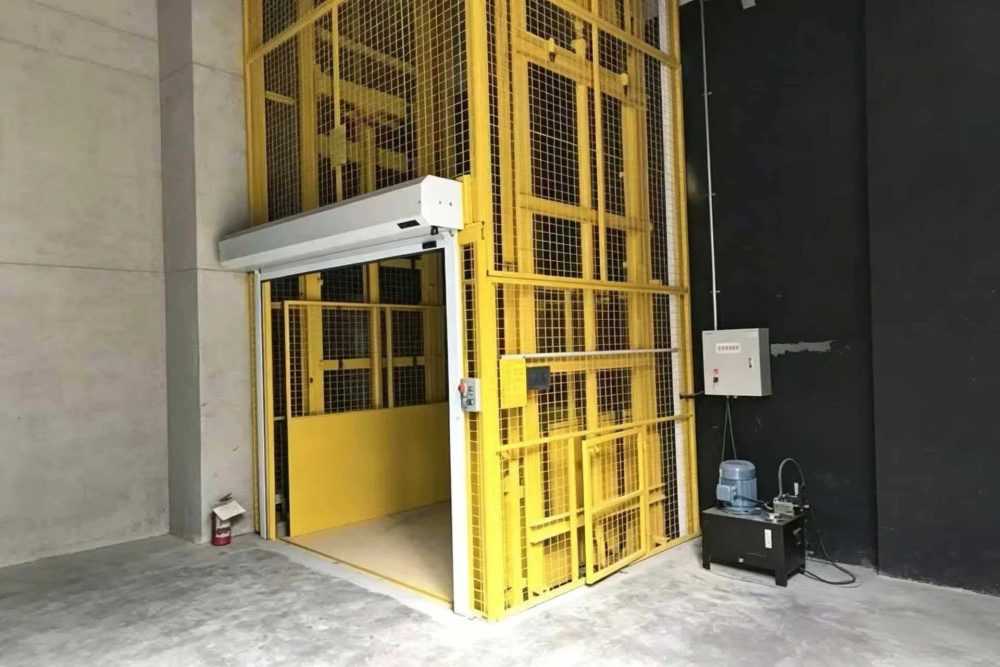
Why Size Matters More Than Just Weight Capacity
Many buyers focus only on rated load capacity. They think, “I need 3000 kg, so I’ll look at lifts that can handle 3000 kg.” But here’s the thing: a lift that can lift three tons might still be too small if its platform is only two meters deep. The actual platform size determines how you load the lift—not just what you put inside.
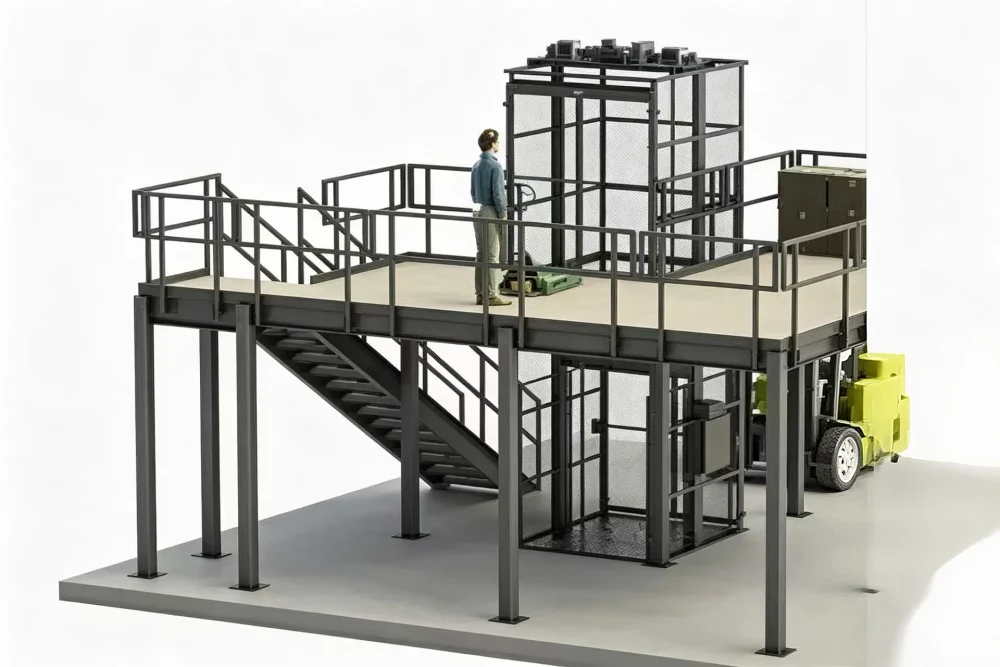
For example, if you plan to drive a forklift directly into the car, the required platform size changes completely. A standard 3-ton counterbalance forklift measures about 3.5 meters long with its forks retracted. Add a loaded pallet, and you’re looking at nearly 4 meters. If your platform depth is only 4 meters, the operator has no room to align the forks or turn around. You need at least 4.3 to 4.5 meters for safe drive‑in operation. That’s why careful freight lift dimensions planning is essential.
Similarly, door opening height is often overlooked. Your cargo might be 2.1 meters tall, but if the door header reduces clear opening to 2.0 meters, you’re stuck. Always measure from the finished floor to the lowest point of the door opening when fully raised. Ignoring this detail means your usable space is smaller than you think.
Three Hidden Measurements You Must Check
Before you call any supplier, grab a tape measure and check these three things on your existing shaft or planned building. These will directly affect your final freight lift dimensions.
- Pit depth– The space below the lowest landing. For hydraulic lifts, enough pit depth allows the car to sit flush with the floor. If your required pit depth is 300 mm but your building only has 150 mm, you’ll need a ramp—and ramps are trip hazards for forklifts. This constraint will force you to adjust your platform size.
- Overhead clearance– The space above the top floor. A typical freight lift needs 3.5 to 5 meters of overhead, depending on the drive system. This clearance isn’t just about the car roof; it includes the machinery and traveling cables.
- Side clearances between car and shaft wall– Safety codes (like ASME A17.1 or EN81‑20) require specific gaps for guide rails and counterweights. If you push your platform too close to the shaft walls, you might fail inspection. Those few centimeters of clearance are part of the overall equation for freight lift dimensions.
Common Lift Sizes – A Practical Reference Table
The table below combines real-world application scenarios with detailed technical parameters. Use it as a starting point for your own freight lift dimensions evaluation.
| Application Scenario | Rated Capacity (kg) | Platform L × W (mm) | Door Opening (W × H mm) | Key Notes |
| Small workshop / mezzanine | 500 – 1000 | 1500 × 1500 | 1200 × 2000 | Manual pallet jacks only; no forklift drive‑in. Fits two Euro pallets side by side. |
| Retail back-of‑house / light warehouse | 1000 – 2000 | 2000 × 1800 | 1600 × 2100 | Designed for roll cages and hand trucks. Allows 90° turn of a 1.2m pallet. |
| Forklift drive‑in (standard 3‑ton forklift) | 3000 – 5000 | 4500 × 2200 | 2200 × 2400 | Minimum platform size for a counterbalance forklift with a 1.2m load. Add 300mm to depth for margin. |
| Very long cargo (steel pipes, lumber) | 4000 – 6000 | 6000 × 2000 | Custom (often pass‑through) | Customized car dimensions; requires multi‑panel or vertical doors. |
| Heavy industrial / tandem loading | 8000 – 10000 | 7000 × 2800 | 2600 × 2600 | Two forklifts crossing? This configuration needs structural verification. |
These numbers are starting points. Always run an on‑site simulation before finalizing your lift’s internal measurements. Even 50 mm can make or break your workflow.
How the Door Type Changes Usable Space
Many people forget that the door opening is part of the effective working space. A 2000 mm wide platform is useless if the sliding door only leaves 1600 mm clear when open.
- Side‑sliding doors: Save vertical space but eat up lateral shaft width. They are good when the platform is generously wide.
- Center‑opening (biparting) doors: Faster and common for general freight. They work well for most standard layouts.
- Vertical bi‑parting doors: Ideal for narrow shafts where you cannot spare side space. They slide up and down, preserving the full width of the platform. If you’re retrofitting an old building with a tight shaft, this door type is often your best friend.
Choosing the right door can effectively increase your usable freight lift dimensions without changing the car itself.
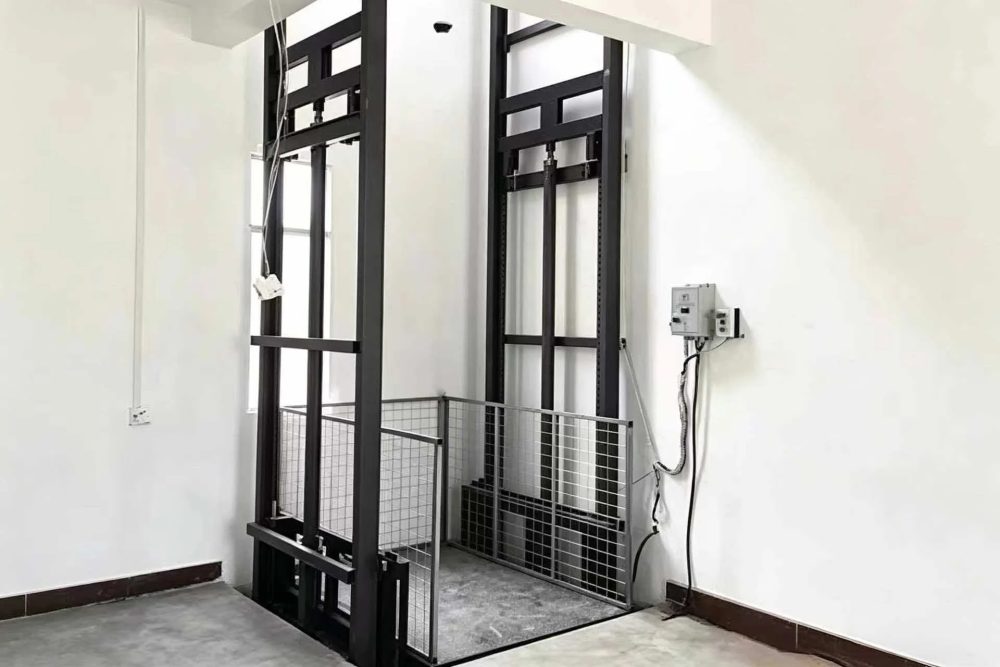
Safety Class and Its Impact on Internal Sizes
According to international standards (EN81‑20, ASME A17.1), freight lifts are classified by how they are loaded. This directly affects your choice of internal dimensions.
- Class A (General freight): Load is distributed, and no single piece exceeds 25% of capacity. The platform can be relatively lightweight.
- Class B (Motor vehicle loading): Designed for cars or small trucks. The car must accommodate wheel loads and ramp angles. The platform needs to be wider.
- Class C (Industrial truck loading): Forklifts drive inside. The floor must be reinforced, which adds thickness. That extra 30–50 mm reduces the internal vertical height slightly. Account for this when you specify your freight lift dimensions.
I’ve seen projects where the ceiling height was spec’d at 2400 mm, but after adding a Class C reinforced floor, the effective height dropped to 2350 mm—and the tallest load was 2360 mm. That’s a painful miss.
Future‑Proofing Your Lift’s Platform Size
Logistics rarely stays the same for a decade. Pallet sizes evolve, forklifts get bigger, and your product mix changes. When you choose a lift’s internal dimensions, always add a safety margin:
- Length/Depth: Add at least 200 mm beyond your current largest load.
- Width: Add 300 mm to allow for off‑center entry.
- Height: Add 200 mm to accommodate taller racking or stacked pallets in the future.
The extra cost during initial installation is minimal compared to the cost of replacing an entire lift later. Generous freight lift dimensions today save you from regret tomorrow.
Häufig gestellte Fragen About Freight Lift Dimensions
Q1: What exactly do “freight lift dimensions” include?
They cover platform length, platform width, internal height, clear door opening size, and often pit depth and overhead clearance. Always ask for a drawing.
Q2: Can I change the car size after the lift is built?
Almost never. Once the car is welded and the guide rails are cut, modifying the internal dimensions is prohibitively expensive. Lock in your freight lift dimensions before production starts.
Q3: Is larger always better?
No. Oversizing increases cost, requires more energy, and may slow down door operations. The goal is the smallest safe size that handles your 95th percentile load.
Q4: How much clearance do I need for a forklift to turn inside?
If you need a 90° turn, the platform width must be at least the diagonal length of the forklift plus 300 mm. In practice, for a 3‑ton forklift, that means a width of at least 2600 mm.
Q5: Do you offer custom lift sizes for irregular loads?
Yes. Many of our projects involve custom car dimensions for aerospace parts, coils, or machinery. We can design around your existing shaft or building constraints.
Q6: What happens if my lift’s size doesn’t meet local codes?
The lift will fail inspection, and you may be forced to demolish and rebuild the shaft. Always have a certified engineer review your proposed freight lift dimensions before ordering.
A Simple Three‑Step Process to Nail Your Lift’s Sizing
Step 1:List every type of load that will use the lift. Include the largest pallet, the tallest machine, and the widest skid. Also note the loading equipment.
Step 2:Measure your available shaft space—width, depth, pit depth, and overhead. Compare this with the minimum required platform dimensions for your loads.
Step 3:Add safety margins (10% length, 15% width, 200 mm height). Then ask a supplier to provide a CAD layout showing how your car will fit inside the shaft.
Don’t guess. Don’t assume. A few hours of careful measurement today will save you years of operational frustration.
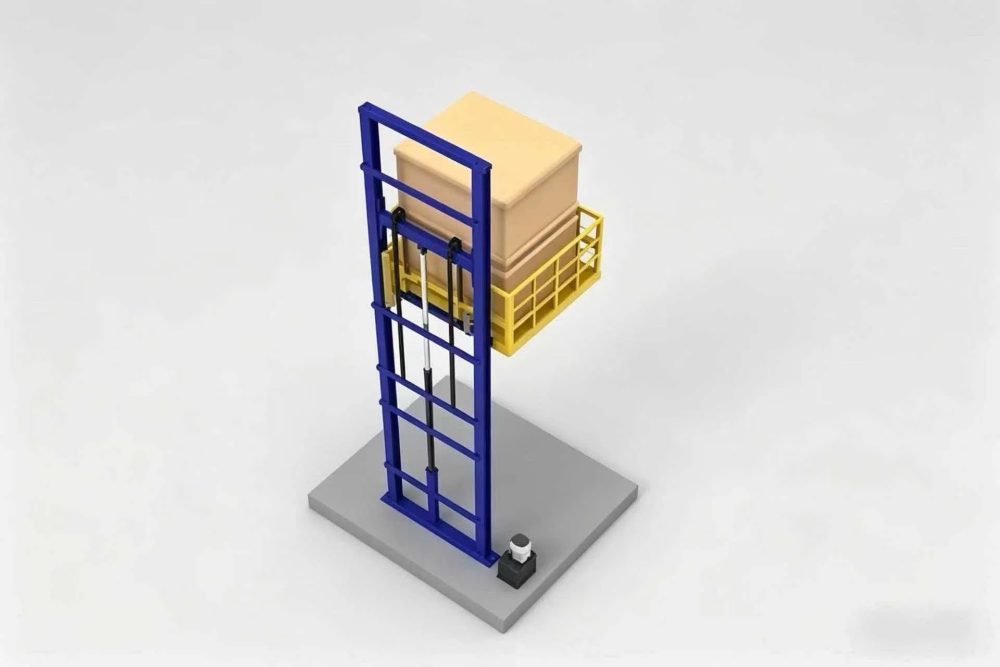
Schlussfolgerung
Getting your freight lift dimensions right from the beginning is not a minor technical detail—it is the foundation of your entire warehouse workflow. As we’ve seen, focusing only on weight capacity while ignoring platform size, door clearance, pit depth, and overhead space leads to costly mistakes: forklifts that can’t turn, pallets that don’t fit, and lifts that fail inspection. The lift itself must be treated as an integrated part of your material handling system, and that means choosing the right door type, respecting safety classes (A, B, or C), and always adding safety margins for future growth. When you finally lock in your freight lift dimensions—length, width, height, plus pit and overhead clearances—you are making a decision that will affect daily operations for the next 15 years. Measure your largest load and your tallest forklift. Simulate the turn. Add 200 mm to depth, 300 mm to width, and 200 mm to height. Then call a certified engineer to review your numbers. A few hours of careful planning today will save you years of frustration, rework, and lost productivity. Nail your freight lift dimensions now, and your warehouse will run smoothly for decades to come.
Call / WhatsApp:+86 189 5417 1380
Email:[email protected]
We speak English, ship worldwide, and offer free preliminary layout advice. Let’s get your freight lift dimensions right the first time.
 German
 English
 Arabic
 French
 Korean
 Spanish
 Russian