
Whether you are setting up a professional automotive repair shop, expanding a commercial service fleet, or optimizing a home garage for personal vehicle restoration, selecting the right equipment is a critical decision. Among all garage machinery, vehicle lifting systems serve as the foundation for efficiency, safety, and ergonomics. Understanding the various types of car lifts available today ensures you invest in a system tailored to your specific mechanical requirements, floor space, and weight capacities.
Automotive lifting technology has evolved significantly over recent decades. Modern manufacturers engineer equipment ranging from compact portable units to industrial multi-ton hydraulic platforms. Because each design targets different operational needs, exploring the distinct types of car lifts allows garage owners to make informed decisions that maximize productivity and worker safety.
Why Understanding the Types of Car Lifts Matters
Investing in garage lifting equipment involves evaluating ceiling height, concrete foundation strength, budget, and intended vehicle applications. Failing to research the major types of car lifts beforehand can lead to installation bottlenecks, unsafe operating conditions, or purchasing a model that cannot accommodate your specific vehicle inventory.
For example, a shop focused on quick oil changes and tire rotations demands very different capabilities than a facility specializing in heavy-duty commercial truck repairs or long-term vehicle storage. By matching your workflow with appropriate types of car lifts, you establish a smoother service pipeline, improve technician posture during undercarriage work, and optimize square footage.
1. Two-Post Car Lifts
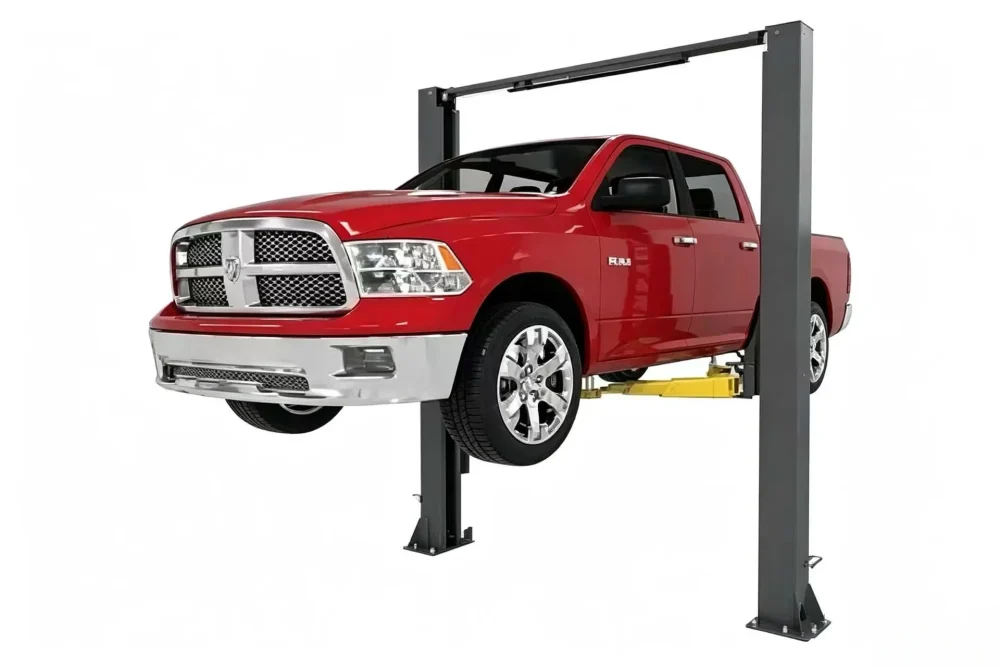
Two-post lifts represent the most ubiquitous sight in modern service bays and commercial auto repair shops. These surface-mounted, frame-engaging lifts feature two rigid steel columns equipped with hydraulic cylinders and swing arms that engage the vehicle’s frame lifting points.
Symmetrical Two-Post Lifts
In symmetrical designs, the two vertical posts face each other directly, and the four support arms are equal in length. Each arm carries approximately 25 percent of the vehicle load. While this offers excellent balance for standard passenger cars and light SUVs, technicians must position the vehicle carefully so the doors do not hit the columns when opened.
Asymmetrical Two-Post Lifts
To solve door clearance issues, asymmetrical designs feature posts turned at a slight angle alongside shorter front arms and longer rear arms. This configuration shifts the vehicle back, allowing doors to open wide while keeping the center of gravity balanced over the columns. When comparing types of car lifts for general mechanical work, asymmetrical two-post units remain top choices because they offer unobstructed undercarriage access to suspensions, exhausts, and drive shafts.
2. Four-Post Car Lifts
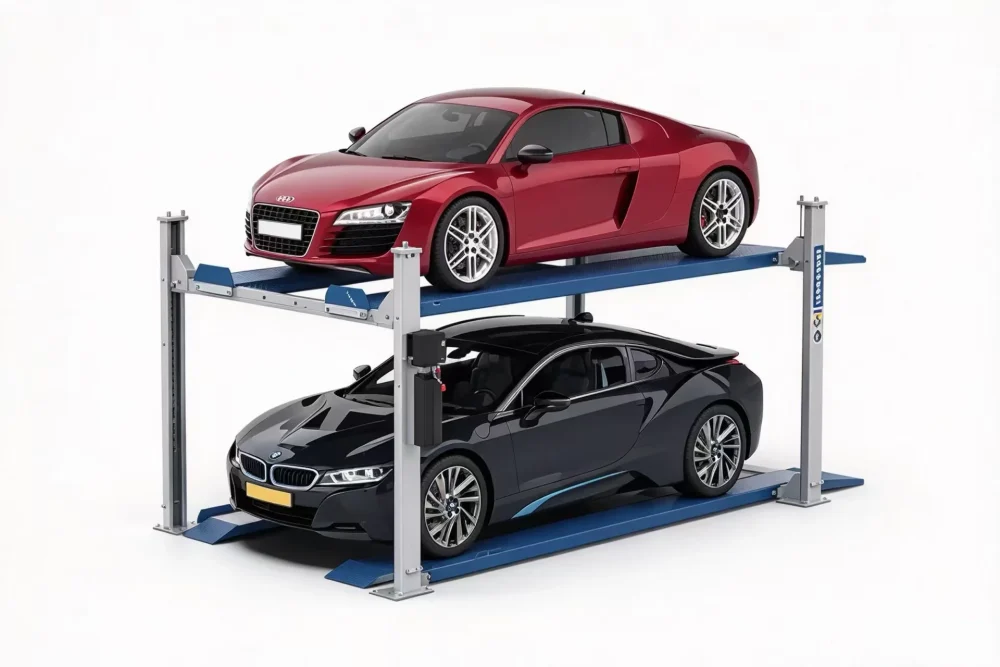
Four-post lifts are wheel-engaging systems that feature four vertical columns supporting two parallel drive-on runways. Rather than lifting by the vehicle frame, the vehicle is driven directly onto the runways, which are then elevated hydraulically.
Storage and Parking Applications
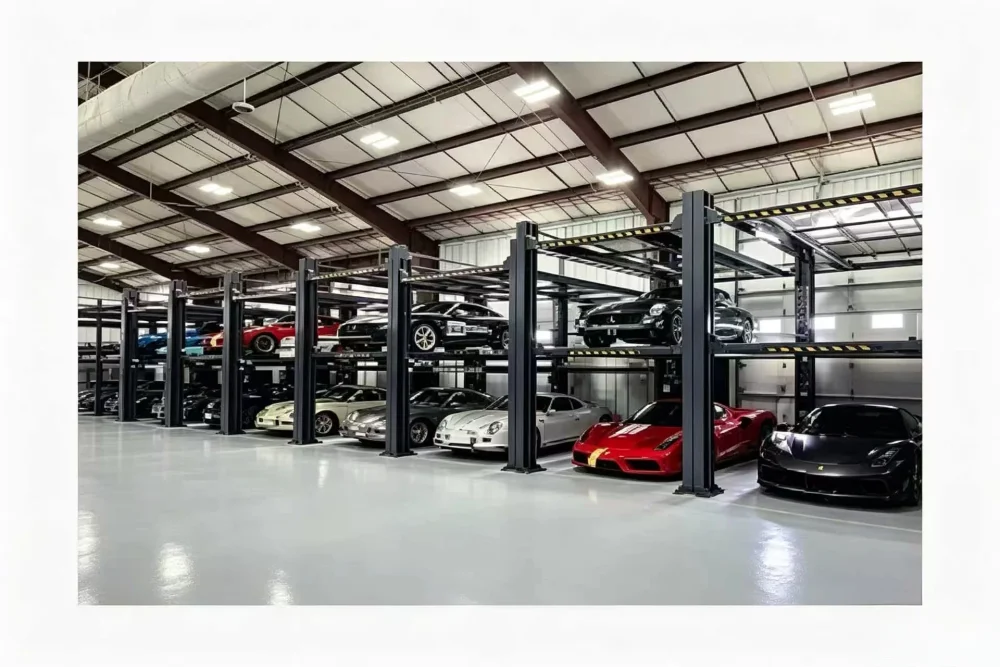
Among all traditional types of car lifts, four-post models excel at vehicle storage. Because the car rests on its wheels, suspension components remain under natural stress rather than hanging free. Many homeowners use four-post systems to park one car above another, effectively doubling garage capacity without construction work.
Heavy Maintenance and Service Lifts
Four-post models also scale to high load capacities, making them ideal for heavy trucks, commercial vans, and wheel alignment work. Optional accessories like sliding rolling bridge jacks allow technicians to lift wheels off the runways for brake and suspension jobs. While evaluating various types of car lifts, four-post units stand out for their drive-on simplicity and stability.
3. Scheren-Autobühnen
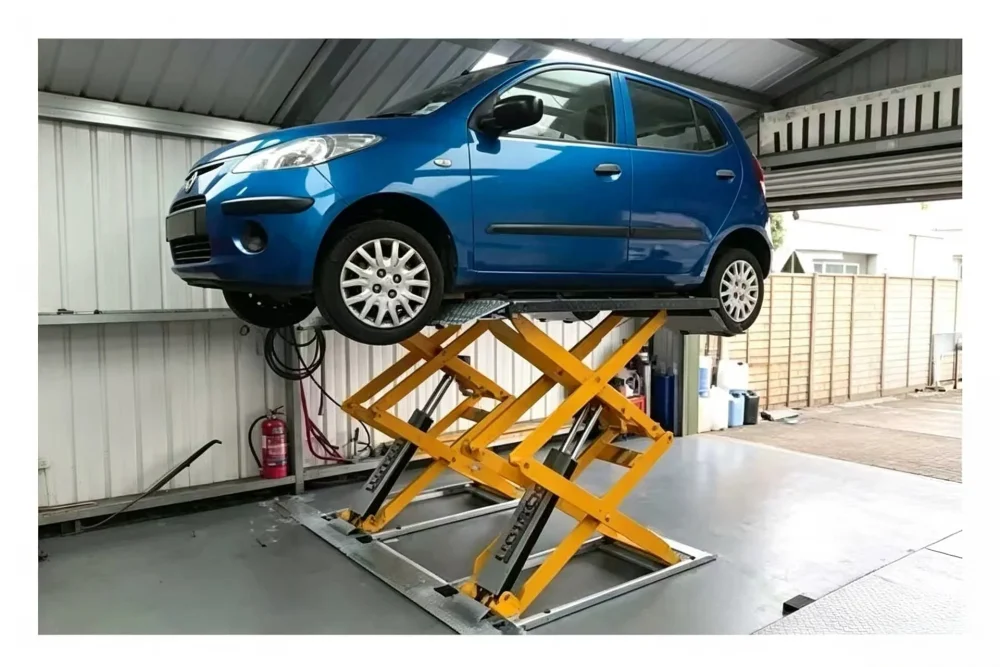
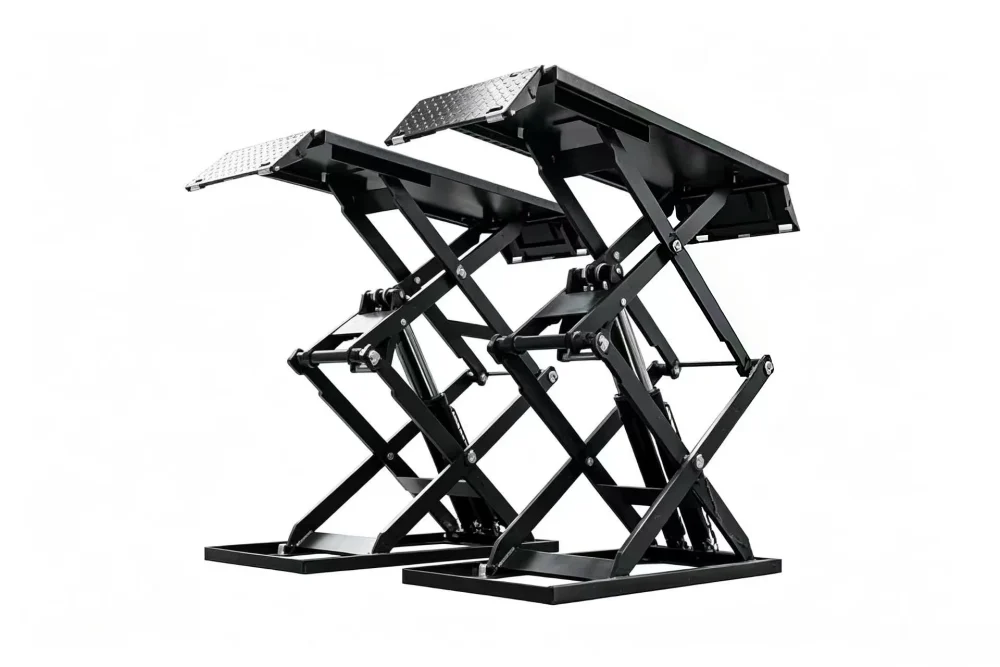
Scissor lifts utilize an accordion-like folding mechanism beneath the lifting platform, driven by powerful hydraulic cylinders. They raise the vehicle straight up and collapse into a low-profile footprint when lowered.
Low-Rise and Mid-Rise Scissor Lifts
Low-rise lifts raise vehicles up to 36 inches, whereas mid-rise models reach 36 to 48 inches off the ground. These compact units are popular in detailing shops, tire centers, and body shops where full undercarriage height is unnecessary, but access to wheels, brakes, and body panels is vital.
Scherenhebebühnen in voller Höhe
Full-rise scissor designs extend to standard standing heights and can be frame-engaging or wheel-engaging. Because they lack vertical side columns, they conserve floor space. Many high-end repair centers choose flush-mounted full-rise scissor types of car lifts to keep shop floors completely flat when unused.
4. Portable and Mobile Car Lifts
Not every garage has the ceiling clearance or concrete thickness required for permanent post installations. Portable lifting systems solve this problem by offering flexible mobility.
Frame-Engaging Portable Units
Low-profile frame lifters consist of two separate motorized steel frames placed underneath the vehicle’s rocker panels. They raise the vehicle roughly 20 to 24 inches for quick tire swaps, oil changes, or brake maintenance, and can be stowed away against a wall or under a workbench.
Mobile Column Lifts
At the heavy-duty end of portable types of car lifts, mobile column systems consist of four to eight independent posts on heavy casters. Wireless electronic controls sync the individual posts, allowing technicians to raise large buses, fire trucks, and commercial trailers anywhere in a facility.
5. In-Ground and Platform Hydraulic Car Lifts
In-ground lifts store their hydraulic posts or scissors inside underground recesses. When retracted, the superstructure sits completely flush with the workshop floor, creating an open, uninhibited workspace.
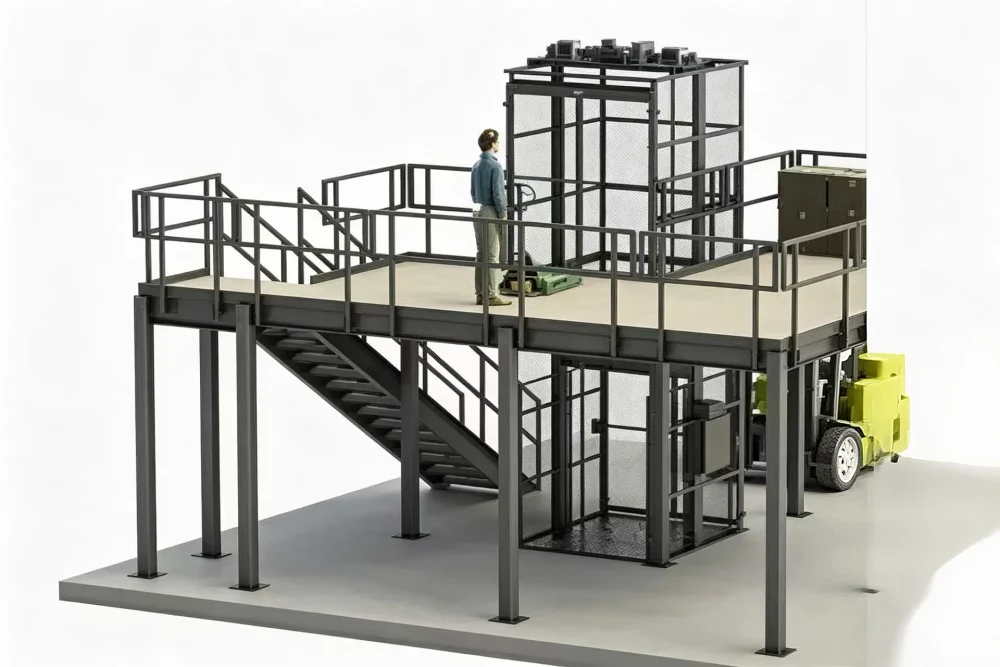
Modern eco-friendly in-ground systems use contained hydraulic cartridges that eliminate historical oil leak concerns. Additionally, heavy-duty industrial platform and rail car lifts—frequently manufactured for commercial auto distribution centers, multi-level parking garages, and multi-story dealerships—provide vertical vehicle transport between levels. Commercial facilities comparing industrial types of car lifts often favor custom hydraulic platforms due to their high weight capacities, ranging from 3,000 kg up to 30 tons.
6. Specialty and Alignment Car Lifts
Specialized vehicle maintenance requires purpose-built equipment engineered for exact measurements or unique vehicle geometry.
Alignment Lifts
Wheel alignment systems feature integrated turn-plates and slip-plates built directly into four-post or scissor runways. These components allow wheels to move freely during measurement adjustments without binding.
Low-Clearance and Motorcycle Lifts
Low-slung sports cars and exotic supercars demand specialized ramps to prevent body damage during mounting. Similarly, dedicated motorcycle, ATV, and lawnmower lifts utilize narrow table platforms and front-wheel clamps. Understanding these specialty types of car lifts ensures that specialized shops deliver damage-free service.
Comprehensive Comparison Table
To help you decide among the primary options, the table below breaks down key specifications across popular types of car lifts:
| Lift Category | Primary Mounting | Typical Capacity | Best Suited For | Key Advantage |
| Two-Post Lift | Surface Anchor (Concrete) | 7,000 – 12,000 lbs | General Repairs, Suspension, Brakes | Complete undercarriage access |
| Four-Post Lift | Free-Standing / Anchored | 7,000 – 40,000+ lbs | Storage, Parking, Fleet Service | High stability, drive-on convenience |
| Scissor Lift | Surface / Flush Recessed | 6,000 – 14,000 lbs | Detailing, Tires, Body Shops | Compact footprint, collapsible |
| Portable Lift | Mobile / Caster Mounted | 3,500 – 7,000 lbs | Home DIY, Small Space Garages | Easy storage when not in use |
| In-Ground / Platform | Sub-Floor Recessed | 8,000 – 60,000+ lbs | Dealerships, Cargo, Multi-Floor | Clean aesthetic, zero floor clutter |
| Mobile Column Lift | Wheel-Based Casters | 30,000 – 100,000+ lbs | Buses, Heavy Trucks, Fleets | Modular expansion for heavy loads |
Key Factors to Consider Before Buying
Selecting from various types of car lifts involves analyzing your physical space and operational needs:
Ceiling Height and Bay Dimensions: Standard two-post and four-post lifts require clear vertical space ranging from 11 to 14 feet. Low-ceiling garages under 10 feet usually suit mid-rise scissor or low-profile portable types of car lifts.
Concrete Slab Requirements: Heavy frame-engaging lifts require a concrete slab thickness of 4 to 6 inches rated at 3,000 PSI or higher. Inspecting your flooring prevents anchor failure under load.
Power Requirements: Smaller homeowner lifts run on standard 110V/120V household outlets. Professional two-post and four-post commercial units generally demand 220V single-phase or three-phase power connections.
Safety Locks and Certification: Ensure all evaluated types of car lifts feature mechanical safety lock ladders, anti-explosion valves, and emergency lowering functions. Look for certifications from recognized safety bodies such as the Automotive Lift Institute (ALI).
Frequently Asked Questions (FAQ)
What are the safest types of car lifts for home garages?
Four-post lifts and portable frame lifts are generally considered the most forgiving for home garage DIYers. Four-post systems support vehicles by their tires rather than chassis lift points, making vehicle mounting straightforward and highly stable.
How do I choose between two-post and four-post types of car lifts?
If your primary goal is mechanical service—such as pulling transmissions, replacing exhaust systems, or working on suspension components—a two-post lift provides unrestricted undercarriage access. If your priority is vehicle storage, double-parking, or quick oil changes, a four-post lift is typically superior.
Do all types of car lifts require permanent concrete anchoring?
No. While two-post lifts must be anchored to heavy concrete to prevent tipping, many low-capacity four-post lifts and portable scissor lifts do not require floor bolts. This flexibility allows operators to relocate the equipment if shop layouts change.
Can custom hydraulic car lifts move vehicles between building floors?
Yes. Heavy-duty hydraulic platform car lifts, elevator platforms, and rail cargo lifts are designed specifically for vertical multi-level vehicle transportation in commercial dealerships and multi-tier garages.
Finding Your Ideal Vehicle Lifting Solution
Selecting the right equipment comes down to analyzing your space, budget, and vehicle inventory. From classic two-post service units to heavy-duty hydraulic cargo platforms, exploring different types of car lifts ensures your garage operates with maximum safety, ergonomics, and efficiency.
For professional guidance on selecting, customizing, or installing high-quality automotive lifting systems, reach out to our engineering team today:
Phone / WhatsApp: +86 189 5417 1380
Email: [email protected]
 German
 English
 Arabic
 French
 Korean
 Spanish
 Russian