
In the modern era of industrial expansion, vertical space utilization has shifted from a premium architectural choice to an absolute operational necessity. As global supply chains demand faster throughput and higher storage density, fulfillment centers, manufacturing facilities, and distribution hubs are increasingly expanding upward rather than outward. Managing a multi-story layout efficiently requires heavy-duty machinery that bridges the gap between different levels without creating supply chain bottlenecks. Integrating a heavy-duty warehouse freight elevator into your facility layout transforms vertical logistics from a costly challenge into a highly streamlined asset.
Choosing the correct vertical transport system involves looking far beyond basic platform dimensions or maximum lifting capacities. Facility managers must closely analyze structural stress points, mechanical drive technologies, regulatory safety compliance, and long-term operating costs. This detailed guide covers the engineering parameters, structural varieties, step-by-step selection criteria, and maintenance frameworks needed to master vertical material handling workflows using a dedicated warehouse freight elevator system. Implementing this type of vertical equipment minimizes material transit errors significantly.
1. The Strategic Role of Vertical Transport in Supply Chains
Modern supply chain logistics rely heavily on minimizing the time it takes to move goods from receiving bays to high-density storage zones. When materials must move vertically across multiple floors or mezzanine levels, traditional manual moving methods become highly inefficient and introduce significant workplace safety risks. This is precisely why a heavy-duty warehouse freight elevator serves as the backbone of multi-tier storage operations, ensuring consistent material flow while minimizing manual labor dependencies.
Without automated vertical lift infrastructure, operations often face major bottlenecks. Forklifts waste valuable time waiting for cleared floor paths, and workers are exposed to additional fatigue and injury risks from manually moving bulky inventory up and down stairs or steep ramps. By incorporating an engineered mechanical lifting shaft, a facility can establish a reliable, repeatable transit route that operates independently of floor traffic, maintaining smooth logistics even during peak operational hours. Furthermore, a custom warehouse freight elevator eliminates common physical barriers to rapid multi-floor picking cycles.
2. Technical Classifications of Industrial Freight Elevators
Not all industrial lifting systems are built the same way. Different architectural layouts and daily duty cycles require specific mechanical and hydraulic setups to ensure long-term reliability. Let us analyze the primary engineering designs utilized in commercial multi-floor facilities today and determine how a customized warehouse freight elevator can improve overall warehouse efficiency.
Hydraulic Guide Rail Freight Elevators
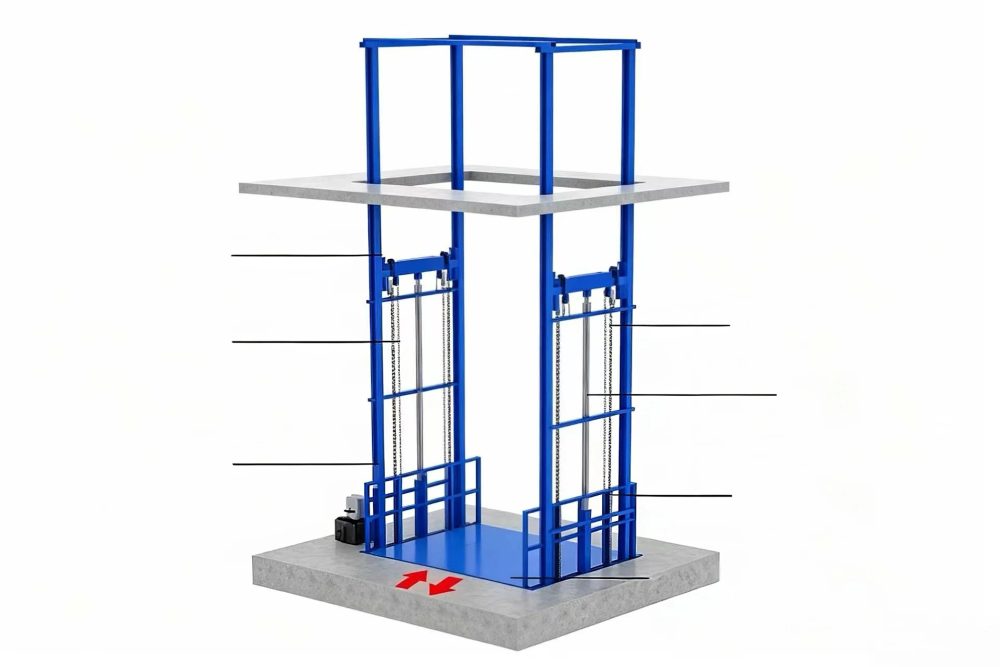
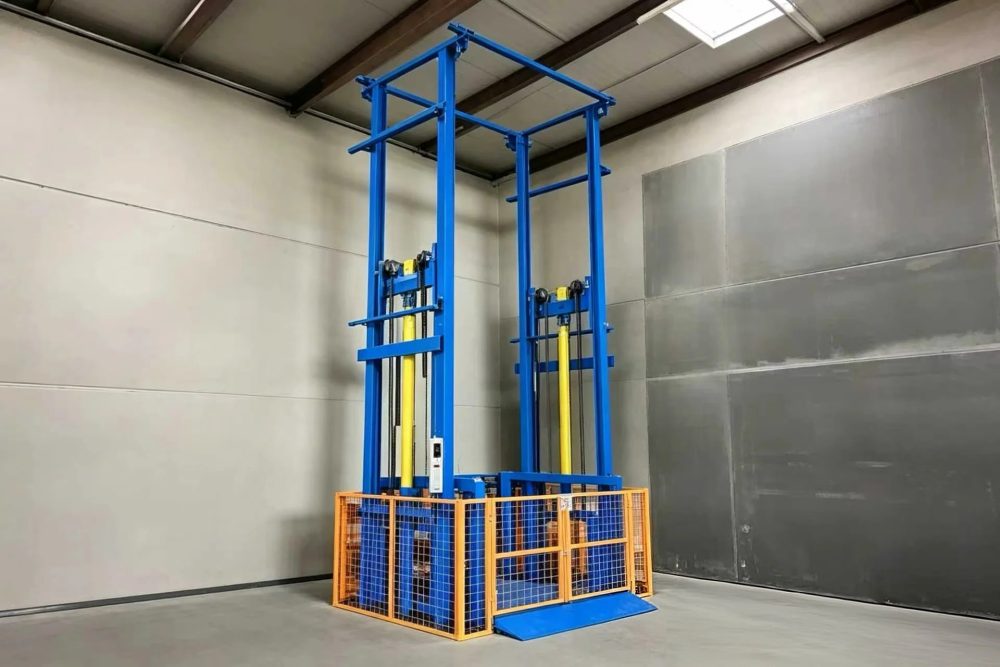
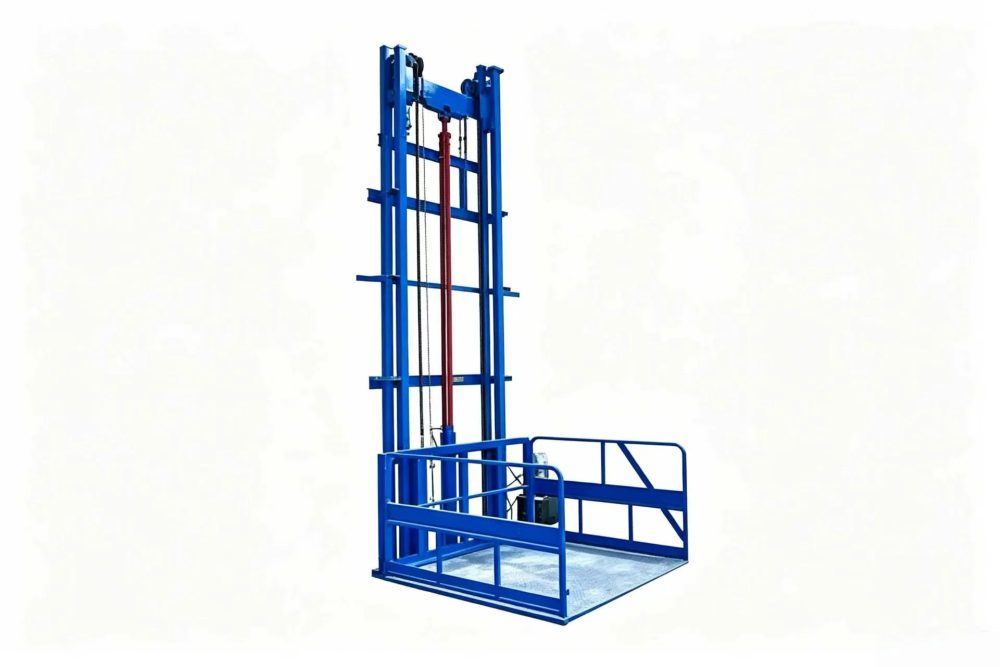
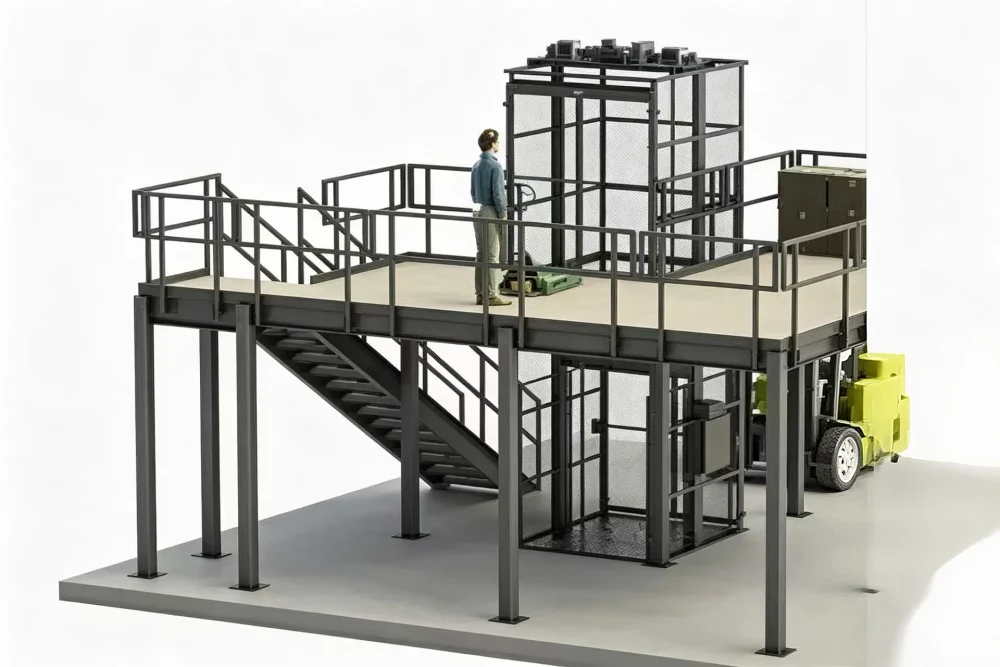
For buildings with two to five floors, hydraulic guide rail lifting systems offer an exceptionally durable and cost-effective solution. These systems use heavy-duty hydraulic cylinders paired with robust structural steel guide rails to smoothly raise and lower the load platform. A primary benefit of a hydraulic warehouse freight elevator is that it transfers the heavy weight of the cargo directly into the concrete floor foundation rather than pulling on the building’s overhead steel framework. This design minimizes the need for extensive overhead structural reinforcement, making it a perfect fit for retrofitting existing facilities. Many facility managers prefer a hydraulic vertical lift because it provides stable structural support over thousands of operating cycles.
Traction-Driven Industrial Elevators
When an industrial facility operates across many floors or requires rapid travel speeds, traction-driven systems become the industry standard. Powered by electric motors, counterweights, and steel cables, these lifts operate efficiently at high speeds over long vertical distances. While traction designs require a dedicated overhead machine room and more intense initial investment, a high-speed warehouse freight elevator of this nature delivers unmatched performance for high-rise distribution complexes that require continuous round-the-clock vertical transport.
Fixed Heavy-Duty Scissor Lifts
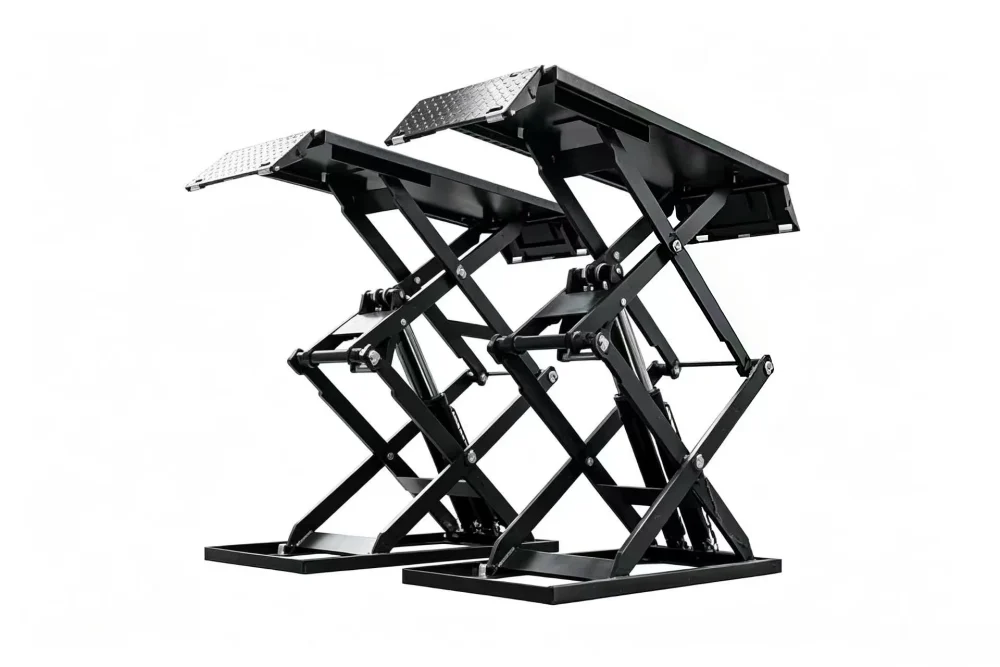
For facilities moving heavy cargo between a single mezzanine level and the main floor, a fixed hydraulic scissor lift provides an excellent alternative to enclosed lift shafts. These open-platform systems rely on a cross-arm pantograph mechanism that extends vertically to lift heavy items. While they lack the multi-floor flexibility of an enclosed platform assembly, they are highly valued for their compact footprint, high weight capacities, and ease of installation in tight manufacturing environments.
3. Key Structural Considerations and Selection Metrics
Selecting the ideal vertical lift architecture requires a comprehensive engineering evaluation of your facility’s daily operational workflows. Investing in a warehouse freight elevator without matching it to specific operational demands can lead to frequent equipment downtime and premature mechanical wear. The following technical parameters must be prioritized during the planning and procurement phases.
Load Capacity and Class of Loading
Industrial lifts are classified by regulatory bodies based on how they are loaded and the types of cargo they handle. Class A loading covers general freight where the load is moved on and off the platform manually or via hand trucks. Class B loading is specifically engineered for automotive transport, whereas Class C loading covers heavy industrial environments where motorized forklifts or pallet jacks drive directly onto the lift platform to deposit cargo. Choosing a warehouse freight elevator with the proper Class C rating ensures the structural deck can withstand the intense localized impact forces generated by heavy warehouse machinery. For heavy manufacturing centers, an industrial material lift should be over-engineered to prevent platform deflection over time.
Platform Dimensions and Overhead Clearance
The physical size of the lift cabin must accommodate your largest pallet configurations with ample clearance space to spare. Furthermore, the overhead height at the highest landing level must be deep enough to accept the lift cabin structure without hitting structural beams or overhead utility lines. Selecting an appropriate warehouse freight elevator requires precise clear-height measurements to prevent layout interference during structural integration phases.
4. Equipment Comparison Matrix
To assist warehouse managers and industrial architects in selecting the optimal configuration for their material handling platforms, the table below outlines the core technical specifications across standard commercial variants and outlines how a specialized cargo system fits into distinct layouts.
| Lift Mechanism Type | Standard Load Range | Optimal Travel Height | Installation Footprint Needed | Primary Advantage |
| Hydraulic Guide Rail Lift | 1,000 to 10,000 kg | Up to 20 Meters | Minimal / No Pit Option Available | No overhead machine room required; highly cost-effective |
| Traction-Driven Lift | 2,000 to 5,000 kg | Up to 50+ Meters | Substantial / Requires Pit & Penthouse | High travel speeds; ideal for high-rise facilities |
| Fixed Scissor Platform | 2,000 to 20,000+ kg | Up to 8 Meters | Low / Can sit surface-mounted | Exceptional weight capacity for single-mezzanine setups |
5. Operational Safety Frameworks and Compliance
Operating heavy industrial lifting machinery comes with an inherent responsibility to maintain rigorous safety standards. A properly configured warehouse freight elevator must be equipped with multiple redundant safety systems to protect operators and prevent catastrophic product loss. Modern material lifts feature interlocked safety gates that prevent operation unless all entry doors are fully closed and locked. Furthermore, emergency braking systems, overload warning sensors, and anti-drop valves ensure the platform remains secure even during a sudden power loss or hydraulic pressure drop. Training personnel on the safety mechanics of a warehouse freight elevator dramatically reduces onsite insurance claims.
Industrial Safety Advisory: Never allow personnel to ride on a material-only lift platform unless it has been explicitly certified for passenger transport. Enforcing strict boundary rules around your heavy equipment keeps your operation compliant with international labor protection standards and avoids costly workplace accidents.
6. Maintenance Strategies for Maximum Equipment Lifespan
To avoid unexpected operational shutdowns, facilities must implement a proactive, preventative maintenance schedule for all vertical lifting assets. Treating your warehouse freight elevator as a critical infrastructure component guarantees a long service life and keeps daily operations running smoothly. Neglecting your mechanical transport system can result in cascading technical issues that impact overall facility output.
Weekly Technical Audits: Operators should visually inspect guide rail alignment, check wire rope or chain tension, ensure safety door interlocks function perfectly, and confirm control panels respond accurately.
Monthly Fluid Analyses: For hydraulic configurations, technicians must check hydraulic oil levels, inspect valves for micro-leaks, and grease all heavy-duty bearings and chain assemblies. A regular check on your industrial lift oil quality prevents internal pump cavitation.
Annual Certifications: Schedule an annual inspection with a certified third-party engineer to perform full-rated load tests, check electrical control insulation, and renew compliance certificates.
By investing in high-quality hardware and following a strict maintenance routine, your warehouse freight elevator will continue serving as a highly efficient asset for decades. Partnering with experienced manufacturers during the design stage ensures your lift infrastructure scales seamlessly alongside your business growth. A modern warehouse freight elevator represents a core capital asset that pays dividends through improved daily logistics throughput.
Frequently Asked Questions (FAQ)
Q1: Does a hydraulic warehouse freight elevator require a deep foundation pit?
A: Not necessarily. While a shallow concrete pit (typically 150mm to 300mm) is ideal for allowing pallet jacks to drive smoothly onto the platform flush with the floor, a surface-mounted vertical lift can be installed using a compact access ramp instead. This flexibility simplifies setup when cutting into an existing concrete foundation is not possible.
Q2: What is the main difference between a standard passenger elevator and a dedicated warehouse freight elevator?
A: Passenger lifts prioritize travel speed, interior styling, and ride comfort. In contrast, a warehouse freight elevator is built for pure durability and heavy load management. They feature reinforced steel wall panels, heavy-duty structural flooring, and specialized gate systems engineered to withstand collisions from forklifts and heavy pallet jacks.
Q3: How do we determine the correct weight capacity for our multi-floor facility?
A: To accurately calculate the required capacity, combine the weight of your heaviest anticipated cargo load with the weight of the material handling equipment used to move it, such as an electric pallet jack or forklift. Choosing a system with a capacity that exceeds this total weight prevents component strain and ensures safe operation during peak periods.
Q4: Can these industrial lifting systems be customized for harsh or outdoor environments?
A: Yes, industrial lifts can be highly customized. If your warehouse freight elevator needs to be installed outdoors or in a chemical processing area, manufacturers can incorporate specialized features like hot-dip galvanized steel coatings, explosion-proof electrical enclosures, and IP65-rated control panels to withstand harsh environmental conditions. Having an outdoor material lift can expand your secondary storage logistics dramatically.
Custom Vertical Logistics Solutions
For professional guidance on selecting, custom-engineering, and installing high-performance warehouse freight elevator systems, hydraulic guide rail lifts, and custom material handling platforms tailored to your specific facility requirements, contact our engineering office today.
Phone/WhatsApp: +86 18954171380
E-Mail: [email protected]
 German
 English
 Arabic
 French
 Korean
 Spanish
 Russian