
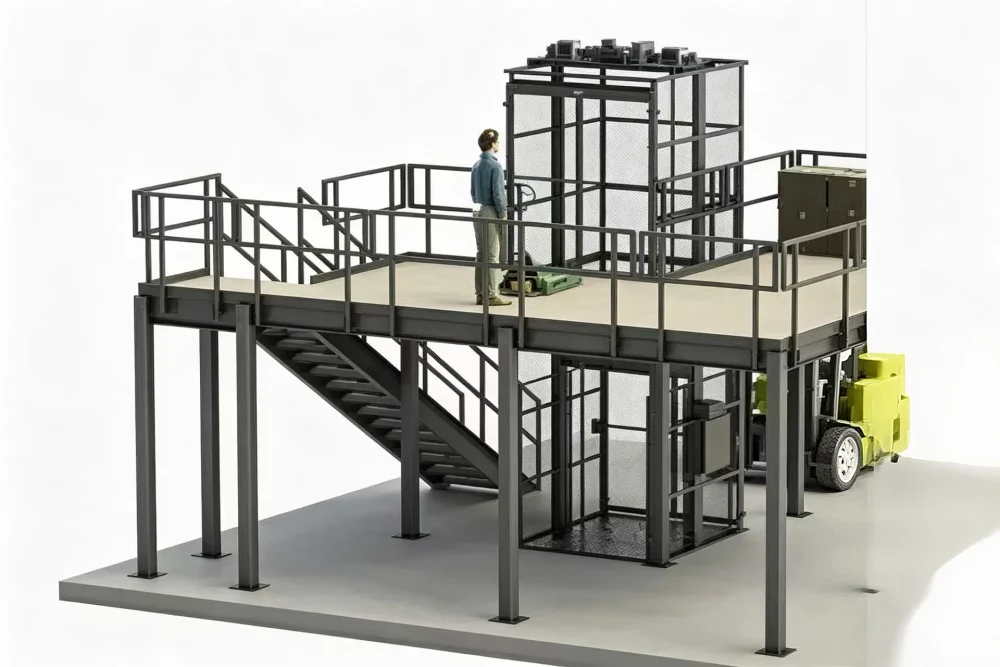
Optimizing vertical space is one of the most effective strategies for expanding storage capacity without incurring the high costs of building expansion or facility relocation. Installing intermediate floor levels allows distribution centers, manufacturing plants, and logistics hubs to maximize their existing building envelope. However, moving heavy inventory, palletized stock, and equipment between ground level and elevated platforms presents significant material handling challenges. Implementing a heavy-duty warehouse mezzanine lift provides a safe, efficient, and reliable solution for vertical goods transport.
This comprehensive guide covers everything you need to know about modern vertical material lifting systems, including mechanical configurations, load capacity considerations, safety protocols, and essential purchasing criteria for industrial facilities.
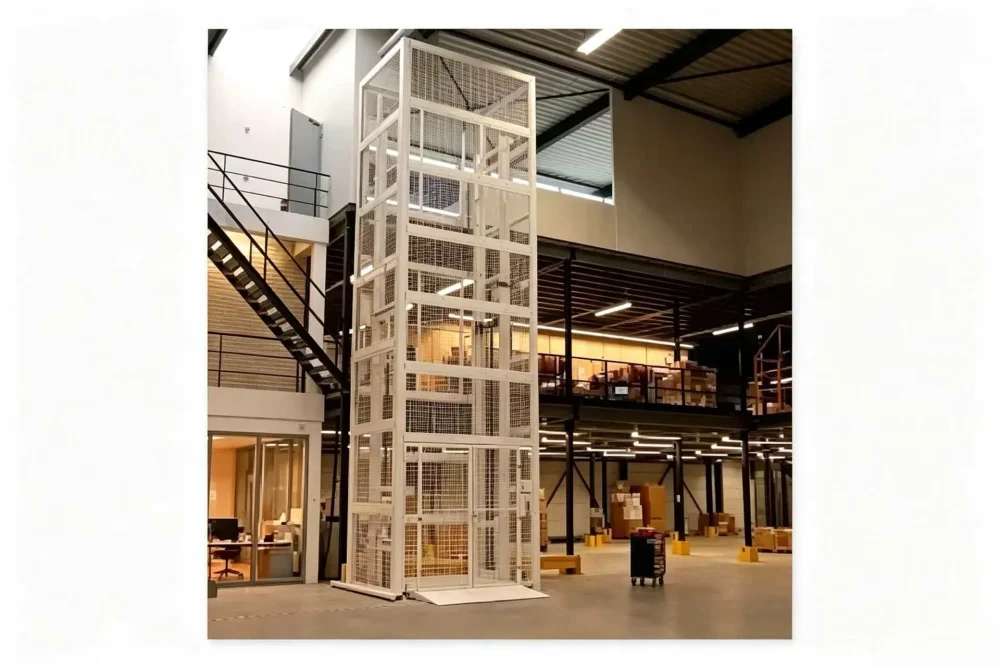
What Is a Warehouse Mezzanine Lift and Why Is It Essential?
At its core, a warehouse mezzanine lift—frequently referred to in material handling industries as a vertical reciprocating conveyor (VRC)—is a mechanical or hydraulic elevator engineered exclusively to transfer materials between different floor levels. Unlike passenger elevators, which are governed by strict passenger transport codes and require complex shaft enclosures, goods-only vertical lifters are designed specifically for freight, pallets, carts, and heavy inventory.
Integrating a high-capacity warehouse mezzanine lift into your facility workflow unlocks several major operational advantages:
Increased Throughput: Moving multi-pallet loads or heavy items in single cycles drastically cuts down handling times compared to manually transporting items up stairs or relying exclusively on forklifts.
Enhanced Workplace Safety: Eliminates the hazards associated with workers carrying heavy loads up steep stairways or attempting risky high-reach forklift maneuvers near upper-level ledges.
Optimized Floor Space: Vertical lifters feature a compact footprint compared to long inclined conveyor belts or wide ramp systems, preserving valuable floor space for storage and assembly lines.
Reduced Forklift Wear and Tear: Shifting vertical transport tasks to a dedicated mechanical unit minimizes forklift travel time and battery consumption across multi-level operations.
Exploring the Main Types of Vertical Lifting Mechanisms
Selecting the proper equipment begins with a thorough understanding of how different mechanical designs operate. Each mechanism offers distinct structural strengths tailored to specific load capacities, travel heights, and duty cycles.
1. Hydraulic Lifting Systems
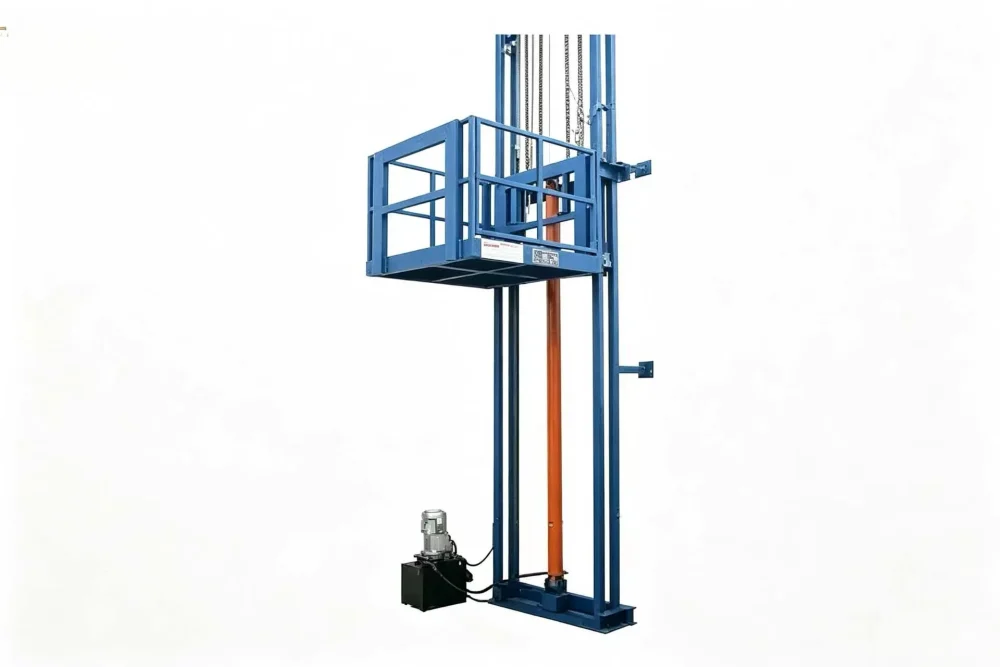
Hydraulic platform lifters utilize heavy-duty fluid cylinders combined with steel lifting chains or wire ropes to raise the platform carriage. Choosing a hydraulic warehouse mezzanine lift is exceptionally popular for applications requiring high weight capacities over moderate travel distances.
Heavy Load Performance: Built to handle substantial payloads ranging from 2,000 to over 10,000 lbs with smooth acceleration and deceleration.
Low Maintenance Design: Hydraulic systems feature fewer moving mechanical parts, resulting in long component service life and reduced maintenance demands.
Primary Applications: Ideal for 2-stop configurations transferring palletized freight between ground level and a single elevated platform.
2. Mechanical Chain Drive Systems
A mechanical chain-driven warehouse mezzanine lift relies on electric motor drive assemblies and heavy roller chains to guide the carriage along structural steel guide columns. These units excel in multi-level facilities demanding continuous duty cycles.
High Travel Heights: Capable of servicing multiple levels across elevated vertical distances exceeding 30 feet.
Precise Leveling: Electric motor controls ensure exact platform stopping accuracy at every landing level, regardless of load weight.
Primary Applications: High-throughput distribution centers and multi-tiered automated storage environments requiring continuous operation.
3. Cantilever and Straddle Column Layouts
The structural orientation of the guide posts determines how goods can be loaded onto the platform carriage of your warehouse mezzanine lift.
Cantilever Configuration: Guide columns are situated entirely on one side of the platform, offering flexible three-sided loading access (front, left, and right).
Straddle Configuration: Guide posts face each other on opposite sides of the platform, directing lifting forces straight down for maximum stability under extremely heavy loads.
Technical Comparison Table
To assist in evaluating which equipment configuration aligns best with your facility layout, structural constraints, and inventory weight profiles, compare the following operational characteristics:
| Lift Mechanism Type | Typical Payload Capacity | Maximum Travel Height | Primary Operational Advantage | Best Suited Application |
| Hydraulic Cantilever | 2,000 to 6,000 lbs | Up to 22 feet | Flexible 3-sided loading access; low profile | Single-level elevated floors with mixed loading directions |
| Hydraulic Straddle | 4,000 to 10,000+ lbs | Up to 30 feet | Superior load balance and structural stability | Heavy palletized inventory and pallet jack transport |
| Mechanical Continuous | 1,000 to 4,000 lbs | 30+ feet (multi-level) | High speed and continuous cycle frequency | Multi-tier logistics hubs with high hourly cycle demands |
| Package / Light Duty | 500 to 1,500 lbs | Up to 18 feet | Compact footprint; fast installation cycle | E-commerce packing stations and tote sorting hubs |
Critical Factors to Evaluate Before Purchasing
Selecting a durable vertical material platform requires meticulous facility planning beyond selecting a payload rating off a spec sheet. Before purchasing a warehouse mezzanine lift, work through this essential evaluation checklist to guarantee seamless site integration:
1. Usable Platform Carriage Dimensions
Accurately measure the maximum physical dimensions of your largest payloads, including pallet overhang, mobile carts, and hand trucks. Ensure the clear usable space inside your warehouse mezzanine lift provides sufficient perimeter room for operators to position and lock down carts securely.
2. Load Capacity and Center of Gravity
Calculate not only the total gross weight of your heaviest anticipated load but also consider how weight is distributed across the platform. Concentrated or off-center loads in a warehouse mezzanine lift require reinforced carriage frames and heavier guide column bracing to prevent torsional deflection during transit.
3. Entry and Exit Loading Patterns
Determine how material moves into and out of the elevator carriage at each floor level. Common load patterns for a custom warehouse mezzanine lift include straight-through (C-type or Z-type), 90-degree side loading, or single-sided entry. Selecting the correct loading orientation during the design phase eliminates workflow bottlenecks later.
4. Interlocking Safety Enclosures and Gates
Safety regulations dictate that vertical freight platform openings must be fully enclosed with interlocked gates or doors. Mechanical interlocks ensure that a warehouse mezzanine lift cannot operate unless all landing gates are completely closed and locked. Similarly, landing doors cannot be opened unless the carriage is safely parked at that specific landing level.
Step-by-Step Operating Guidelines for Safe Operation
Establishing standardized operating procedures protects facility staff from injury and prevents accidental equipment or inventory damage. Technicians and operators using a warehouse mezzanine lift should adhere to the following steps during every loading cycle:
Pre-Shift Inspection: Visually inspect the lifting carriage, floor tracks, wire ropes or hydraulic lines, and door interlocks for signs of wear or obstructions before initiating daily operations.
Stage Payload Correctly: Roll carts or place pallets squarely in the center of the warehouse mezzanine lift floor to maintain an even center of gravity across the platform frame.
Secure the Load: Engage wheel locks on mobile carts and verify that loose packages or palletized items do not extend beyond the perimeter edges of the carriage.
Close Landing Gates Fully: Ensure all safety gates at both the lower and upper landing levels are firmly latched to engage the mechanical safety interlocks.
Operate Control Stations: Push the designated landing button on the external control panel. Never attempt to ride inside a warehouse mezzanine lift unless the equipment is explicitly rated and certified for personnel transport.
Preventative Maintenance Schedule for Long-Term Reliability
To ensure your material handling equipment delivers reliable performance over decades of heavy service, implement a structured preventative maintenance program for your warehouse mezzanine lift:
Daily Checks: Inspect landing gate interlocks, emergency stop buttons, and rubber carriage bumpers for proper alignment and immediate responsiveness.
Weekly Service: Clean road dust and debris from vertical guide columns. Apply high-grade lubrication to lifting chains, rollers, and drive sprockets of the warehouse mezzanine lift.
Monthly Checks: Inspect wire ropes or hydraulic hoses for signs of fraying, surface wear, or fluid weeping. Check anchor bolt torque along column bases using a calibrated wrench.
Annual Audit: Perform a complete hydraulic fluid flush and filter replacement on hydraulic models. Have a certified technician inspect structural welds, motor brake linings, and electrical contact relays on your warehouse mezzanine lift.
Frequently Asked Questions (FAQ)
What is the main difference between a VRC and a standard freight elevator?
A vertical reciprocating conveyor, or warehouse mezzanine lift, is classified as a material handling machine rather than a passenger elevator. Because human passengers are strictly prohibited from riding inside goods-only vertical conveyors, installation costs, structural shaft requirements, and regulatory compliance inspections are significantly lower and simpler than those for standard freight elevators.
Can a vertical freight lifter be installed outdoors?
Yes, many industrial models of a warehouse mezzanine lift feature weatherized electrical enclosures, hot-dip galvanized structural steel, and protective exterior cladding for outdoor installations adjacent to exterior loading docks or mezzanine floors.
How do safety interlocks protect workers during operation?
Safety interlocks are electromechanical switches mounted on landing gates. They prevent the warehouse mezzanine lift from moving if any gate is left open, and keep landing doors locked tight when the carriage is stationed at a different elevation level.
What building foundation requirements are needed for installation?
Most surface-mounted units require a flat, level concrete slab capable of supporting the combined weight of the equipment structural columns and maximum payload. Depending on platform design, a shallow pit (typically 6 to 12 inches deep) may be excavated so the warehouse mezzanine lift carriage rests flush with the floor, eliminating the need for an entry ramp.
What is the typical payload capacity range for industrial platform lifters?
Standard industrial models for a warehouse mezzanine lift handle loads ranging from 1,000 lbs for light totes and boxes up to 10,000+ lbs for heavy-duty motor vehicles, multi-pallet loads, and heavy manufacturing equipment.
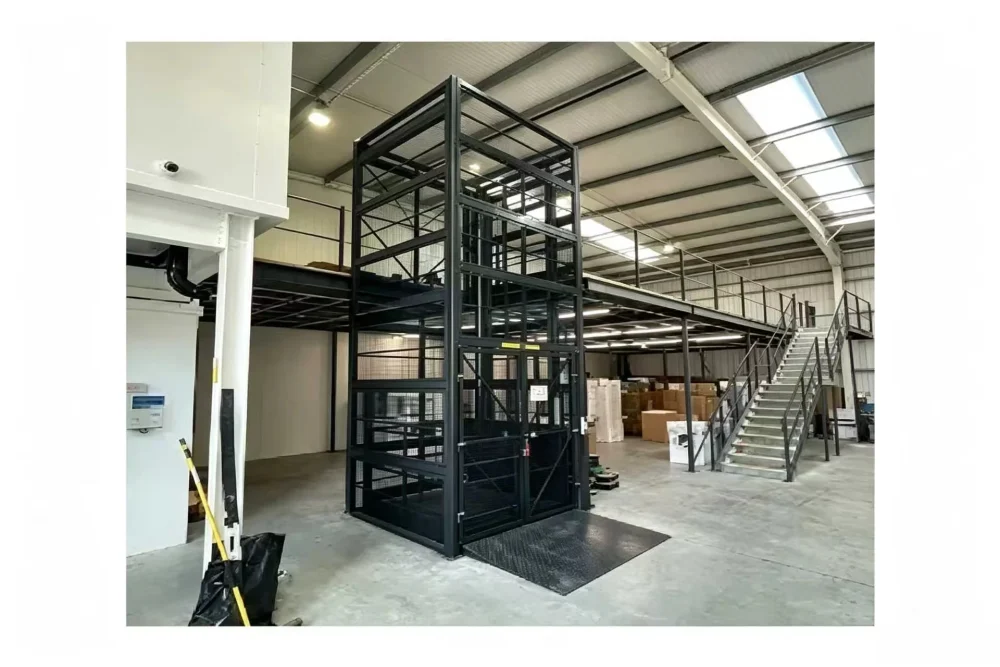
Get in Touch for Custom Vertical Transport Solutions
Selecting the ideal warehouse mezzanine lift tailored to your facility dimensions and operational throughput requirements ensures maximum long-term efficiency and safety. Whether you need custom platform engineering, layout advice, or direct product specifications, our experienced team is here to assist you every step of the way.
Email Contact: [email protected]
Phone / WhatsApp: +86 189 5417 1380
 German
 English
 Arabic
 French
 Korean
 Spanish
 Russian