
Optimizing multi-level logistics within modern supply chain infrastructure demands highly efficient vertical material handling systems. For commercial facilities utilizing mezzanine floors, multi-tiered storage racks, or multi-story floor plans, selecting an appropriate goods lift for warehouse operations is a foundational decision that impacts long-term operational velocity, workplace safety, and throughput efficiency. Choosing a reliable vertical transit platform prevents material handling bottlenecks and streamlines daily workflow routines.
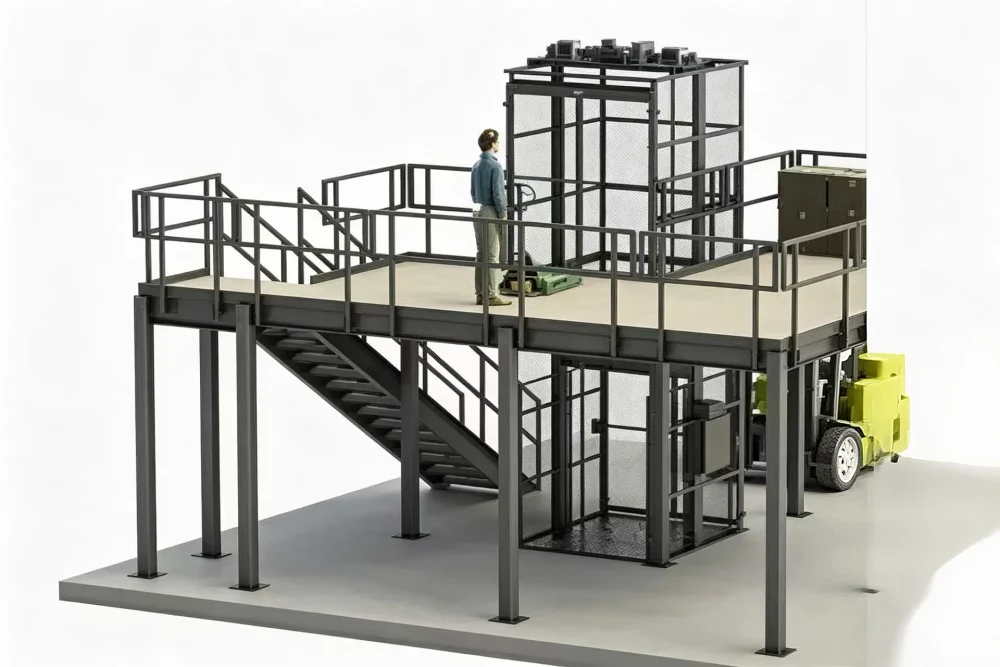
A high-performance goods lift for warehouse applications acts as a heavy-duty mechanical bridge that transitions bulk freight, heavy pallets, industrial roll cages, and incoming raw components between vertical landings. Unlike passenger elevators designed for human transit, industrial cargo elevators are engineered specifically to endure severe impact from forklifts, uneven structural loading, and constant material cycling. Investing in the right system ensures your warehouse space operates at peak performance.
Implementing a dedicated goods lift for warehouse use allows facilities to maximize their vertical square footage without extending their building footprint. This specialized material handling equipment reduces manual labor dependencies and significantly decreases the risk of workplace injuries caused by moving heavy stock up steep stairs or using unstable forklift extensions.
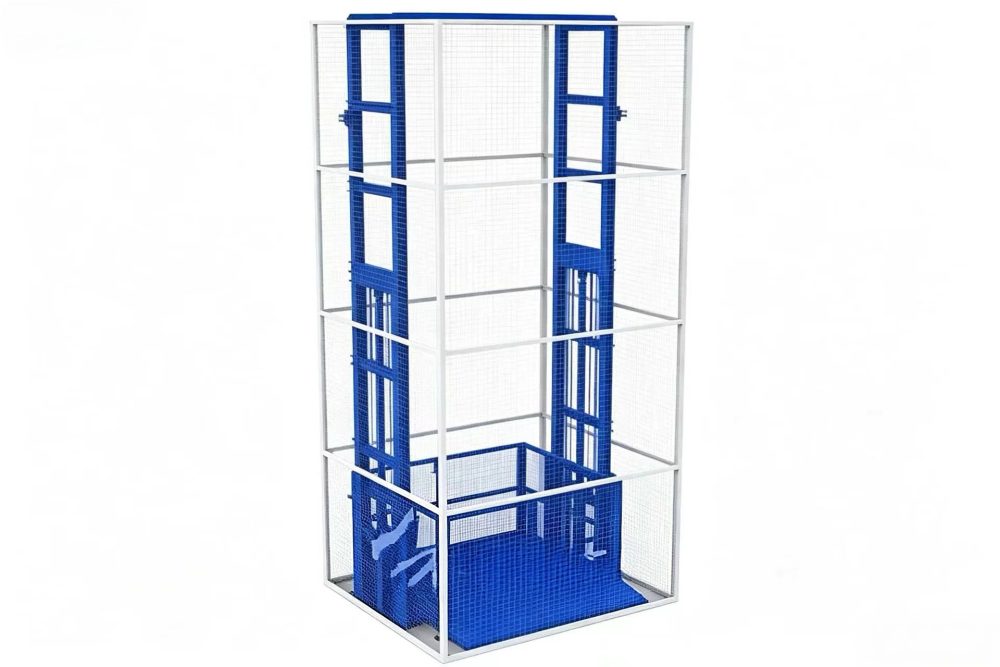
Technical Specifications Matrix for Warehouse Cargo Lifts
When evaluating an industrial goods lift for warehouse installation, referencing baseline engineering criteria across standard payload boundaries simplifies the procurement process. Selecting a specific model requires balancing structural weight limits with platform size constraints to guarantee the machine fits your intended application safely.
| Rated Payload Capacity | Standard Internal Platform Footprint | Maximum Vertical Travel Speed | Typical Drive Mechanism | Required Sump Pit Depth | Applicable Safety Directives |
| 500 kg (Light Industrial) | 1,200 mm × 1,300 mm | 0.15 m/s – 0.20 m/s | Screw & Nut / Hydraulic | Pitless (Ramp Option Available) | CE / Machinery Directive 2006/42/EC |
| 1,000 kg (Medium Duty) | 1,500 mm × 1,500 mm | 0.15 m/s – 0.30 m/s | Single-Acting Hydraulic Cylinder | 70 mm – 100 mm | EN 81-31 / ASME B20.1 |
| 2,000 kg (Standard Pallet) | 2,000 mm × 2,500 mm | 0.20 m/s – 0.40 m/s | Dual-Cylinder Hydraulic / Chain | 150 mm – 200 mm | CE / ISO 9001 Structural Code |
| 3,000 kg+ (Heavy Commercial) | 2,800 mm × 3,000 mm | Up to 0.50 m/s | Heavy Geared Traction / Hydraulic | 300 mm+ | Full Industrial Compliance |
Note: Technical parameters fluctuate depending on custom platform modifications, unique structural dimensions, and specialized material specifications requested by the end-user.
Core Mechanical Configurations of Warehouse Lifts
Every building layout requires a specific mechanical drive assembly to power a vertical goods lift for warehouse system. Choosing the correct mechanical setup depends directly on your total travel height, target platform velocity, and the architectural constraints of your facility floor plan.
1. Hydraulic Goods Lifts
The hydraulic goods lift for warehouse application remains highly popular due to its exceptional structural strength and robust long-term reliability. These systems use heavy-duty single-acting or double-acting cylinders powered by an electric hydraulic pump unit to raise the cargo carriage smoothly.
Key Benefits: Exceptional structural load handling at a lower initial cost; transfers heavy stress forces directly into the concrete floor slab rather than the warehouse wall frames.
Best For: Low-to-medium rise material transport spanning 2 to 4 floor levels, or vertical transfers up to 15 meters.
2. Geared Traction and Chain Drive Systems
A traction-driven goods lift for warehouse setup offers higher speed capabilities and improved power efficiency during high-frequency cycles. These mechanical lifts rely on a top-mounted or side-mounted electric motor configured with steel ropes or heavy industrial roller chains connected to a counterweight arrangement.
Key Benefits: Enhanced power efficiency during non-stop shifts; delivers faster travel times across taller distances.
Best For: High-volume distribution centers, multi-story manufacturing hubs, and operations requiring rapid vertical cargo cycling exceeding four floors.
3. Screw and Nut Mechanical Platforms
For simpler installations, a screw-driven goods lift for warehouse design provides a completely self-contained solution that does not require an independent machine room or complex structural modifications. The platform relies on an electric motor traveling along a stationary threaded steel mast running vertically behind the lifting cage.
Key Benefits: Minimal structural impact on the building; clean design that limits grease and oil exposure.
Best For: Light-duty mezzanine stockrooms, retail backup spaces, and clean-room facilities with strict environmental containment rules.
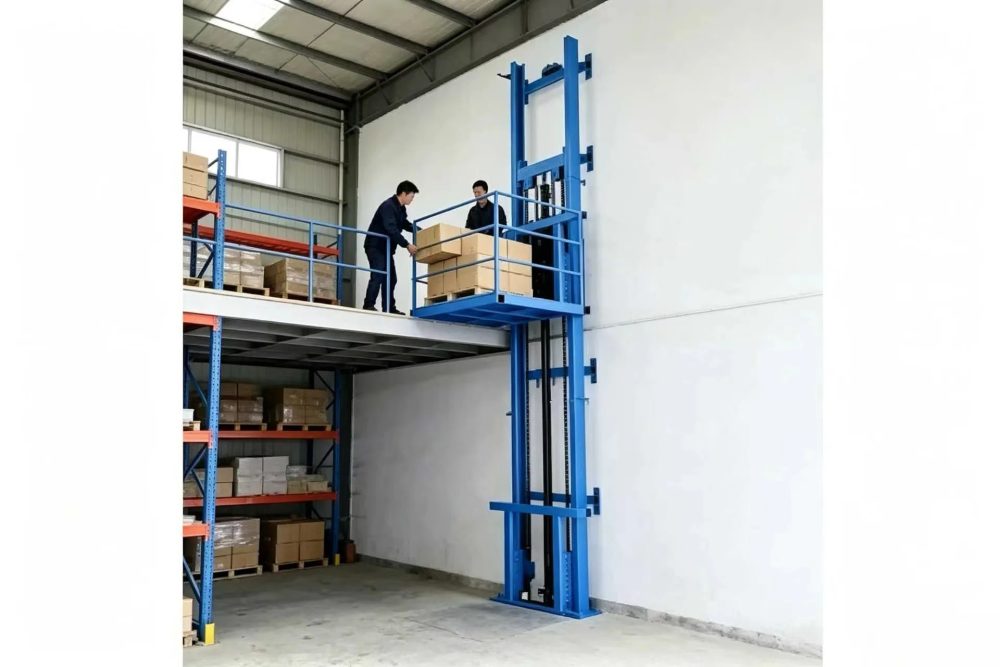
Spatial Integration and Facility Planning Clearances
Integrating an industrial goods lift for warehouse workflows requires detailed structural surveying before the equipment arrives. Neglecting these core clearances can lead to structural interference with warehouse support beams, ceiling piping, or overhead logistics tracks.
Evaluating overhead space ensures the goods lift for warehouse system operates safely without hitting ceilings. The overhead clearance is the vertical distance measured from the top finished floor landing to the lowest structural obstruction above the lift shaft. For a standard clear-height installation, an overhead buffer of at least 2,400 mm to 3,000 mm above the highest platform position is vital to ensure safe mechanical overrun protection.
Furthermore, matching the entry gate layout of your goods lift for warehouse plan to your material flow pattern avoids navigation problems for equipment operators. Choosing between a through-car layout or an adjacent 90-degree configuration lets you tailor your material paths so pallet jacks can move in and out efficiently.
Traditional cargo elevators require a deep concrete cutout at the base floor level to house the lower frame components flush with the ground. If cutting your concrete foundation is impossible due to underground utilities or high water tables, a pitless goods lift for warehouse design is the ideal path forward. These configurations sit directly on top of the existing level floor slab and utilize a low-profile structural ramp to allow pallet trucks and manual roll cages smooth access onto the lifting floor.
Foundation and Concrete Slab Engineering
A heavy-duty goods lift for warehouse environments relies on a solid foundation to maintain its structural balance over thousands of lifting cycles. The entire weight of the vertical columns, the steel platform, and the maximum cargo payload is concentrated onto localized anchoring points.
Minimum Structural Slab Guideline
Compressive Strength: 3,000 PSI ($210 \text{ kg/cm}^2$) minimum rating
Concrete Thickness: 150 mm to 200 mm of solid structural depth
Total Curing Period: 28 Days minimum before anchor installation
Surface Level Tolerance: Completely flat and horizontal without sloping
If the floor under the goods lift for warehouse is uneven, it can lead to subtle twisting stresses on the vertical structural guide rails. This alignment shift accelerates wear on the lift rollers, causes mechanical vibration, and reduces energy efficiency. Engineers must use precision steel shims or pour a fresh level concrete pad to restore safety alignment if the base floor slopes.
Safety Systems for Industrial Material Handling
Operating a goods lift for warehouse cargo transit requires strict safety parameters to protect your warehouse staff and your product inventory. Industrial lifting environments present unique workplace challenges, which is why modern equipment includes several automated fail-safes.
Mechanical Gate Interlocks: Electromechanical safety switches prevent the goods lift for warehouse from moving unless all landing gates are completely closed and securely locked. They also prevent any warehouse worker from opening an external gate if the cargo carriage is parked on a different floor
Anti-Crush Under-Platform Sensors: Pressure-sensitive safety frames fitted beneath the lower edge of the platform instantly cut off system power if an obstruction is encountered during downward travel, protecting the goods lift for warehouse structure from damage.
Overload Protection Monitors: Integrated weight sensors measure platform pressure, preventing operation and triggering a warning signal if the safe load limit of the goods lift for warehouse system is breached.
Slack-Cable Fail-safes: Specialized safety wedges grip the side guide rails instantly if hydraulic pressure drops or a lift cable loses tension, locking the platform firmly in place.
Internal Protection Rails: Solid steel bump rails fitted along the inner cage walls absorb direct impact from heavy pallet jacks and industrial carts, protecting the lift structure from damage.
Preguntas frecuentes
What is the typical operational lifespan of a goods lift for warehouse installation?
With routine maintenance, a high-quality vertical material lift can operate reliably for 15 to 20 years. Using high-grade hydraulic seals, solid steel guide columns, and robust electrical controls ensures long-term operational durability.
Can a pitless goods lift for warehouse model support heavy forklifts?
Pitless designs are excellent for manual pallet jacks, electric walkie stackers, and heavy roll cages. However, if you plan to drive heavy, ride-on forklifts directly onto the platform, a recessed structural pit installation is highly recommended to handle the extreme localized axle weights.
Does a goods lift for warehouse require a separate control room?
No, most modern industrial material lifts utilize compact, wall-mounted electrical control cabinets that sit right next to the lift frame. This space-saving setup eliminates the need for a dedicated machinery room, maximizing your usable storage floor space.
What power supply configuration is standard for these installations?
Most commercial systems require a stable three-phase industrial power connection (380V to 480V, 50Hz/60Hz). For light-duty installations or mezzanine lifts under 500 kg, single-phase power options (220V to 240V) can be arranged based on the specific power pack configuration.
How does through-car loading improve general warehouse layout efficiency?
Through-car loading creates a straight-line flow for materials. By entering from the front and exiting from the rear, material handlers save time by avoiding tight turnarounds and backing maneuvers, reducing accidental collisions within the lift cage.
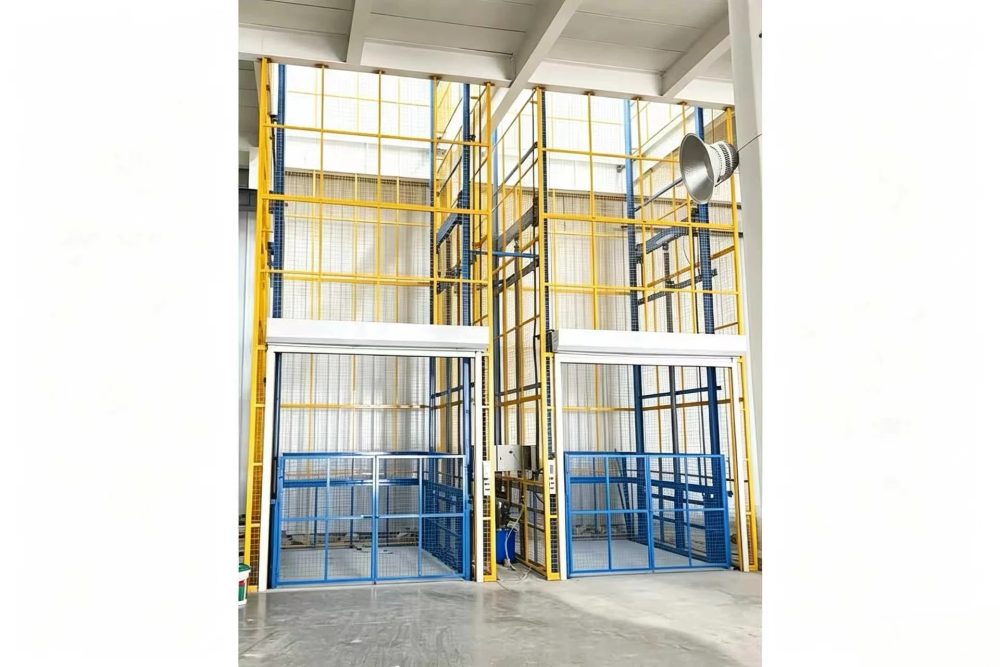
Partner with a Trusted Industrial Lifting Innovator
Finding the right goods lift for warehouse use means balancing your everyday load requirements with the physical layout of your building. High-end material lifts must comply with strict manufacturing standards, holding independent certifications such as CE, ISO9001, and SGS load compliance to ensure total workplace safety.
Our engineers can customize a goods lift for warehouse layout to fit narrow spaces, high mezzanines, or unusual loading angles. We supply comprehensive structural drawings, detailed electrical requirements, and precise spatial dimension planning to integrate your lift system seamlessly into your floor plan.
For specialized technical consultations, custom quote requests, or to review certified machinery blueprints, please contact our international support offices:
Phone : +86 18954171380
Email : [email protected]
 Spanish
 English
 Arabic
 French
 Korean
 German
 Russian