
Equipping a commercial automotive repair bay or transforming a residential garage into a multi-vehicle storage space requires a clear understanding of the hydraulic car lift price landscape. Modern hydraulic lifts offer vertical lifting force, safety interlocks, and space optimization. However, figures across online catalogs, factory-direct quotes, and equipment distributors vary widely. Evaluating your total equipment investment involves assessing machinery costs ranging from under $1,500 for lightweight portable units to over $25,000 for heavy-duty commercial lifting systems.
Evaluating an investment in shop machinery requires looking beyond initial purchase tags. Understanding how column metallurgy, pump fluid mechanics, concrete site preparation, freight logistics, and long-term safety certifications influence the overall hydraulic car lift price enables facility owners and private collectors to make financially sound procurement decisions.
Baseline Cost Expectations Across Core Hydraulic Car Lift Price Architectures
Engineering design and structural footprint directly dictate base manufacturing expenses and the resulting hydraulic car lift price of vehicle hoists. Evaluating quotes requires breaking down major design categories to understand what constitutes a fair market rate.
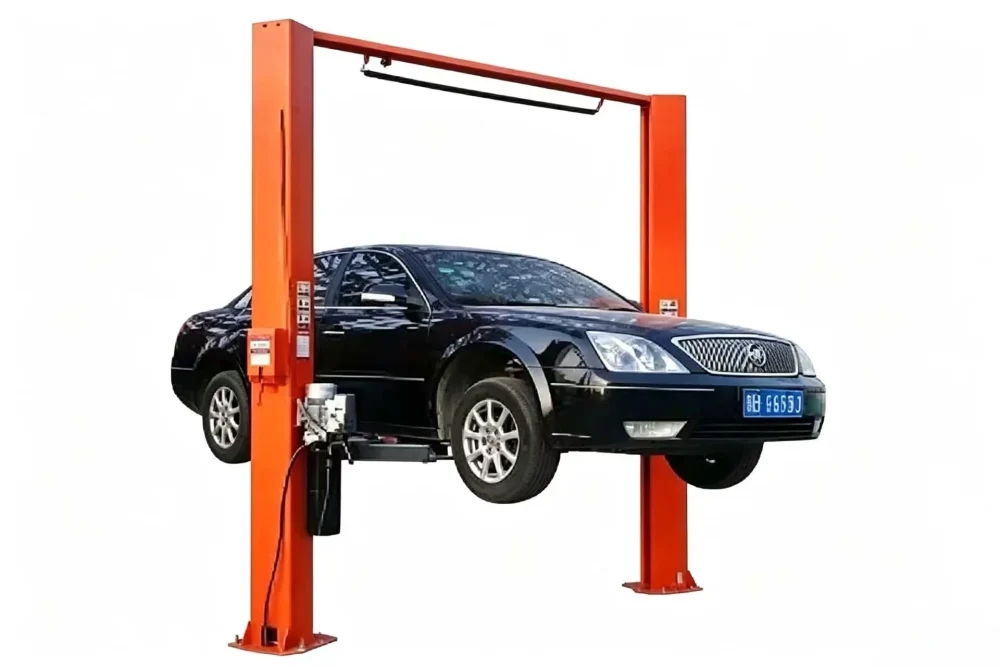
Two-Post Hydraulic Lifts ($2,200 – $9,000)
Two-post lifts remain the undisputed standard for mechanical repair shops requiring full undercarriage, suspension, and wheel-free access. When calculating a realistic hydraulic car lift price, these units rely on twin hydraulic cylinders, heavy leaf chains or direct-push rams, and equalizer cables running across overhead beams or floor plates.
Light-Duty Residential Models (7,000 lbs – 9,000 lbs): Typically range from $2,200 to $3,800 in base equipment cost. They provide ideal access for passenger sedans and light crossover SUVs.
Commercial Grade Overhead Units (10,000 lbs – 12,000 lbs): Range between $4,000 and $6,500, incorporating padded shut-off bars and heavier steel columns.
Heavy-Duty Commercial Models (14,000 lbs – 18,000 lbs): Reach $7,000 to $9,000, designed specifically to hoist work vans, ambulances, and dual-rear-wheel diesel trucks.
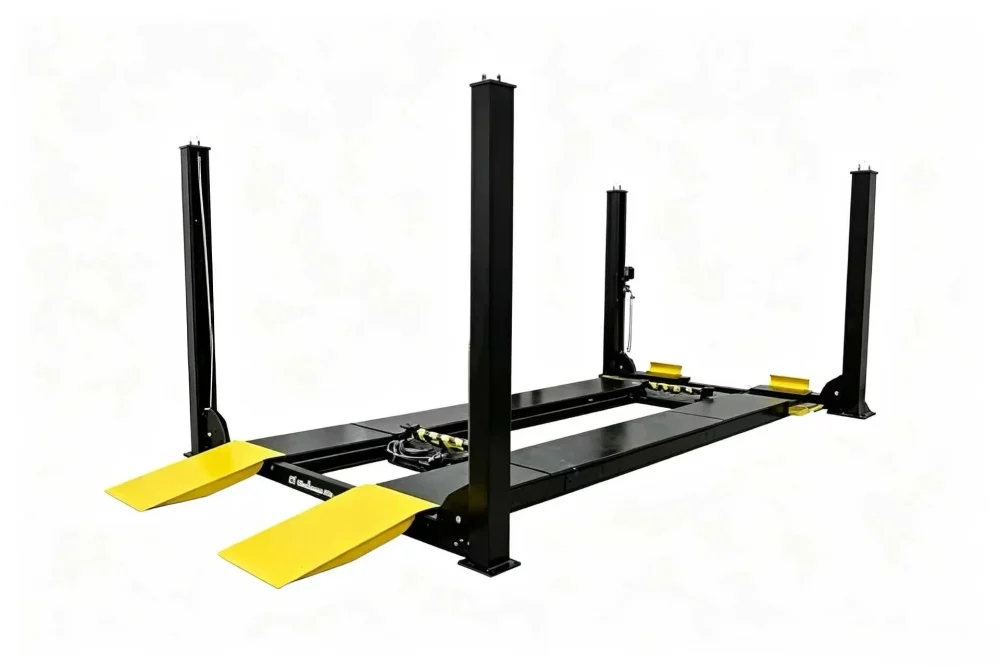
Four-Post Hydraulic Lifts ($2,800 – $12,000)
Four-post lifts feature drive-on runways supported by sturdy corner columns. While they restrict access to wheels unless secondary rolling bridge jacks are used, they excel in vehicle storage, alignment work, and quick lube services at a reasonable hydraulic car lift price.
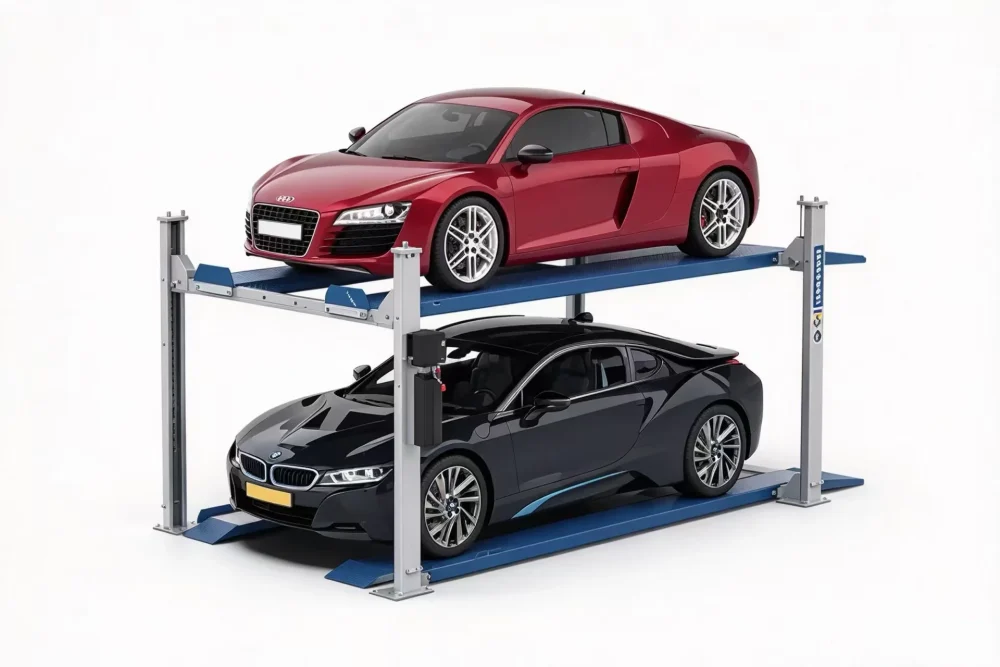
Standard Home Garage Storage Lifts (7,000 lbs – 9,000 lbs): Usually range from $2,800 to $4,500. Most models are free-standing and offer an economical lift cost option without heavy floor anchoring.
Commercial Service and Alignment Lifts (12,000 lbs – 18,000 lbs): Cost between $6,000 and $12,000. These systems include integrated turn-plates, rear slip-plates, and higher capacity hydraulic pumps.
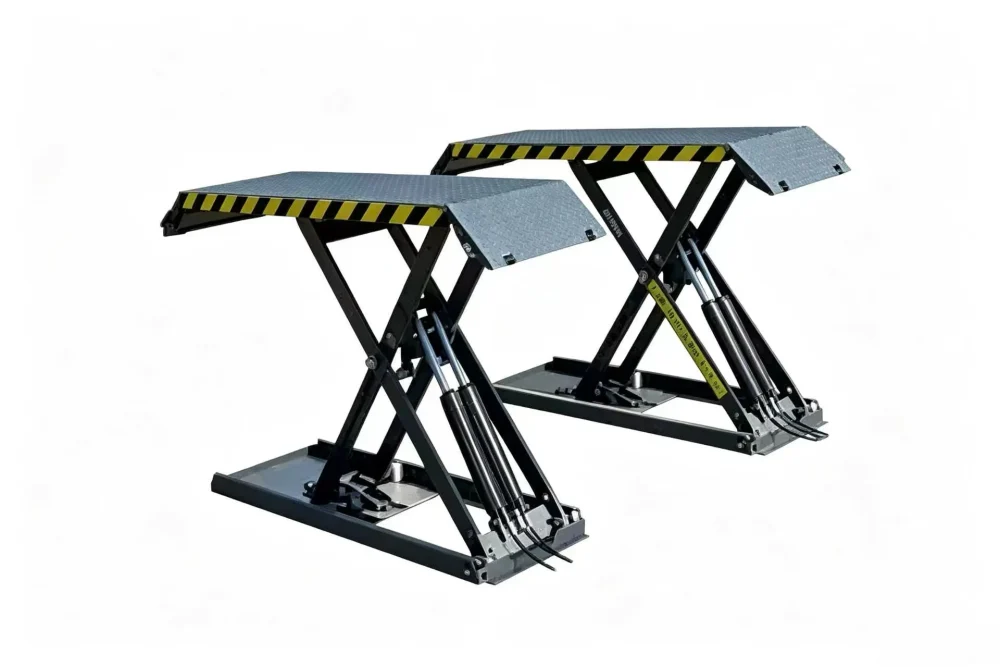
Elevadores de tijera hidráulicos ($1,200 – $7,000)
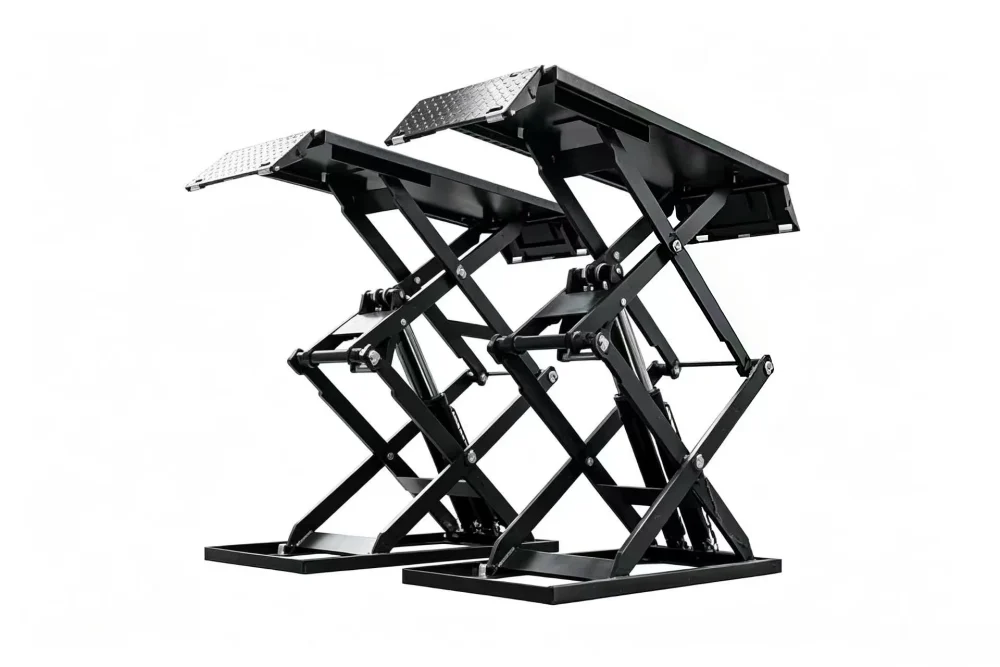
Utilizing a collapsible pantograph mechanism beneath lifting platforms, scissor hoists provide space efficiency at an accessible entry-level hydraulic car lift price.
Low-Rise / Mid-Rise Portable Units ($1,200 – $3,500): Popular among tire shops, auto body detailing bays, and home mechanics working within low ceilings.
Full-Height In-Ground Scissor Lifts ($4,500 – $7,000): Recessed flush into concrete floors, offering clean aesthetics and clear shop pathways when fully lowered.
Technical Specifications and Cost Breakdown Matrix
Review the comparison matrix below to evaluate baseline equipment pricing, load capacities, civil setup needs, and ideal application scenarios across different lift types:
| Equipment Category | Average Equipment Cost (USD) | Standard Load Capacity | Primary Target Application | Required Foundation & Site Setup |
| Mid-Rise Portable Scissor | $1,200 – $3,500 | 3,000 lbs – 6,000 lbs | Tire change, detailing, bodywork | Flat concrete floor (110V/220V power) |
| Symmetric / Asymmetric 2-Post | $2,200 – $6,500 | 7,000 lbs – 12,000 lbs | Engine, brake, transmission repair | 4″ to 6″ reinforced 3,000 PSI concrete |
| Commercial Heavy 2-Post | $6,500 – $9,000 | 12,000 lbs – 18,000 lbs | Fleet trucks, vans, service vehicles | 6″+ industrial grade concrete pad |
| Standard 4-Post Parking Lift | $2,800 – $4,500 | 7,000 lbs – 9,000 lbs | Home garage double-deck parking | Flat concrete slab (Anchoring optional) |
| Commercial 4-Post Alignment | $6,000 – $12,000 | 12,000 lbs – 18,000 lbs | Wheel alignment, commercial service | Recessed pit or heavy flat anchor pad |
| Flush Mount In-Ground Scissor | $4,500 – $7,000 | 7,000 lbs – 10,000 lbs | Express lube bays, high-end shops | Deep concrete pit excavation & drainage |
Key Structural Drivers Shaping Machinery Quotes
When comparing estimates with identical weight capacities, buyers often wonder why one unit commands a higher hydraulic car lift price than another. Several critical manufacturing factors explain how an attractive initial estimate tag might reflect underlying design compromises.
Steel Quality and Structural Gauge Thickness
The weight and grade of steel used in column fabrications play a direct role in raw material costs. Premium manufacturers utilize Q350 or structural grade steel with thick column wall profiles. Cheaper equipment frequently uses thinner gauge steel plates that flex under heavy, off-center loads to lower the upfront quote. Frame flex increases internal carriage friction, accelerates pulley wear, and compromises hydraulic cylinder seal longevity over time. Paying a higher hydraulic car lift price up front often yields stronger structural rigidity and smoother vertical travel.
Drive Mechanics: Direct Drive vs. Chain-Over-Hydraulic
The mechanical design of the drive assembly significantly impacts performance, maintenance needs, and manufacturing expenses:
Chain-Over-Hydraulic Systems: Short hydraulic cylinders are paired with heavy leaf chains to double carriage speed relative to cylinder stroke. This design reduces cylinder length, helping lower the baseline equipment budget. However, leaf chains require periodic lubrication, alignment inspections, and eventual replacement.
Direct-Drive Systems: Full-length, chrome-plated hydraulic cylinders push carriage assemblies directly, eliminating lifting chains entirely. While direct-drive configurations raise the upfront equipment cost by $400 to $800, they feature fewer moving components, lower friction losses, and reduced maintenance over decades of operation.
Safety Certification Standards (ALI / CE Verification)
Safety compliance is a critical factor in lift engineering that affects total equipment expense. Equipment certified by the Automotive Lift Institute (ALI) or carrying official CE markings undergoes testing, including destructive overload tests, lock-engagement verifications, and structural fatigue testing. Certified lifts increase the average hydraulic car lift price by roughly 15% to 25%, but certification is mandatory for commercial facilities to comply with workplace safety regulations and insurance policies.
Secondary Capital Factors: Installation, Freight, and Infrastructure
Purchasing the lift itself accounts for only a portion of the total project investment. Factoring in secondary execution expenses ensures a complete budget without unexpected financial surprises.
Concrete Pad Foundation Work
Anchor-dependent two-post lifts require stable concrete pads to resist intense leverage forces. Standard 9,000 lb lifts demand a minimum concrete thickness of 4 inches rated at 3,000 PSI, while heavy-duty 12,000 lb units require 6 inches or more. If an existing slab is cracked, uneven, or too thin, cutting and repouring a dedicated concrete pad typically adds $1,200 to $3,500 beyond the base hoist expenditure.
Dedicated Electrical Infrastructure
While lightweight mobile scissor platforms run on standard 110V single-phase household power, heavy-duty 220V/240V power units demand dedicated electrical circuits. Commercial repair shops utilizing three-phase power (208V/380V/480V) require licensed electrical contractors to route subpanels and install disconnect switches, which adds $300 to $1,000 to your turnkey investment.
Freight Shipping and Professional Assembly
Transporting heavy steel columns and power units weighing between 1,500 lbs and 4,000 lbs requires flatbed freight shipping. Freight costs range from $300 to $800 based on delivery distance. Professional assembly by certified technicians adds another $600 to $1,500 to the total setup expense, ensuring proper column shimming, hydraulic line bleeding, cable tensioning, and safety latch calibration.
Step-by-Step Strategic Checklist for Equipment Procurement
To secure the best overall value and optimize your final hydraulic car lift price without compromising workplace safety, follow this structured procurement approach:
1. Measure Overhead Clearance and Floor Space
Accurately measure floor-to-ceiling heights, accounting for overhead garage door tracks, lighting fixtures, and roof trusses. Ensure the total ceiling height accommodates the lift height plus the tallest vehicle intended for service.
2. Evaluate Vehicle Weight and Wheelbase Dimensions
Match lift capacity to your heaviest anticipated payload. For light passenger cars, a 9,000 lb two-post lift provides ample support. Commercial work trucks, armored vehicles, or electric vehicles with heavy chassis battery packs require 12,000 lb or 15,000 lb capacity ratings.
3. Request Itemized Quotes
Ensure quotes clearly break down equipment costs, freight charges, anchor hardware, accessory adapters, and warranty terms. Comparing itemized estimates allows you to judge the true hydraulic car lift price across suppliers.
4. Review Warranty Coverage and Spare Part Availability
A low initial purchase quote offers little long-term value if replacement seals or hydraulic valves take months to source. Choose manufacturers that back structural steel frames with 5-year warranties and stock replacement components locally.
Frequently Asked Questions (FAQ)
Q1: What is the minimum concrete thickness needed for a 2-post lift?
Standard 9,000 lb two-post lifts require a minimum of 4 inches of reinforced concrete rated at 3,000 PSI. Heavy-duty commercial units rated at 12,000 lbs or higher typically require 6 inches or more of reinforced concrete.
Q2: Is a direct-drive or chain-driven hydraulic system better?
Chain-driven systems offer a lower upfront purchase price and fit well in garages with ceiling height constraints. Direct-drive systems cost slightly more initially, but require less long-term maintenance because they eliminate chain stretch, cable wear, and pulley adjustments.
Q3: How much should I budget for annual lift maintenance?
Routine annual maintenance costs between $150 and $350. This covers hydraulic fluid changes, line inspections, equalizer cable adjustments, anchor bolt torque checks, and safety latch verifications.
Q4: Can 4-post parking lifts be used without concrete floor anchors?
Yes. Most standard 7,000 lb to 9,000 lb 4-post storage lifts are free-standing. Optional caster kits allow the lift to be moved across a flat garage floor when unloaded.
Q5: What electrical supply is needed for a residential garage lift?
Lightweight scissor lifts run on standard 110V/120V household outlets. Standard full-height two-post and four-post residential lifts require a dedicated 220V/240V single-phase power supply with a 30-amp circuit breaker.
Q6: How long do hydraulic pumps and cylinder seals typically last?
With clean hydraulic fluid and proper load distribution, commercial-grade hydraulic power units and cylinders deliver 10 to 15 years of continuous service before requiring seal replacements.
Streamline Your Shop Machinery Investment Today
Selecting the ideal vehicle hoist requires balancing initial equipment expenditure, civil site preparation, and long-term structural durability to achieve a competitive hydraulic car lift price. Investing in certified equipment backed by reliable technical support ensures safety, operational efficiency, and long-term performance for commercial repair bays and private residential garages alike.
For technical CAD dimensional drawings, custom voltage options, or factory-direct quotes with a detailed hydraulic car lift price breakdown, contact our engineering specialists:
Email: [email protected]
Phone / WhatsApp: +86 189 5417 1380
 Spanish
 English
 Arabic
 French
 Korean
 German
 Russian