
For automotive professionals, fleet managers, and passionate home mechanics alike, adding a vehicle lift to a workshop is nothing short of a game-changer. It transforms strenuous, ground-level repairs into efficient, comfortable, and safe operations. However, before investing in this pivotal piece of garage infrastructure, the primary question everyone asks is simple: how much does a car lift cost? The short answer is that prices vary widely, spanning anywhere from $500 for highly portable DIY solutions to well over $15,000 for heavy-duty commercial lifting systems. The total financial commitment depends heavily on design layout, load capacity, engineering standards, and installation requirements. In this comprehensive guide, we will break down the true costs associated with acquiring a vehicle lift, look deeply into different configurations, explore hidden installation expenses, and provide the practical insights you need to make a well-informed investment. When deciding on upgrading your space, knowing how much does a car lift cost allows you to plan your capital expenditures accurately.
Why the Price Ranges Vary So Significantly
When searching for a reliable system, you will immediately notice massive discrepancies in pricing. This occurs because the term “car lift” encompasses an incredibly diverse array of equipment engineered for entirely different operational environments. A compact unit designed for occasional DIY oil changes in a residential garage operates on vastly different engineering principles than a continuous-duty, twelve-thousand-pound model meant for a busy commercial repair center.
Manufacturing origins, structural steel quality, hydraulic reliability, and safety certifications (such as the Automotive Lift Institute, or ALI certification) heavily impact the baseline pricing. While a cheaper, uncertified model might save you money upfront, it often carries higher long-term risks and maintenance costs. Therefore, understanding exactly how much does a car lift cost requires analyzing specific categories of lifts and identifying where your operational needs align with structural capabilities. By evaluating equipment durability alongside sticker prices, buyers can accurately gauge how much does a car lift cost over its functional lifespan.
Breaking Down Costs by Lift Type
To establish a realistic budget, it is essential to examine the market options systematically. Below is an in-depth breakdown of the most common vehicle lift categories, their typical applications, and their corresponding price brackets.
1. Scissor Lifts
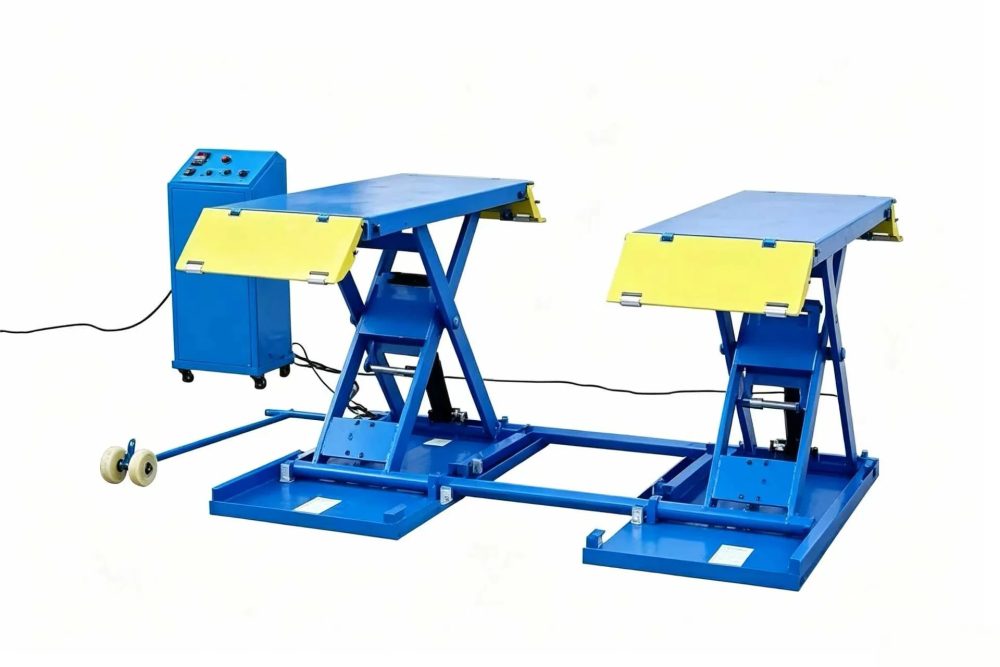
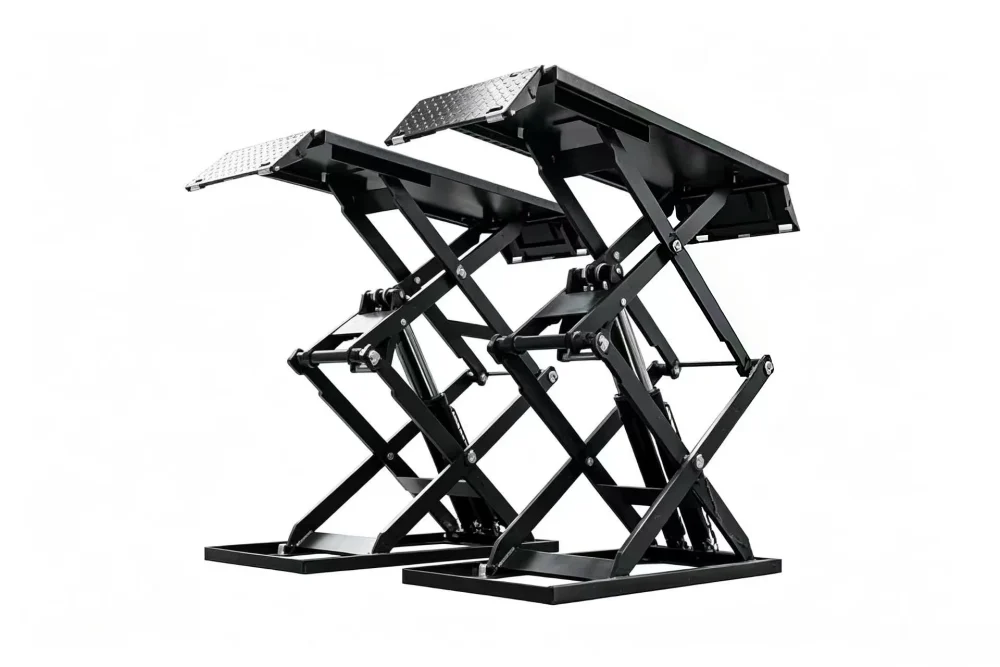
Scissor lifts are excellent for workshops with limited spatial footprints or low ceiling clearances. These units utilize a crisscross mechanism to elevate vehicles and are available in both low-rise and mid-rise formats. They are highly favored by auto body shops, detailing centers, and tire service specialists because they leave the wheels and sides of the vehicle completely accessible.
For a basic entry-level portable scissor lift, prices generally begin around $1,000 to $2,500. If you are looking for heavy-duty, full-rise flush-mount scissor units designed for professional alignment or structural work, equipment costs can scale from $5,000 to over $10,000. When calculating how much does a car lift cost for tight spaces, scissor mechanisms consistently represent a highly space-efficient option. Business owners often discover that analyzing how much does a car lift cost in a scissor configuration helps them maximize low-clearance service bays.
2. Two-Post Lifts
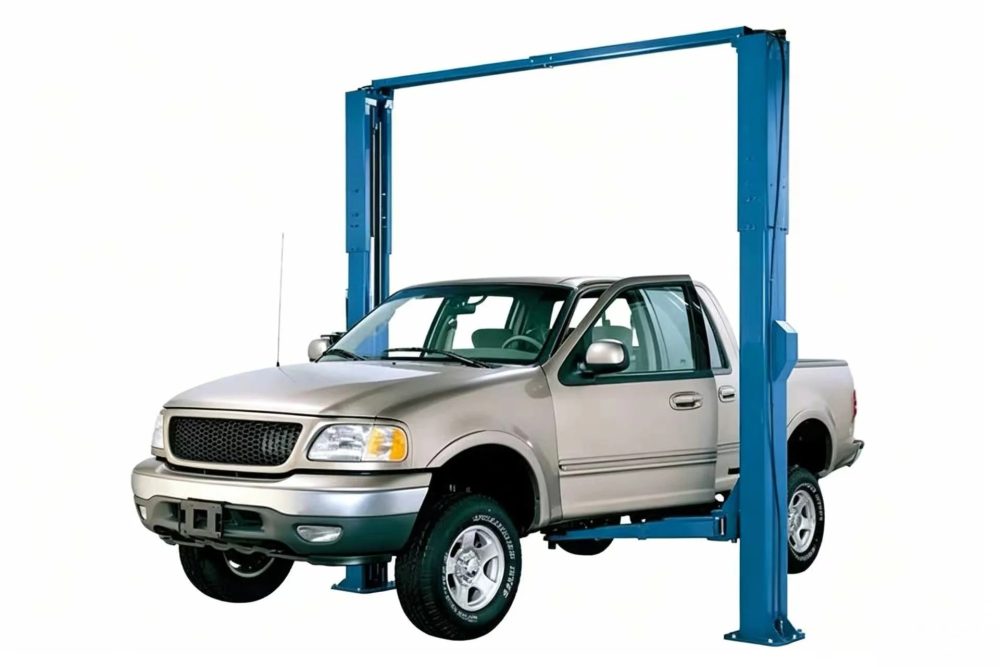
The two-post lift is the undisputed backbone of the professional automotive repair industry. Featuring two robust vertical columns and adjustable swing arms, it lifts the vehicle from designated frame points, providing completely unobstructed access to the wheels, braking systems, suspension components, and the entire undercarriage.
For a standard asymmetric or symmetric two-post model with a capacity between 9,000 and 10,000 pounds, prices typically hover between $2,500 and $6,000. Premium commercial-grade variants with higher lifting columns and advanced hydraulic safeties can reach up to $8,000. Because of their immense utility and relatively accessible entry pricing, they offer some of the best return on investment in the industry. If you are wondering how much does a car lift cost for standard mechanical repairs, the two-post configuration is usually the most economical entry point. Furthermore, exploring how much does a car lift cost in this category reveals a highly competitive market with extensive options.
3. Four-Post Lifts
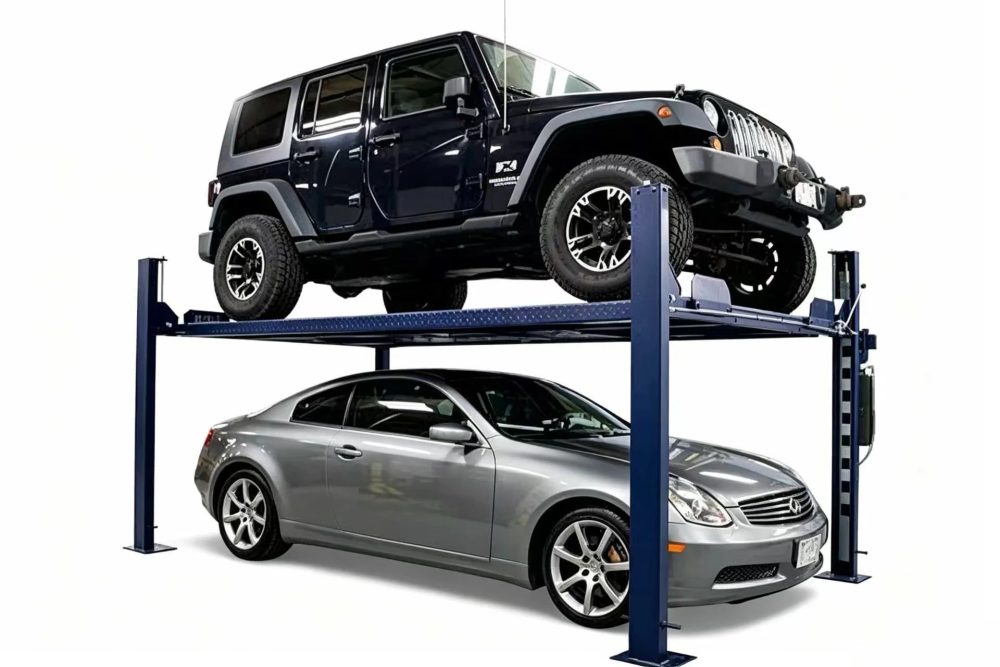
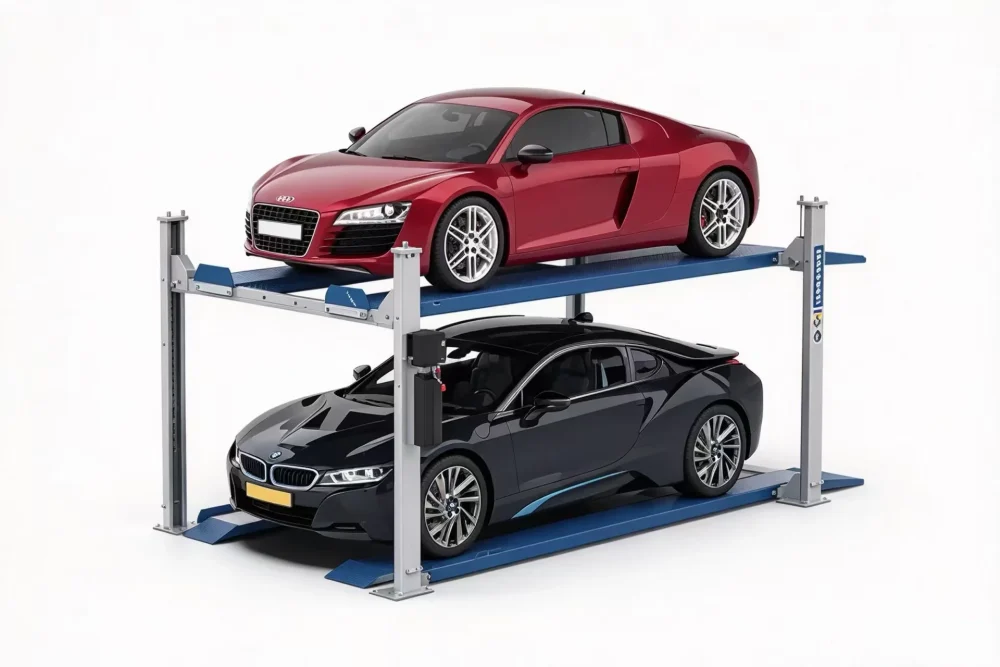
If drive-on convenience and structural stability are your top priorities, a four-post lift is the ideal choice. These units feature two parallel runways that support the vehicle by its tires, eliminating the need to locate under-car frame points manually. They are incredibly popular for wheel alignment tasks, quick lube services, and vehicle storage or parking optimization.
If you are a home enthusiast asking how much does a car lift cost to stack two vehicles in a single garage bay, a light-duty residential four-post lift generally falls between $3,000 and $5,500. Conversely, industrial-grade, heavy-duty four-post alignment lifts equipped with integrated slip plates and rolling jacks frequently command prices between $7,000 and $16,000. When residential buyers evaluate how much does a car lift cost for parking solutions, they must also factor in optional rolling jacks and drip trays. Understanding how much does a car lift cost for long-term vehicle storage helps collectors preserve their investments safely.
4. In-Ground Lifts
For modern workshops seeking a sleek, hyper-clean aesthetic with zero visual obstructions when the bay is empty, in-ground lifts are the golden standard. These systems house their entire lifting structure inside a sealed concrete vault beneath the workshop floor, with only the lifting pads or runways visible when retracted.
Because they require specialized engineering, excavation, and professional hydraulic integration, their upfront price is substantial. The physical equipment itself easily ranges from $6,000 to $12,000. However, when you factor in extensive concrete work and environmental containment considerations, determining how much does a car lift cost in an in-ground configuration usually results in a final budget exceeding $15,000 to $25,000. Dealerships planning a modern workshop renovation must carefully calculate how much does a car lift cost when underground plumbing and structural reinforcing are necessary.
Automotive Lift Pricing & Application Summary Table
| Lift Configuration Type | Average Equipment Cost (USD) | Estimated Installation Cost (USD) | Primary Applications & Structural Advantages |
| Portable Scissor Lift | $1,000 – $2,500 | Self-installed (Minimal) | Detailing, quick tire swaps, brake work, low-ceiling spaces. |
| Standard Two-Post Lift | $2,500 – $6,000 | $700 – $1,500 | General mechanics, suspension rebuilds, exhaust repair. |
| Residential Four-Post Lift | $3,000 – $5,500 | $600 – $1,200 | Double-stacking vehicle storage, classic car preservation. |
| Commercial Four-Post Lift | $7,000 – $16,000 | $1,500 – $3,000 | Precision alignment, heavy-duty commercial fleet maintenance. |
| Premium In-Ground Lift | $6,000 – $12,000 | $5,000 – $12,000+ | High-end aesthetic workshops, clean showroom repair floors. |
The True Cost Beyond the Equipment: Hidden Expenses
Focusing strictly on the retail sticker price of the machinery can lead to unexpected budget overruns. When calculating how much does a car lift cost, several secondary expenses must be integrated into your financial planning to ensure a smooth, compliant setup.
Concrete and Foundation Requirements
A vehicle lift is only as reliable as the ground it stands on. For two-post models especially, the concrete slab must meet strict depth and structural strength ratings to withstand the immense leverage forces exerted during operation. Most manufacturers mandate a minimum concrete thickness of 4 to 6 inches, rated at 3,000 PSI or higher. If your existing garage floor is too thin, cracked, or unlevel, you will need to cut out sections and pour new concrete footings, which can easily add $1,000 to $3,000 to your total expenses. This foundational preparation heavily impacts how much does a car lift cost for old commercial buildings.
Professional Installation vs. DIY Layouts
While lightweight portable scissor structures can be assembled using basic workshop tools, anchoring a heavy commercial lift demands specialized expertise. Professional installers have the necessary heavy machinery, rotary hammer drills, and precision leveling instruments to mount columns safely. Professional labor rates generally vary between $600 and $3,000 depending on the complexity of the unit. Skipping professional installation to save money might sound appealing, but it can void equipment warranties and compromise workplace safety. Therefore, when estimating how much does a car lift cost for an active commercial business, certified labor is an inescapable line item.
Electrical System Upgrades
Many entry-level and residential lifts run efficiently on standard 110-volt household power. However, heavy commercial systems almost universally require a robust 220V or 240V single-phase or three-phase power source to operate their high-pressure hydraulic pumps. If your commercial facility or home workshop lacks the necessary electrical service, hiring a certified electrician to install dedicated breakers, run heavy-gauge wiring, and mount industrial drop boxes will influence how much does a car lift cost overall, adding anywhere from $300 to $1,500 to your budget.
How to Choose the Right Option for Your Budget
To avoid overspending on features you will never use—or conversely, buying an underpowered system that fails to meet your daily operational workflow—evaluate your purchasing decision through three main criteria:
Weight Capacity: Always calculate the heaviest vehicle you plan to lift and add a 20% safety margin. If you mainly service compact passenger cars, an 8,000-lb lift is plenty. If you service diesel dual-wheel pickup trucks, look toward 12,000-lb to 15,000-lb capacities.
Ceiling Height: Measure your ceiling clearance carefully. True full-rise clear-floor lifts need at least 11 to 12 feet of vertical clearance. For continuous, day-in and day-out commercial use, prioritizing heavy steel fabrication and easily sourcing replacement hydraulic seals is critical.
Frequency of Use: Premium industrial machinery scales significantly better over continuous operating cycles compared to cheap entry-level options.
By assessing these parameters, you can establish an accurate expectation of how much does a car lift cost for your unique scenario, ensuring every dollar spent helps drive efficiency and safety. Workshop owners who systematically analyze these operational pillars can better anticipate how much does a car lift cost without compromising on quality or regulatory compliance.
Frequently Asked Questions (FAQ)
Q: Is it safe to install a car lift on my own? A: While it is structurally possible to self-install light-duty four-post or portable scissor units, professional installation is strongly encouraged for all two-post and commercial-grade systems. Professional technicians possess the calibration gear to verify perfect plumb alignment, ensure safety locks engage evenly, and anchor the columns correctly to prevent catastrophic failures. This peace of mind is a vital consideration when evaluating how much does a car lift cost for your workshop floor.
Q: How much does a car lift cost to maintain annually? A: On average, preventative maintenance costs run between $150 and $400 per year. Routine care typically involves inspecting cables for fraying, checking hydraulic fluid levels, lubricating mechanical columns, and verifying safety latch engagement. Regular maintenance maximizes equipment lifespan and keeps professional workshops fully compliant with safety regulations. Knowing how much does a car lift cost over a ten-year operational span requires factoring in these minor annual upkeep bills.
Q: What is ALI Certification and does it increase the purchase price? A: Yes, ALI (Automotive Lift Institute) certified lifts generally cost slightly more because they undergo rigorous independent laboratory testing to verify they meet strict structural safety and load performance standards. Buying an ALI-certified model is highly recommended for peace of mind and is frequently required by commercial insurance providers. When asking how much does a car lift cost with certification, the safety dividend always outweighs the marginal cost increase.
Q: Can I put a 2-post lift in a standard 2-car residential garage? A: It depends heavily on your ceiling height and concrete slab thickness. Standard residential garages typically have 8-to-9-foot ceilings, which are generally too low for full-size two-post systems. However, if you have a modified ceiling layout or use specialized low-ceiling columns—and your concrete slab is at least 4 inches thick—it can be successfully implemented. Understanding how much does a car lift cost for low-clearance spaces helps home mechanics find compact alternatives.
Conclusion: Making a Smart Long-Term Investment
Answering how much does a car lift cost involves looking far beyond the equipment retail price. By taking a holistic approach—incorporating structural foundation assessment, professional labor, electrical adjustments, and long-term maintenance requirements—you protect your investment and guarantee a secure working environment. Buying a high-quality lift boosts workflow productivity, saves labor time, and makes vehicle maintenance vastly more ergonomic.
Are you ready to elevate your shop’s capabilities with robust, reliable, and premium-engineered lifting solutions? At Tebo Automotive Equipment, we design and manufacture high-performance lifting machinery tailored for modern repair facilities and commercial fleets worldwide. Contact our engineering support team today to receive a customized quote, technical layout advice, and a comprehensive breakdown of the best solutions for your workshop floor.
Phone / WhatsApp: +86 18954171380
Email: [email protected]
 English
 Arabic
 French
 Korean
 Spanish
 German
 Russian