
Managing multi-level material transport inside modern factories, commercial warehouses, and distribution centers presents significant operational safety challenges. Moving heavy palletized inventory, raw materials, and machinery components between mezzanine floors or multiple building levels via open staircases or forklifts introduces high collision and fall risks. Installing a dedicated enclosed shaft vertical cargo lift provides an isolated, highly secure vertical transit channel that drastically cuts internal labor costs while ensuring strict compliance with local industrial safety regulations.
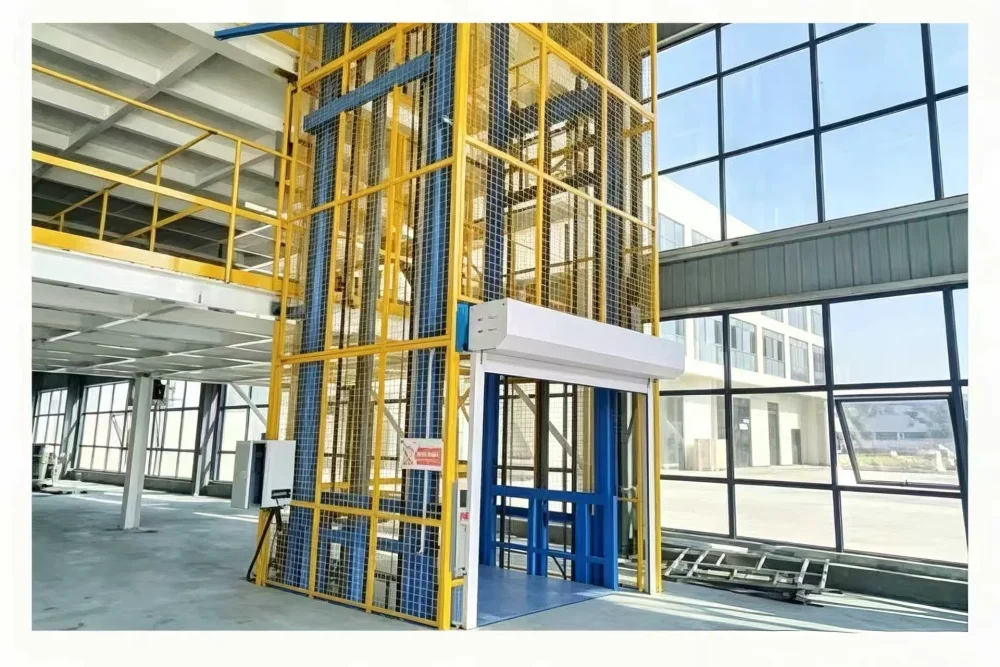
Understanding the Purpose of an Enclosed Shaft Cargo Lift
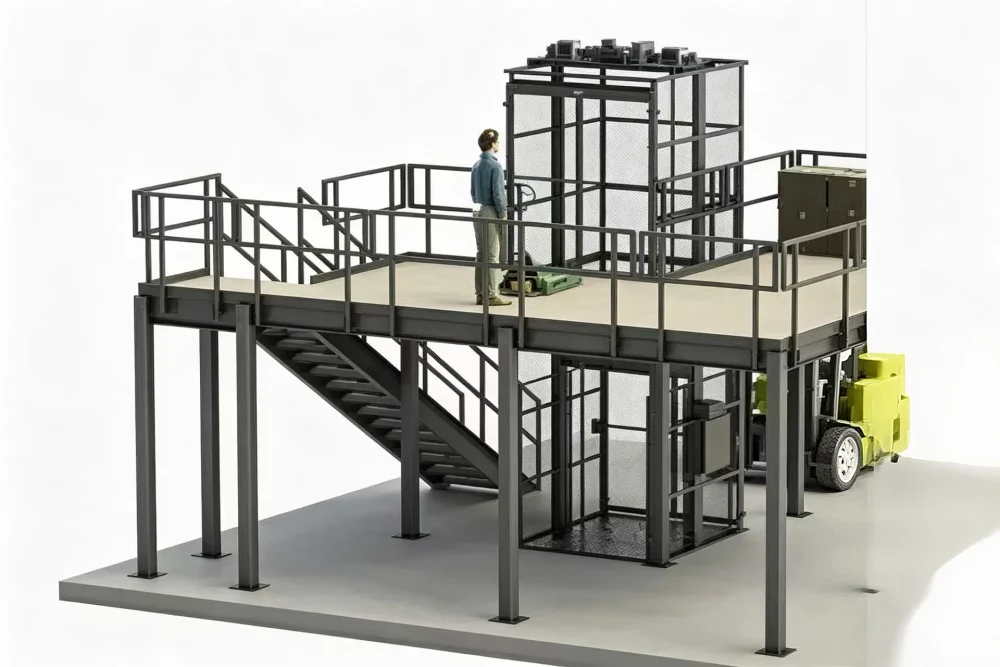
Industrial logistics facilities require reliable floor-to-floor vertical transport that protects both floor personnel and valuable cargo. Traditional open-frame platform hoists leave moving parts and goods exposed during transit, increasing the likelihood of items shifting or snagging on floor edges. An enclosed shaft vertical cargo lift solves this by housing the platform, hydraulic cylinders, and guide systems inside a fully enclosed steel or mesh perimeter structure.
Whether retrofitting an existing concrete hoistway or setting up a self-supporting steel framework on a factory floor, choosing a purpose-built enclosed shaft vertical cargo lift stabilizes material workflows. Isolating the platform environment prevents unauthorized access during operation, blocks falling debris, and creates a controlled vertical transport system across two to five building levels.
Core Industrial Applications for Enclosed Vertical Cargo Lifts
Multi-Tier Warehouse Mezzanines: Moves heavy pallets, storage racks, and inventory smoothly between levels.
Automotive Repair & Assembly Workshops: Transports heavy vehicle engines, tires, and mechanical components safely.
Chemical & Pharmaceutical Plants: Protects material batches from dust contamination inside a secure vertical shaft.
Commercial Retail & Logistics Hubs: Transports bulk stock from basement storage rooms up to primary retail floors without exposed machinery.
Technical Engineering and Shaft Structure Configurations
An engineered enclosed shaft vertical cargo lift relies on heavy-duty structural steel framing, precision hydraulic or traction drive systems, and multi-layered enclosure cladding to handle demanding daily duty cycles.
Shaft Cladding and Perimeter Framing
The perimeter enclosure of an enclosed shaft vertical cargo lift can be adapted to match specific environmental and building code mandates:
Steel Mesh Enclosures: High-visibility expanded steel mesh panels allow continuous internal visibility and airflow while preventing personnel from reaching into the moving travel zone.
Solid Sheet Metal Cladding: Heavy-gauge cold-rolled steel or stainless steel sheets provide a complete dust-proof and moisture-resistant barrier for cleanroom or outdoor placements.
Glass Wall Enclosures: Toughened safety glass panels deliver clean architectural lines for modern commercial buildings without sacrificing perimeter safety.
Precision Hydraulic Drive and Rail Systems
Inside the enclosure, high-tensile steel guide rails direct the platform. High-pressure hydraulic cylinders paired with heavy-duty leaf chains drive the system smoothly. Choosing a well-engineered enclosed shaft vertical cargo lift ensures zero side sway, smooth start-and-stop control, and precise floor leveling during heavy pallet loading.
Technical Specifications Comparison Matrix
Review the matrix below to compare key performance attributes across common enclosed shaft vertical cargo lift configurations:
| Technical Attribute | Standard Single-Cylinder Lift | Twin-Cylinder Heavy Cargo Lift | Traction Enclosed Cargo Elevator |
| Payload Capacity Range | 500 kg to 2,000 kg | 2,000 kg to 10,000 kg | 1,000 kg to 5,000 kg |
| Max Vertical Rise | Up to 12 meters (2–3 floors) | Up to 20 meters (2–5 floors) | Up to 30+ meters (Multi-story) |
| Platform Speed Range | 0.1 m/s to 0.15 m/s | 0.1 m/s to 0.12 m/s | 0.25 m/s to 0.5 m/s |
| Pit Depth Requirement | Shallow Pit (200 mm to 300 mm) | Shallow Pit (300 mm to 500 mm) | Standard Pit (1,000 mm+) |
| Enclosure Structure | Self-supporting steel mesh frame | Heavy-duty steel beam frame | Reinforced concrete/steel shaft |
| Primary Advantage | Fast installation & low cost | Extremely heavy pallet loading | High travel speed for tall buildings |
Critical Safety Systems for Industrial Material Handling
Safety compliance remains the top priority when specifying an enclosed shaft vertical cargo lift. Modern systems incorporate multiple mechanical and electrical backup mechanisms to safeguard operators and facility assets:
Interlocked Shaft Doors and Landing Gates
Every landing door on an enclosed shaft vertical cargo lift is equipped with electromechanical safety interlocks. The platform will not move if any door is open, and landing gates remain mechanically locked until the platform stops flush at that specific floor.
Anti-Fall Velocity Fuses and Mechanical Brakes
Hydraulic lines feature inline velocity safety valves. If a hydraulic hose breaks, the valve locks instantly to stop oil movement, holding the platform securely in place. Heavy-duty mechanical safety wedges grip the steel guide rails if descent speed exceeds safe limits.
Overload Sensing and Emergency Stops
Built-in pressure sensors detect weight conditions. If load limits are exceeded, an audible alarm sounds and activation is disabled. Emergency stop buttons on every landing panel allow operators to halt operation immediately during unexpected hazards.
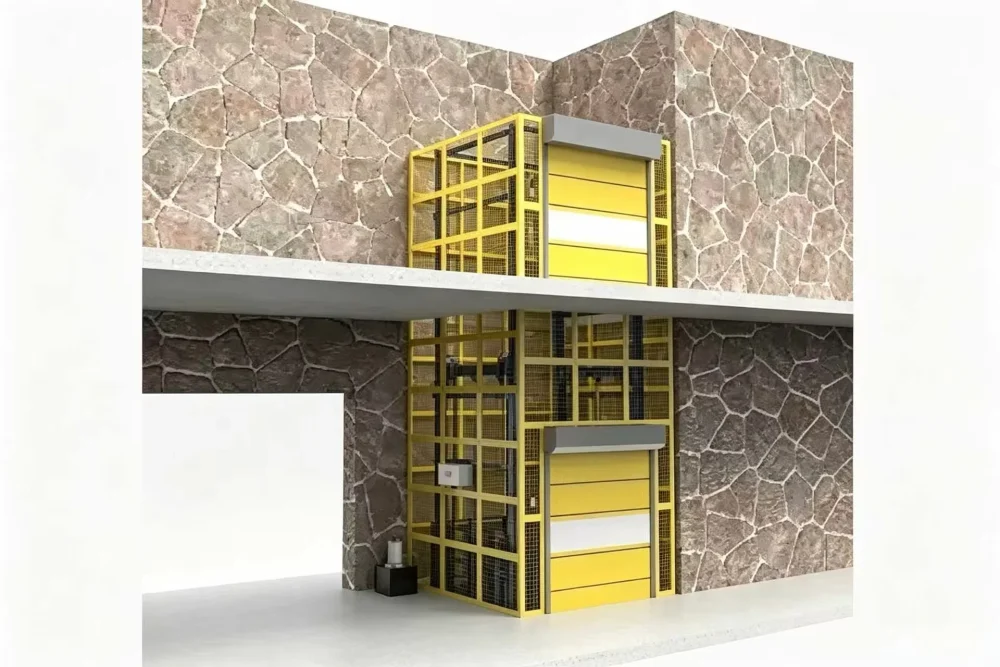
Core Advantages of Installing an Enclosed Shaft Cargo Lift
Upgrading from open platform hoists or manual stair movement to an enclosed shaft vertical cargo lift delivers clear operational and financial benefits.
1. Eliminating Workplace Slip, Trip, and Fall Risks
Moving heavy materials manually up stairs or using open hoists creates severe trip and falling object hazards. Operating a fully enclosed shaft vertical cargo lift contains all moving goods inside a sealed vertical zone, eliminating falling item risks across surrounding work floors.
2. Maximizing Spatial and Floor Efficiency
Vertical lifts feature a compact footprint compared to wide floor ramps or bulky forklift staging areas. Utilizing vertical space allows facilities to clear floor lanes for active production and storage.
3. Preserving Material and Inventory Quality
Securing cargo within a smooth-moving enclosed shaft vertical cargo lift prevents product damage caused by abrupt movement, tilting, or collision with building walls during transport.
4. Simplified Pitless or Shallow Pit Retrofitting
Unlike traditional passenger elevators that require deep excavation work, a modern enclosed shaft vertical cargo lift requires only a minimal pit floor recess or a short ground ramp, saving time and civil construction costs.
Essential Site Preparation and Installation Steps
Planning your facility setup ensures a smooth equipment deployment process. Contractors preparing for installation should verify several core requirements:
Floor Foundation and Load Verification
Concrete Pad Capacity: Ensure the ground foundation features reinforced concrete (minimum 200 mm thickness, 3,000 PSI) capable of supporting the dead weight and dynamic load.
Level Slab Finish: Verify that the pit base or mounting floor is completely level to maintain accurate rail alignment and smooth travel.
Structural Mounting and Anchor Points
Mezzanine Tie-In Locations: The vertical steel frame must be braced against mezzanine floor edges or structural building columns using heavy-duty steel mounting brackets.
Overhead Clearance: Confirm that ceiling height at the top landing accommodates the overall frame height and top motor housing.
Electrical Power Line Setup
Most industrial hydraulic lifts run on 3-phase industrial power (380V/415V/480V) for optimal motor efficiency. Ensure a dedicated power line with an easily accessible circuit breaker is installed near the main control cabinet.
Preventive Maintenance Guidelines for Peak Performance
Following a structured preventive maintenance routine keeps your enclosed shaft vertical cargo lift running safely and efficiently over long service lifespans:
Monthly Operational Audits
Inspect guide rail lubrication, chain tension, and roller assemblies on your enclosed shaft vertical cargo lift.
Test electromechanical door interlocks and emergency stop buttons on all landing control panels.
Check hydraulic fluid levels, hose connections, and pump pressure valves for leaks.
Clean debris from the bottom pit area and verify light curtain sensor alignment.
Annual Structural and Safety Testing
Perform full-capacity load testing on your enclosed shaft vertical cargo lift to verify safety brake activation and valve responsiveness.
Check structural frame mounting bolts, wall anchors, and guide rail alignment tolerances.
Audit electrical control relays, contactors, and ground wiring safety.
Enclosed Shaft Lift vs. Traditional Freight Elevator Options
Evaluating a purpose-built enclosed shaft vertical cargo lift against conventional commercial elevators highlights key operational differences:
Lower Civil Construction Capital Expense
Traditional commercial elevators require deep concrete pits, heavy overhead machine rooms, and extensive civil engineering work. Installing a vertical platform lift offers a self-supporting frame option that drastically reduces structural modification costs while delivering high payload capacities.
Streamlined Industrial Operation
Commercial passenger elevators feature complex doors and slow cycles. An enclosed shaft vertical cargo lift focuses on rapid material handling, wide door clearance for forklifts and hand trucks, and durable industrial push-button controls built for heavy daily use.
Frequently Asked Questions (FAQ)
Q1: What is the maximum load capacity for an enclosed shaft vertical cargo lift?
Standard industrial configurations handle payloads from 1,000 kg to 5,000 kg, while heavy-duty custom models support loads exceeding 10,000 kg.
Q2: Can an enclosed shaft vertical cargo lift be installed outdoors?
Yes. Outdoor installations feature hot-dip galvanized steel frames, fully sealed solid sheet cladding, rain canopies, and IP65-rated waterproof control panels to withstand harsh weather.
Q3: Is a deep floor pit required to install an enclosed shaft vertical cargo lift?
No. Most hydraulic models require only a shallow pit recess of 200 mm to 300 mm. Pitless options use a short entry ramp placed directly on top of existing concrete floors.
Q4: Are operators allowed to travel inside an enclosed shaft vertical cargo lift alongside goods?
These platforms are engineered exclusively for material and freight transport. Operators load materials at the landing, close the interlocked shaft doors, and activate the lift using external floor control panels.
Q5: What happens if an electrical power failure occurs while cargo is in transit?
Integrated manual lowering valves allow maintenance staff to lower the system safely to the nearest ground floor landing to retrieve materials during power outages.
Q6: How long does on-site field assembly typically take?
Installing a standard two-stop enclosed shaft vertical cargo lift generally takes 3 to 5 working days once ground concrete slab work and power lines are ready.
Q7: Can the enclosure walls be customized to match facility requirements?
Yes. Enclosures can be configured with steel mesh, solid sheet metal, clear glass panels, or fire-rated panels based on facility safety mandates.
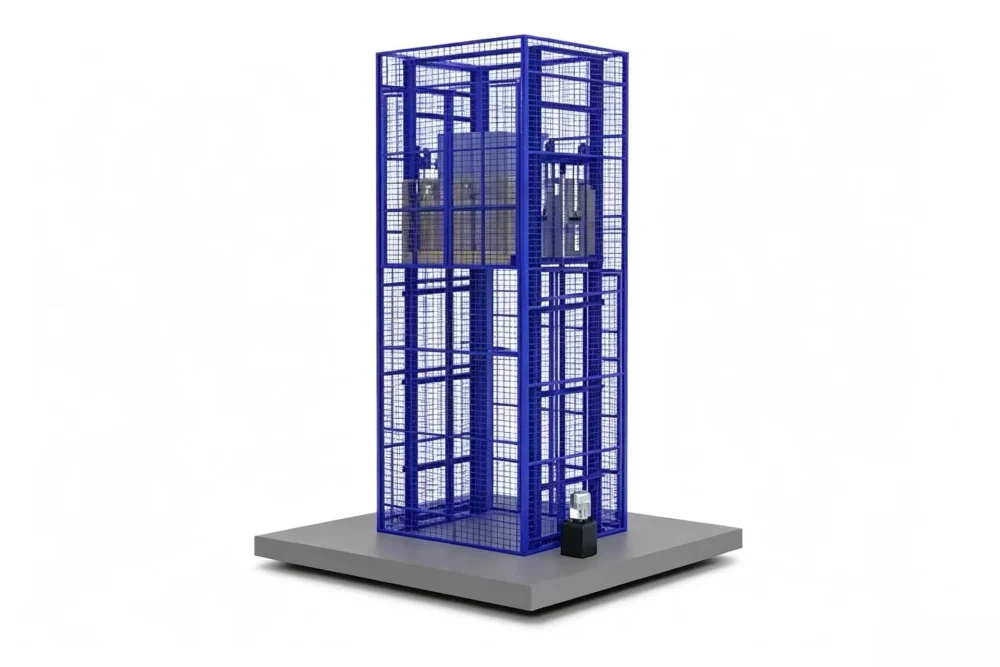
Upgrade Your Facility Material Handling Efficiency Today
Investing in a heavy-duty material handling platform improves workplace safety, boosts floor throughput, and protects valuable facility assets. Installing a custom enclosed shaft vertical cargo lift tailored to your floor height and payload requirements ensures years of quiet, dependable service.
For technical CAD drawings, customized dimensional layouts, or factory-direct quotes, contact our engineering specialists:
Email: [email protected]
Phone / WhatsApp: +86 189 5417 1380
 Russian
 English
 Arabic
 French
 Korean
 Spanish
 German