
In modern manufacturing facilities, distribution hubs, and multi-story warehousing complexes, efficient material movement is essential for sustaining smooth operational workflow and high throughput. Moving bulky palletized inventory, raw materials, heavy tools, and production machinery across building levels manually or via temporary hoists creates severe bottlenecks, inflates labor expenditures, and introduces safety hazards. Implementing purpose-built industrial freight lifts directly addresses these operational challenges by offering a robust, scalable, and highly reliable architectural solution engineered specifically for vertical material transport.
Understanding the engineering principles, structural designs, and operational capabilities of heavy-duty vertical lifting platforms enables plant managers and facility directors to make informed equipment investments that streamline supply chain logistics and maximize spatial efficiency.
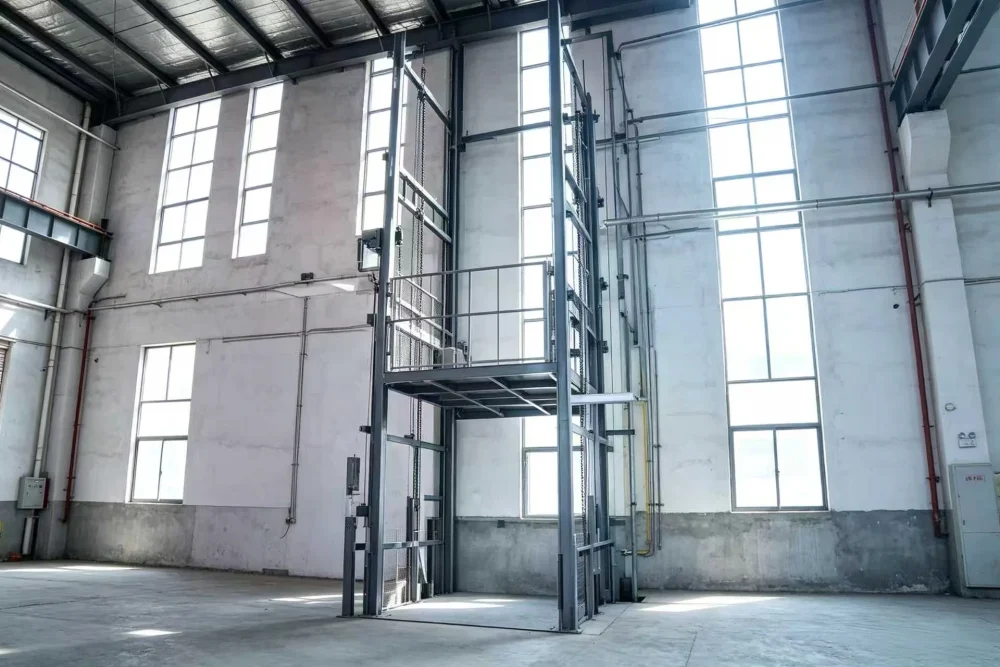
What Are Industrial Freight Lifts and How Do They Work?
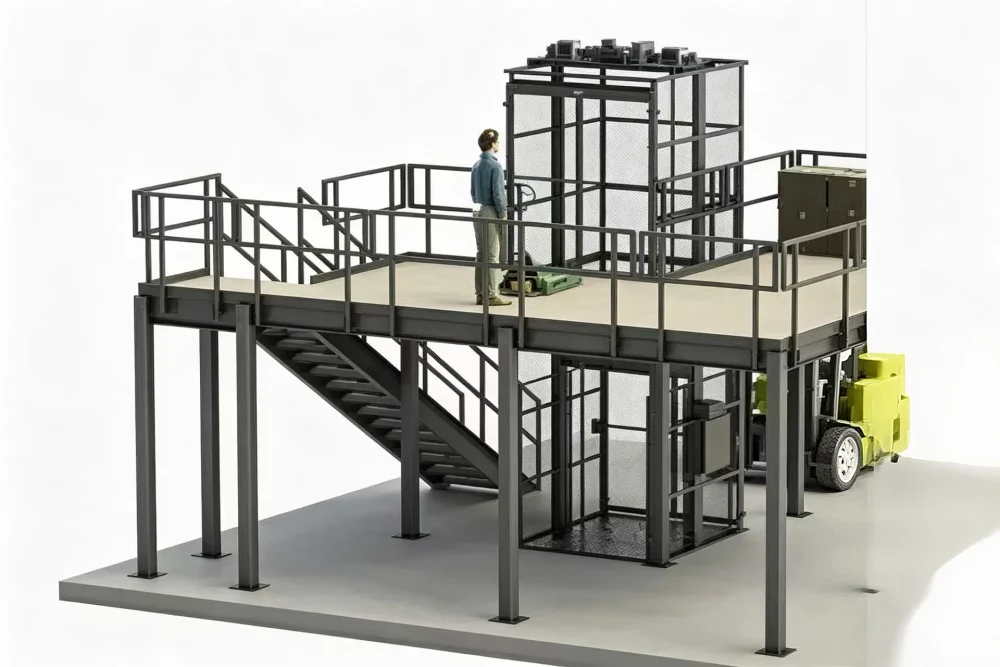
An industrial freight lift—commonly referred to in material handling terminology as a vertical reciprocating conveyor, material lift, or heavy-duty cargo elevator—is specialized mechanical machinery designed to transport goods, equipment, and bulk inventory between distinct building levels, mezzanine floors, or elevated storage platforms. Unlike conventional commercial passenger elevators designed primarily for human transport and strict aesthetic standards, these heavy-duty units feature reinforced structural steel channels, heavy-duty guide rails, high-capacity hydraulic cylinders or electric traction systems, and spacious non-slip platforms built specifically to withstand punishing daily duty cycles and severe point loading.
In high-throughput manufacturing plants and fulfillment centers, installing dedicated industrial freight lifts ensures that heavy materials transition smoothly from ground-level receiving bays directly to upper-tier assembly lines, intermediate processing floors, or multi-level mezzanine rack systems without delaying ground operations.
Primary Types of Cargo Lifting Systems
Choosing the appropriate equipment architecture depends on facility layout, vertical rise height, maximum load weight requirements, cycle frequency, and building structural constraints.
1. Hydraulic Cargo Lifts
Hydraulic vertical platforms utilize heavy-duty hydraulic cylinders paired with high-tensile lifting chains or steel wire cables to raise and lower the cargo platform along rigid steel guide rails. These systems are widely recognized across industrial sectors for their extreme mechanical durability, cost-effective initial installation, and smooth, controlled movement under heavy loads.
Best Suited For: Low-to-medium rise vertical travel (typically spanning 2 to 5 floor levels or up to 18 meters).
Key Advantages: Exceptionally low maintenance demands, high load tolerance, compact drive footprint, and lower initial capital outlay compared to traction alternatives.
2. Mechanical and Traction Cargo Lifts
Mechanical vertical reciprocating conveyors utilize electric motor-driven gearboxes, counterweights, and heavy wire ropes or lifting chains to elevate cargo. These units excel in high-rise, multi-level facilities requiring rapid vertical speeds and continuous, around-the-clock operating schedules.
Best Suited For: Tall multi-story industrial buildings, automated high-bay warehouses, and multi-tier mezzanine installations exceeding 15 to 20 meters of travel.
Key Advantages: Fast lifting velocities, unrestricted vertical travel heights, high duty-cycle capabilities, and precise floor-level stopping accuracy.
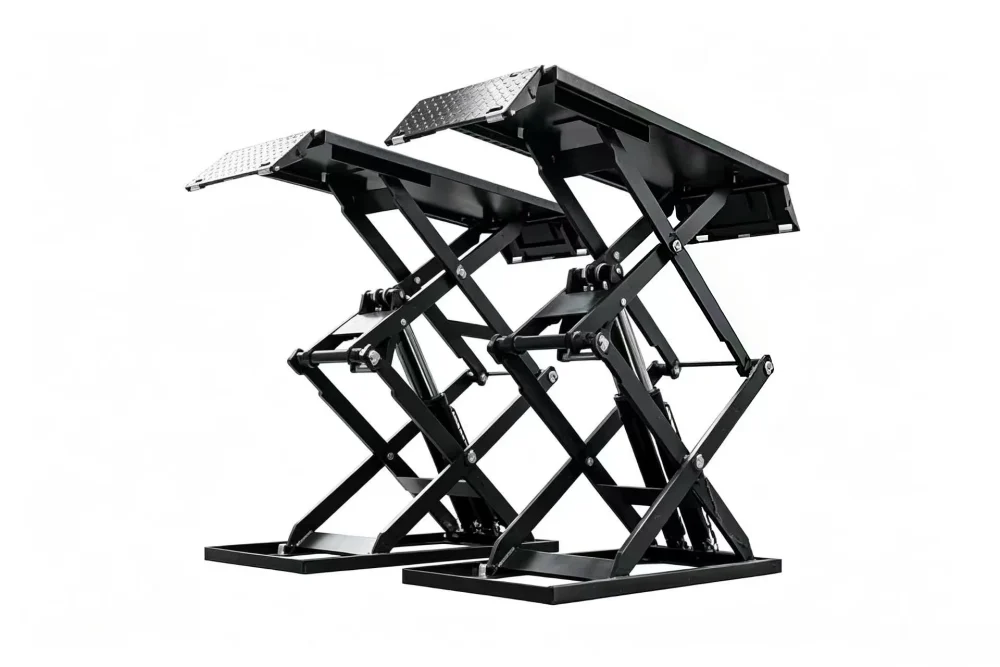
3. Heavy-Duty Scissor Lifts
Scissor lifting platforms utilize cross-pivoting steel legs powered by integrated hydraulic cylinders to push the lifting platform upward. Their self-contained mechanism provides an exceptionally stable footprint without requiring full-height vertical guide columns.
Best Suited For: Lower travel elevations, loading dock levelers, exterior unloading bays, and floor-to-mezzanine applications up to 6 meters.
Key Advantages: Minimal structural footprint above the platform, excellent perimeter stability, and flexible installation possibilities.
Technical Specifications and Comparative Analysis
Evaluating technical parameters across different structural designs ensures that facility planners select equipment matched directly to their throughput requirements and architectural site conditions.
| Engineering Parameter | Hydraulic Guide-Rail Systems | Mechanical Traction Elevators | Heavy-Duty Scissor Platforms |
| Typical Payload Capacity | 1,000 kg – 20,000+ kg | 1,000 kg – 10,000 kg | 500 kg – 15,000 kg |
| Maximum Travel Height | Up to 18 meters | Up to 35+ meters | Up to 6 meters |
| Lifting Velocity | 4 – 8 meters / min | 8 – 20 meters / min | 2 – 5 meters / min |
| Pit Depth Requirement | Shallow (150 mm – 300 mm) or ramp | Shallow pit or floor-mounted | Recessed pit required for flush load |
| Overhead Clearance | Low to moderate clearance | Substantial overhead room | Minimum overhead required |
| Structural Frame | Wall-mounted or self-supporting frame | High-strength steel mast frame | Base frame with cross-pantograph legs |
| Maintenance Profile | Low (hydraulic fluid & seal checks) | Moderate (cables, gears, brake adjustments) | Low to moderate (pivot bushings & fluid) |
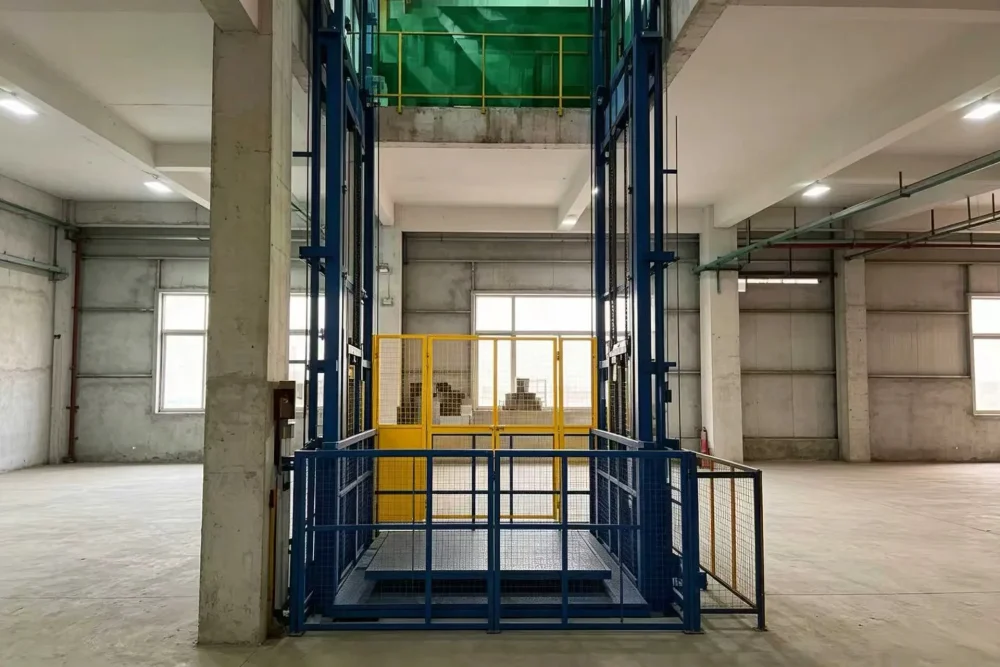
Key Benefits of Integrating Heavy Material Lifts
Modern industrial operations function under rigorous production timelines where material handling delays directly compromise bottom-line profitability. Installing purpose-built equipment transforms internal plant logistics across several crucial dimensions:
1. Maximizing Vertical Space and Storage Density
Industrial real estate expansion and land acquisition involve major capital expenditures. Utilizing available vertical volume through mezzanine construction and multi-tier racking systems is the most cost-effective method to expand operational floor space. Integrating robust industrial freight lifts guarantees that moving inventory to upper storage levels is as rapid, safe, and routine as moving goods across the ground floor.
2. Enhancing Occupational Safety and Ergonomics
Manual transport of bulky items across staircases, steep ramps, or temporary hoists accounts for a large percentage of workplace injuries, employee fatigue, and inventory breakage. Modern industrial freight lifts eliminate manual heavy lifting, creating an ergonomically sound work environment that aligns fully with international occupational health and safety standards.
3. Unlocking Dedicated Workflows and Reducing Forklift Traffic
Forklifts are indispensable for horizontal transport across dock bays and warehouse aisles, but using them for high vertical stacking across multiple floor levels introduces significant hazard risks and ties up valuable vehicles. Installing industrial freight lifts creates a dedicated, enclosed vertical transport highway within the building structure, releasing forklift fleets to focus entirely on horizontal loading and unloading duties.
Crucial Safety Systems and Structural Features
Industrial material handling environments require robust safety measures to protect personnel and prevent product damage. Heavy-duty material handling platforms incorporate multiple layers of mechanical and electrical safety systems:
Electro-Mechanical Door Safety Interlocks:
Landing gates at every floor level remain locked automatically whenever the lifting platform is in motion or positioned at a different level. The lift platform cannot move unless all enclosure doors and landing gates are fully closed and latched.
Anti-Fall Mechanical Catching Devices:
In the unlikely event of dynamic chain slackening or cable failure, automatic mechanical safety dogs instantly engage with the structural guide rails, locking the platform in position and preventing catastrophic platform descent.
Hydraulic Burst Valve Protection:
Hydraulic lifting systems feature velocity fuses or burst valves built directly into the cylinder ports. If a hydraulic line loses pressure unexpectedly, the burst valve seals immediately, holding hydraulic pressure within the cylinder and securing the load safely.
Overload Sensing and Limit Switches:
Digital overload sensors prevent the lift from operating if the total weight exceeds the specified payload rating. Upper and lower ultimate limit switches prevent mechanical over-travel at terminal landings.
Versatile Applications Across Key Industrial Sectors
Heavy-duty vertical material lifting solutions provide essential utility across a broad spectrum of commercial and industrial sectors:
Automotive Manufacturing and Assembly: Transporting heavy engine blocks, vehicle chassis components, stamping dies, and palletized auto parts between sub-assembly floors and overhead storage gantries.
Warehousing and E-Commerce Logistics: Moving fast-turnover consumer goods, tote boxes, and heavy crates to multi-tier mezzanine picking platforms during high-volume sales cycles.
Heavy Equipment and Metal Fabrication: Elevating steel raw materials, heavy tooling jigs, welded structural frames, and machinery components between workshop levels using customized industrial freight lifts.
Pharmaceutical and Chemical Processing: Transporting sealed ingredient drums, packaging materials, and cleanroom supplies in enclosed, easy-to-clean vertical hoistways using industrial freight lifts.
Commercial Building Maintenance: Moving heavy heating, ventilation, air conditioning (HVAC) equipment, structural renovation supplies, and maintenance tooling to utility roofs and equipment plant rooms.
Site Preparation, Installation, and Routine Maintenance
Successful implementation requires careful pre-installation site evaluation and a disciplined maintenance regimen to ensure long service life and zero unplanned downtime.
Architectural Site Requirements
Modern industrial freight lifts are designed for flexible installation inside existing facilities or adjacent to exterior walls. Most models require only a minimal foundation pit depth of 150 mm to 300 mm, allowing straightforward installation onto standard reinforced concrete slabs. In retrofit facilities where floor excavation is prohibited, industrial freight lifts can be mounted directly on the finished floor level and paired with a low-incline steel approach ramp.
Preventative Maintenance Schedule
Maintaining optimal operating performance requires adhering to systematic inspection intervals:
Monthly Checkpoints: Inspect hydraulic line connections for leaks, test emergency stop buttons, verify door interlock functions, and inspect lifting chains or wire ropes for proper tension and lubrication.
Quarterly Checkpoints: Inspect guide roller wear and track alignment, check hydraulic oil purity and level, lubricate all mechanical pivot points, and test the anti-fall mechanical safety catches under partial load conditions.
Annual Comprehensive Servicing: Perform full rated-load testing on industrial freight lifts, inspect primary structural frame welds, clear electrical control cabinets of dust and debris, recalibrate load cell sensors, and perform insulation testing on motor drive assemblies.
Frequently Asked Questions (FAQ)
What distinguishes industrial freight lifts from traditional commercial passenger elevators?
Commercial passenger elevators are engineered specifically for moving human passengers safely with strict aesthetic requirements. In contrast, industrial freight lifts are built to move heavy cargo, machinery, and palletized materials. This focus allows for heavy-duty structural framing, vastly larger platform dimensions, higher payload weight limits, and lower installation and civil engineering costs.
What maximum payload weight can modern industrial freight lifts support?
Depending on structural configuration, drive mechanism, and hydraulic cylinder sizing, weight capacities for industrial freight lifts range from light-duty 500 kg commercial stockroom units to massive custom systems exceeding 20,000 kg (20 metric tons) for heavy industrial machinery transport.
Can industrial freight lifts be installed outdoors against an exterior building wall?
Yes, exterior installations are common in facilities where indoor floor space is constrained. Outdoor industrial freight lifts feature weatherproof electrical control cabinets, rust-resistant galvanized steel structures, weather-sealed drive motors, and protective perimeter cladding to withstand harsh weather conditions.
Is a deep elevator pit required for installing these material lifts?
No, deep structural pits are not necessary. Most hydraulic industrial freight lifts require a pit depth of only 150 mm to 300 mm. If floor cutting or digging is not permissible due to post-tension slab constraints, industrial freight lifts can sit directly on the floor level with an integrated entry ramp.
How do mechanical safety locks protect operators during loading and unloading?
Mechanical safety locks and electro-mechanical door interlocks function together to ensure safety. Access gates cannot be opened unless the platform is stationary at that exact floor level. Furthermore, industrial freight lifts will not operate if any enclosure gate along the vertical shaft remains unlatched.
What structural routine checks ensure long-term stability for industrial freight lifts?
Routine monthly and quarterly checks on mechanical chain tension, guide rail alignment, and hydraulic fluid purity guarantee smooth, continuous operation for industrial freight lifts in high-intensity production environments.
Why are industrial freight lifts preferred over conventional forklifts for vertical transport?
While forklifts excel at short-distance horizontal transfers, using them for multi-story vertical movement introduces stability risks. Purpose-built industrial freight lifts offer an enclosed, safe, and dedicated vertical pathway that drastically improves efficiency.
Are custom platform sizes available for industrial freight lifts?
Yes, custom industrial freight lifts can be tailored to exact site constraints, accommodating oversized equipment, irregular pallet sizes, or specific overhead clearance limitations.
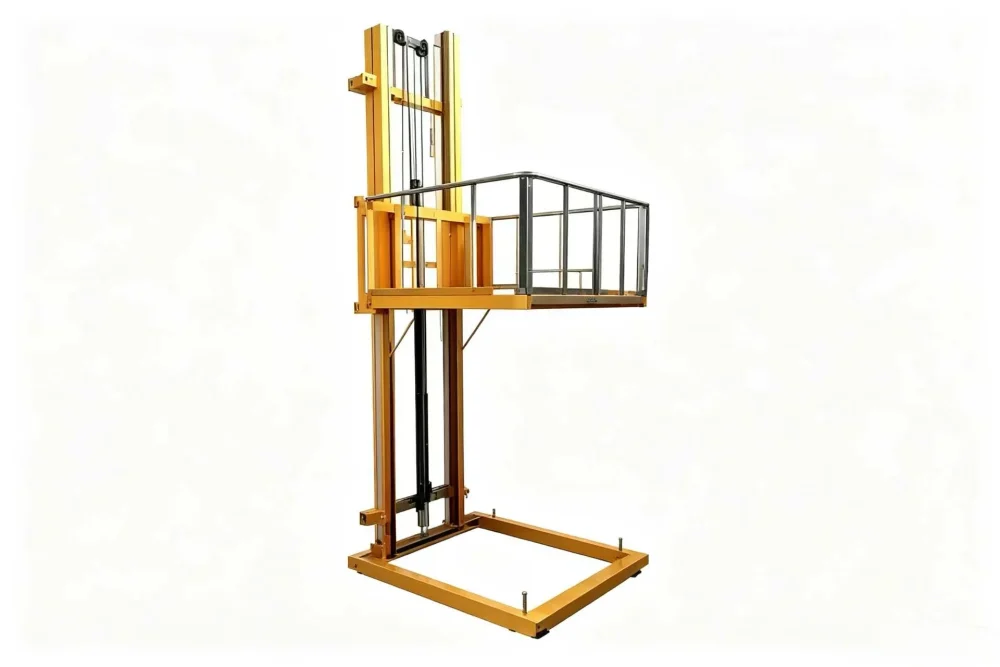
Conclusion and Contact Information
Investing in engineered industrial freight lifts drastically improves warehouse operational throughput, eliminates hazardous manual lifting tasks, and maximizes vertical building space utilization. Whether expanding storage capacity onto a new mezzanine floor or linking multi-level production operations, choosing high-performance industrial freight lifts guarantees dependable, continuous, and safe performance for years to come.
For customized engineering designs, detailed technical specifications, or a tailored project consultation, contact our engineering sales team today:
Phone: +86 189 5417 1380
Email: [email protected]
 Russian
 English
 Arabic
 French
 Korean
 Spanish
 German